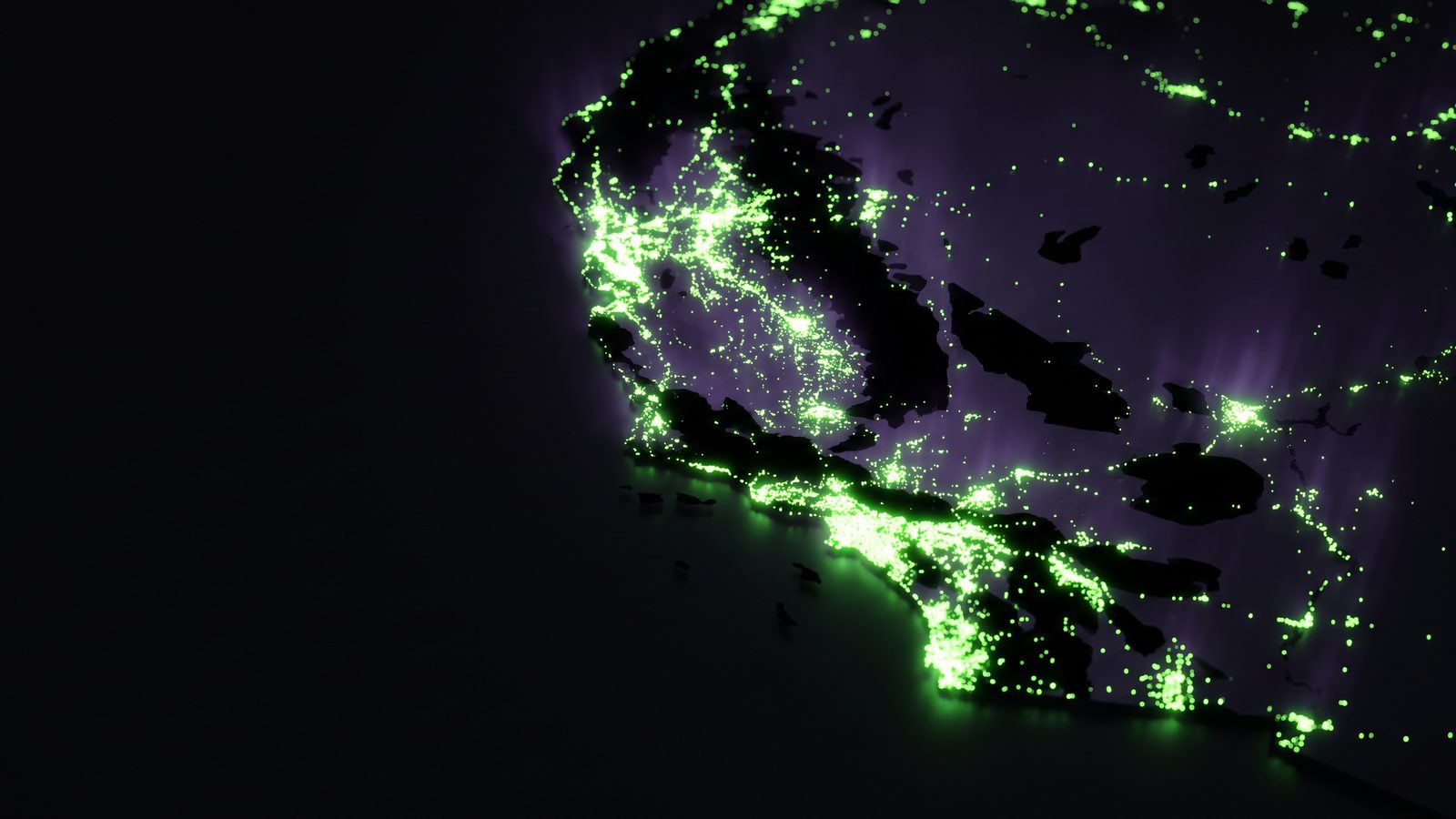
We drew a random sample of 180 of California's 2,285 state-licensed substance use disorder treatment facilities and checked each one against SAMHSA's FindTreatment.gov, the federal government's own free treatment locator, using its public API.
Only 65 facilities (36%) could be confidently matched by name to a federal listing. 53 facilities (29% of the sample) returned zero SAMHSA-listed facilities within half a mile of their licensed address, not a near miss, nothing nearby at all.
Residential detox programs, often the most urgent point of entry into care, matched at a noticeably lower rate than outpatient programs. Of the facilities we did find listed, 97% had a working website on file, so this is not a website problem. It is a federal-listing participation problem, and it is fixable.
PELORA is a marketing agency, not a research institution, a law firm, or a clinical body. This is original data analysis of two public government datasets, presented with our methodology in full so it can be checked and reproduced. It is not a licensing determination, a clinical assessment, or legal advice about any individual facility.
Why we lookedLicensed and findable are not the same thing
Every treatment center in California has to be licensed by the state. That part is well understood and heavily enforced. What gets almost no attention is a second, quieter system: whether that same facility shows up in the federal government's own free tool for finding it.
FindTreatment.gov is built from data SAMHSA collects through its National Substance Use and Mental Health Services Survey. Participation in that survey, and therefore inclusion in the public locator, is a separate process from state licensing. A facility can be fully licensed, fully operating, and still be invisible on the one federal tool built specifically to connect it with the families searching for it.
I have run four treatment centers myself, so this is not an abstract question for me. I wanted to know, with real numbers instead of a guess: across the state, how big is that gap actually?
The methodHow we cross-referenced 180 facilities
We built this from two public sources, both free and both linked below so anyone can pull the same data:
- California DHCS SUD Recovery Treatment Facilities dataset, the state's own public list of 2,285 licensed facilities, including name, legal entity, address, capacity, license expiration, and coordinates.
- SAMHSA's FindTreatment.gov public API, the same data source behind the consumer-facing locator, queried directly.
From the full DHCS list we drew a random sample of 180 facilities. For each one, we queried the SAMHSA API within an 800-meter radius of the facility's licensed coordinates and compared the returned facility names, and the sampled facility's legal entity name, against every nearby SAMHSA-listed result using name-overlap matching. A facility only counted as a confident match when a real name overlap existed. Simply having some other, unrelated facility nearby did not count as a match, a distinction that matters because early, looser versions of this same check overstated the match rate by including exactly that kind of false positive.
The numbersWhat we found
Put another way: of the 180 licensed, real, operating facilities we sampled, 115 could not be confidently confirmed in the exact tool the federal government tells families to use. Just under a third had literally nothing federally listed anywhere near their address.
| Segment | Sample size | Confident SAMHSA match | Match rate |
|---|---|---|---|
| Full sample | 180 | 65 | 36.1% |
| Residential detox (RES‑DETOX) | 67 | 18 | 26.9% |
| Outpatient / non‑residential (NON) | 93 | 36 | 38.7% |
| Residential (RES) | 11 | 6 | 54.5% |
The detox gap is the part I would flag hardest. Detox is frequently the first call a family makes, often in crisis, often time-sensitive. If the federal locator's coverage of exactly that program type lags the rest of the category, that is the highest-stakes place for the gap to exist.
The county pattern is worth naming honestly too: because Los Angeles County has by far the most licensed facilities of any county in the state, it also produced the largest raw number of unmatched facilities in our sample (47 of the 115). That is proportional to how many facilities LA County has, not evidence that LA specifically underperforms other counties. Orange County, Riverside, San Diego, and Marin all appeared in the unmatched group as well.
Reading the caveats honestlyWhat this data does and does not show
We would rather undersell this than oversell it. A few limits, stated plainly:
- This is a sample, not a census. 180 of 2,285 facilities, drawn at random. The true statewide rate could be somewhat higher or lower than 36%, though a sample this size gives a real, directional read, not noise.
- Name-matching has a floor and a ceiling. Some facilities operate under a different public-facing name than their state license reflects, which our matching could miss and undercount as unlisted. That is exactly why we report the more conservative, unambiguous number alongside it: 29% of the sample had zero SAMHSA records of any kind within half a mile, a gap no naming difference can explain away.
- Being unmatched is not a licensing or safety finding. It says nothing about the quality of care at any specific facility. It is a finding about federal locator participation, a data and visibility question, not a clinical one.
Why it mattersThe visibility gap has a real cost
Set this next to something that already happened. In June 2025, the FTC settled with Evoke Wellness, LLC, a treatment provider that used deceptive dynamic keyword insertion to generate as many as 68,510 misleading Google search ads carrying the names of unaffiliated, unrelated treatment centers, routing calls meant for those other centers into Evoke's own call center instead. The company paid a $1.9 million civil penalty under the Opioid Addiction Recovery Fraud Prevention Act of 2018.
"When a third of licensed facilities are hard to confirm through the one free federal tool built for exactly this search, families searching by name become easier targets for the kind of ad interception the FTC just fined a company $1.9 million for doing."
That is the real stake here. Every family that cannot confirm a specific, licensed center through the free federal channel is a family more likely to click whatever paid ad shows up first, licensed or not, affiliated or not. A stronger federal locator is not just a nice-to-have data completeness issue. It is one less opening for exactly the kind of deceptive lead interception regulators are actively prosecuting.
If you operate a facilityWhat to actually do with this
This is fixable, and it is worth fixing regardless of what a marketing agency has to say about it.
- Check your own listing. Search FindTreatment.gov directly for your facility by name and address. Confirm you are there, and confirm the details, phone, website, services, and hours are current.
- If you are not listed, or the listing is stale, that is a SAMHSA data-collection question, not a marketing fix. It runs through SAMHSA's N-SUMHSS survey process, separate from your state license, and is worth resolving directly with them.
- Do not treat this as a substitute for the rest of your visibility. Being in the federal locator is one channel among several. A real Google Business Profile, local SEO, and being citable by AI search tools like ChatGPT and Perplexity all matter alongside it. We wrote a longer operator's guide to the rest of that picture in how to market a treatment center in 2026, including LegitScript certification and the flat-fee compliance rule that governs how treatment marketing can legally be paid.
Want the same check run on your center?
We can confirm your facility's federal locator status alongside the rest of your visibility picture, Google Business Profile, local SEO, and AI search citation, as part of a free Growth Check. Operator-led, not theoretical.
Get a free Growth Check → See our behavioral health workSourcesData and citations
- California Department of Health Care Services, SUD Recovery Treatment Facilities dataset, pulled August 2026, 2,285 facility records.
- SAMHSA, FindTreatment.gov public locator and developer API.
- Federal Trade Commission, FTC v. Evoke Wellness, LLC, settled June 2025.
FAQThe SAMHSA gap, explained
What is SAMHSA's FindTreatment.gov locator?
It is the Substance Abuse and Mental Health Services Administration's official, free, public locator for finding addiction and mental health treatment in the United States, the tool the federal government itself directs patients, families, and referring clinicians to use. It is built from facility data collected through SAMHSA's National Substance Use and Mental Health Services Survey.
Why would a state-licensed treatment center not appear in the federal locator?
Listing depends on a facility responding to SAMHSA's N-SUMHSS survey and being included in that data pull, a separate process from state licensing. A facility can be fully and currently licensed and still be absent from, or out of date in, the federal locator simply because it has not participated in or kept current with that federal data collection.
How was this study conducted?
We downloaded California DHCS's public dataset of 2,285 licensed SUD facilities and drew a random sample of 180. Each sampled facility's licensed coordinates were queried against SAMHSA's public FindTreatment.gov API within an 800-meter radius, and matches were confirmed by comparing facility and legal entity names against nearby federal listings. A match required real name overlap, not just proximity.
Is being missing from SAMHSA's locator a compliance problem?
Not by itself, and it is not a licensing violation. It is a visibility and marketing problem: the free channel the federal government built specifically to connect patients with legitimate, licensed care is not surfacing that facility, which pushes more of the search burden onto paid ads, word of mouth, or less reliable sources. This is general information, not legal or regulatory advice.
How does this connect to the FTC's case against Evoke Wellness?
In June 2025 the FTC settled with Evoke Wellness, LLC over deceptive keyword-insertion ads that used unaffiliated treatment centers' names to route as many as 68,510 misleading Google ads to Evoke's own call center, under the Opioid Addiction Recovery Fraud Prevention Act of 2018. When a large share of licensed facilities are hard to confirm through the free federal channel, families searching for a specific center by name are more exposed to exactly that kind of deceptive ad interception.
Has PELORA's founder run treatment centers?
Yes. Preston Durnford, PELORA's founder, has run four treatment centers in Newport Beach and Costa Mesa, California: two subacute detox facilities and two full continuum-of-care programs. This study was written from that operator seat.
Does PELORA give legal or clinical advice?
No. PELORA is a marketing agency, not a law firm and not a clinical or medical provider. This article presents original data and general information, not legal, regulatory, or medical advice. Confirm your facility's specific standing with SAMHSA, your state licensing body, and qualified counsel.
Last updated August 12, 2026. By Preston Durnford. Newport Beach, California. Original data analysis, general information only, not legal or medical advice.