How do you market a construction company?
You market a construction company by separating campaigns by job value, answering inquiries in minutes, and putting real project footage in front of the right homeowners. Three layers run at once. High-intent capture on Google Search, Local Services Ads and your Google Business Profile, where someone is already looking for a builder. Demand generation on Meta and Instagram, where finished work reaches people who have not searched yet. And a follow-up system that responds instantly and keeps quoting until the homeowner decides. The Construction and Contractors category averages $165.67 per lead on Google Search, so the campaign for $12,000 bathrooms and the campaign for $250,000 builds cannot share one budget.
How much does marketing for a contractor cost?
PELORA retainers start at $3,500 a month for Launch and run to $50,000 at Elite. Growth is $5,500, Scale is $7,500, Full Program is $11,000, Enterprise is $14,000, and Full-Service is $20,000. There is a one-time setup, $4,500 above Launch and $1,500 to $2,000 on Launch, and a three-month minimum. Ad spend is billed direct to the platforms with no markup and no media commission, and every account, pixel and raw file stays yours. Most established contractors land at Growth. The full PELORA pricing ladder shows all nine tiers and the add-on rates.
How much should a contractor spend on ads?
Set the budget from your job value and your monthly revenue target, not from a generic percentage of revenue. Two constraints decide the floor. The Construction and Contractors category averages $165.67 per lead on Google Search at a $5.31 average cost per click, so a month that only funds twenty clicks will never produce a readable result. And the ad platforms need roughly 50 conversion events in a rolling window to exit the learning phase, so a budget too small for your job value never lets the algorithm learn. A $12,000 bathroom and a $250,000 custom build need different budgets, different campaigns and different landing pages. The free PELORA ad spend calculator models the honest minimum before you spend anything.
How long until contractor marketing works?
Months 1 and 2 are the learning phase for Google and Meta ads, plus content production, the website or landing page build, and the CRM, booking and review automation setup. Month 3 is usually the inflection point when ads exit the learning phase and cost per lead drops. Months 4 to 6 the system compounds: ads dialed in, retargeting active, reviews flowing, and follow-up closing jobs that used to slip. High-ticket builds have longer research cycles, so attribution windows matter. Anyone promising a flood of $100,000 jobs in week two is selling something other than the truth.
How do I get more high-ticket remodel jobs?
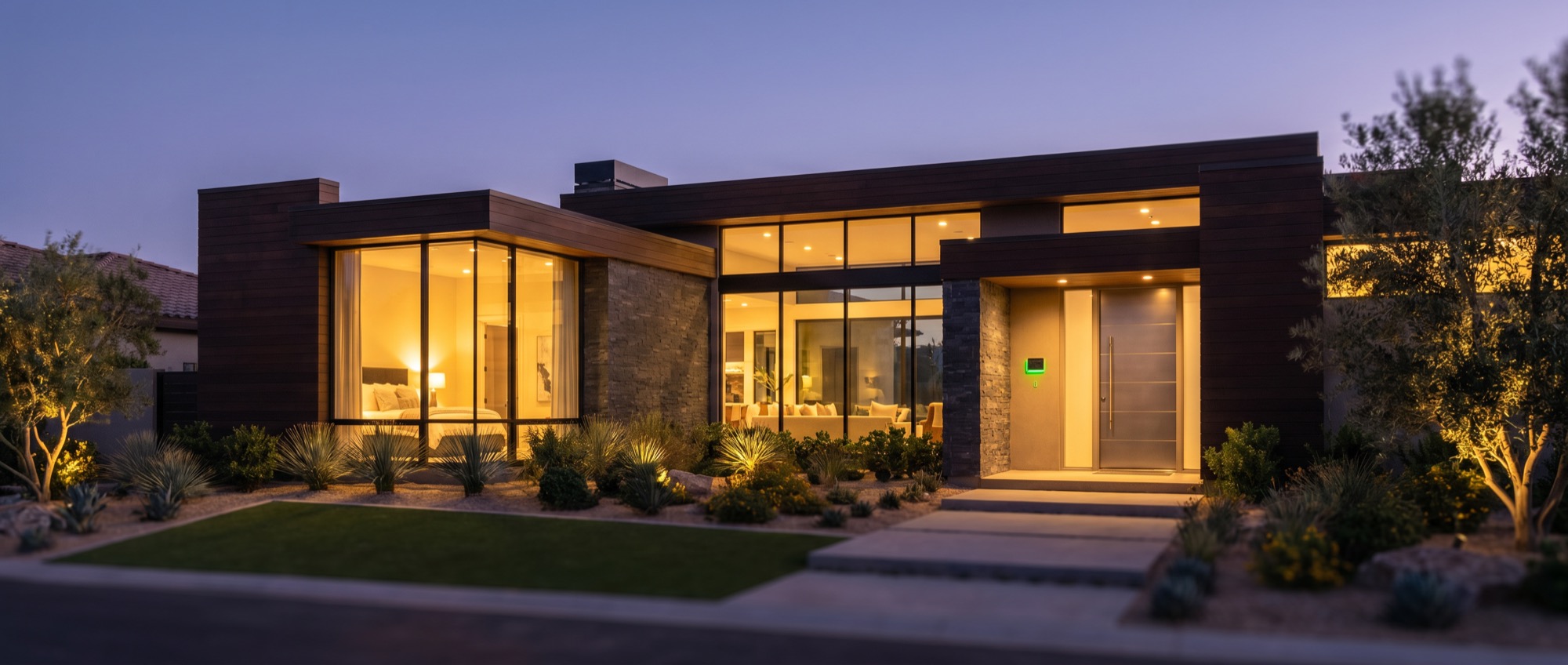
Run high-ticket work as its own campaign, with its own budget, its own creative and its own landing page. A whole-home renovation buyer behaves nothing like a bathroom buyer. They research for months, they read every review, they look at your finished work before they look at your price, and they usually talk to two or three builders. That means a project gallery deep enough to browse, video walkthroughs of completed builds, a site that loads fast on a phone, and retargeting that stays in front of them across a research cycle measured in months rather than days. At the category benchmark, a $165.67 lead is 0.07% of a $250,000 build, so you can afford to bid where a volume contractor cannot.
Do Local Services Ads work for contractors?
Yes, for defined residential jobs where the homeowner is ready to hire. Local Services Ads sit above the regular search results, you pay per lead rather than per click, and the verification badge Google attaches to your listing is a trust signal a standard text ad cannot buy. One thing to know, because a lot of advice is stale on it: in late 2025 Google folded Google Guaranteed, Google Screened and License Verified into a single Google Verified badge and discontinued the money-back guarantee that came with the old one. The tradeoffs are real too. You have to pass license and insurance screening, the categories are narrower than what a full-service builder actually does, you have to dispute bad leads to get credited, and how fast you respond affects your ranking. Run them alongside Google Search rather than instead of it, because the two capture different parts of the same query.
How do I market a commercial construction company?
Differently from residential, and the residential playbook does not transfer. Commercial work is won through RFPs, prequalification, and relationships with developers, architects, property managers and general contractors. It is not won through consumer lead-gen funnels or instant text-back automation. What marketing genuinely does for a commercial GC: a website that survives a developer's due diligence, project galleries and video that win prequalification, case studies written for architects and owners rather than homeowners, an active LinkedIn presence for the people who actually sign, and search visibility for terms like commercial general contractor plus your city. That is credibility infrastructure, and it shortens the distance between a referral and a shortlist.
Why do my leads go cold?
Almost always because of response time. The Lead Response Management study led by Dr. James Oldroyd found that reaching a lead within five minutes rather than thirty made buyers roughly 100 times more likely to be contacted and about 21 times more likely to be qualified. Harvard Business Review's audit, The Short Life of Online Sales Leads, found firms responding within an hour were nearly seven times more likely to have a meaningful conversation with a decision maker than firms that waited just one hour longer. Homeowners inquire at night and on weekends, they contact three or four contractors, and they hire the one who answers. The fix is mechanical: instant text-back on every form and missed call, and a follow-up sequence on day 3, day 7 and day 14 for anyone who got a quote and went quiet.
Is video worth it for a builder?
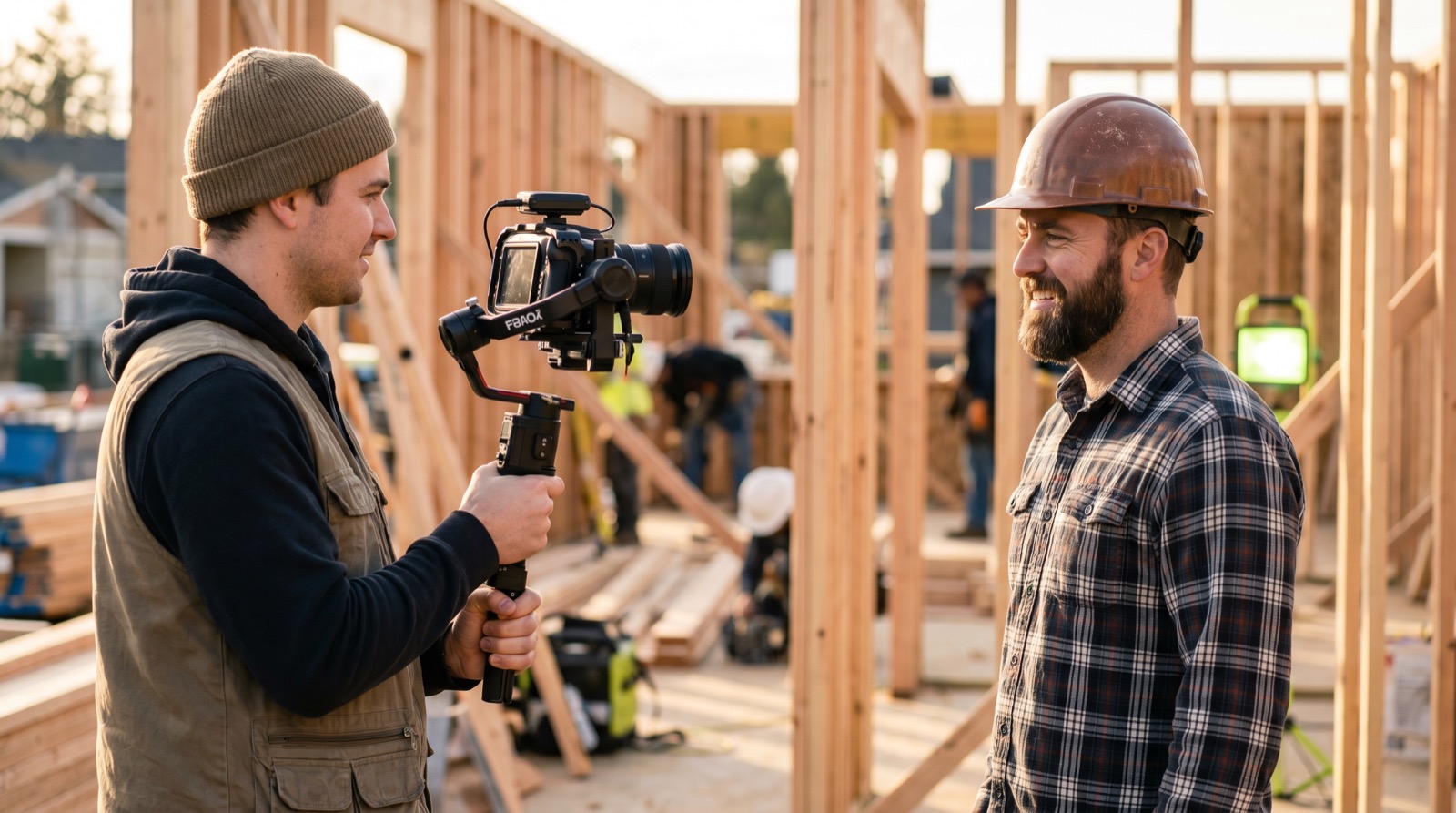
Yes, because construction is one of the few industries where the product is genuinely worth filming. A homeowner deciding between three bids is trying to answer one question: will these people do good work and not disappear. A photograph cannot answer that. A walkthrough of a finished kitchen, the owner explaining what they wanted, and your crew actually working answers it in ninety seconds. One shoot day on an active job site produces the ad creative, the project gallery, the social calendar and the testimonial, all from the same footage. That is why we schedule filming around your build calendar rather than ours.
Should I market bathroom remodels and custom builds the same way?
No. Blending them into one budget is the most expensive routine mistake in contractor marketing. The two have different search terms, different buying timelines, different creative and different tolerances for cost per lead. At the $165.67 category benchmark, one lead costs about 1.4% of a $12,000 bathroom and about 0.07% of a $250,000 build. Averaged together in a single campaign the cheap leads flatter your reporting while the expensive ones look like failures, and the platform optimizes toward whichever converts fastest, which is almost never the job you actually want. Separate the campaigns, separate the landing pages, and judge each one against its own job value.
What is the Builder Marketing System?
The Builder Marketing System is PELORA's marketing system for builders and contractors: seven layers built together, in order, by one team. The layers are Google Search and Local Services Ads, Meta and Instagram, Google Business Profile and reviews, job site video, website and project galleries, CRM follow-up, and a commercial track.