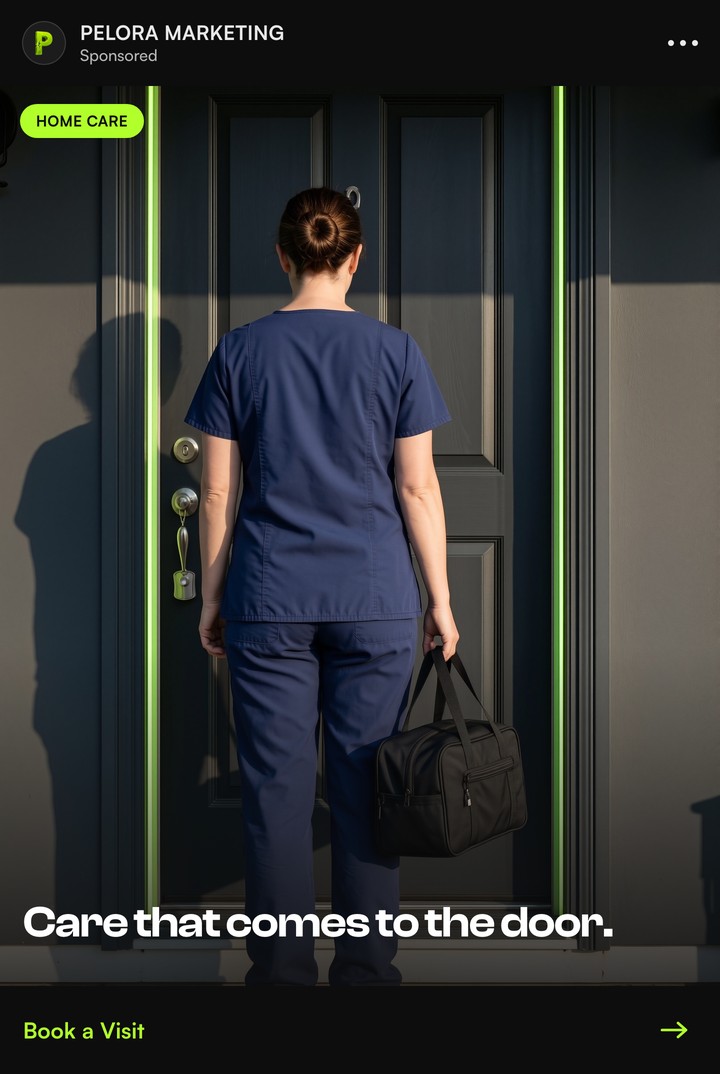
Creative is the lever now. Targeting was solved years ago.
Once your budget and targeting are set, the creative is what decides whether an ad wins or dies. AppsFlyer's 2025 State of Creative Optimization report, built on 1.1 million video ad variations and $2.4 billion in spend, found that the top 2 percent of creatives capture roughly half of all ad spend. The winners take almost everything, and what separates a winner is the creative. The machine got good at finding your buyer. The video is now the job.
That is why we build this business around the footage, not around edit tricks. A real person, a sharp hook, and a clear reason to care will beat a polished ad that has nothing to say. We shoot for the scroll, write for sound off, and test opening hooks against each other until the winner is obvious.
The same AppsFlyer data shows just 2 percent of ad variations end up commanding 68 percent of spend. You do not know in advance which hook wins, which is exactly why volume and variety beat fifty versions of the same clip. One well-planned shoot day gives us the raw material to be diverse on purpose instead of by accident.
The ad styles we shoot
We shoot ten core ad styles, and most brands run a rotation of four or five at a time. Same crew, same direction, so your brand looks like itself across every placement.
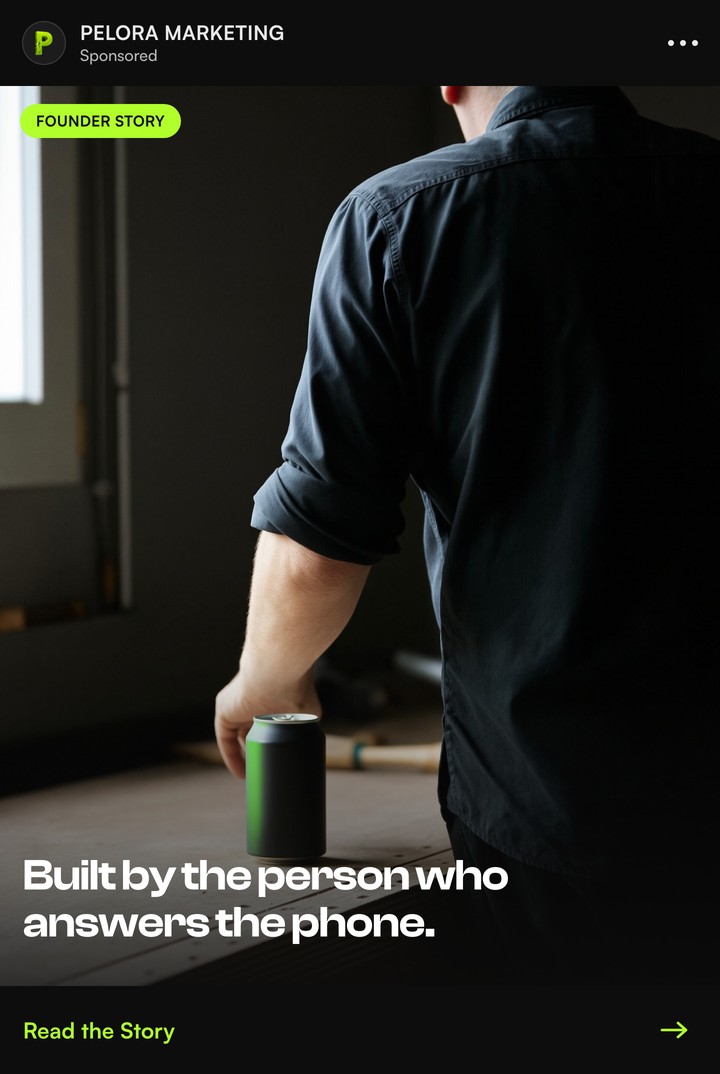
Founder story and owner story ads put the person who built the company on camera to say why it exists. They build trust fast and are the hardest thing for a competitor to copy. Team story ads do the same for the people a customer will meet.
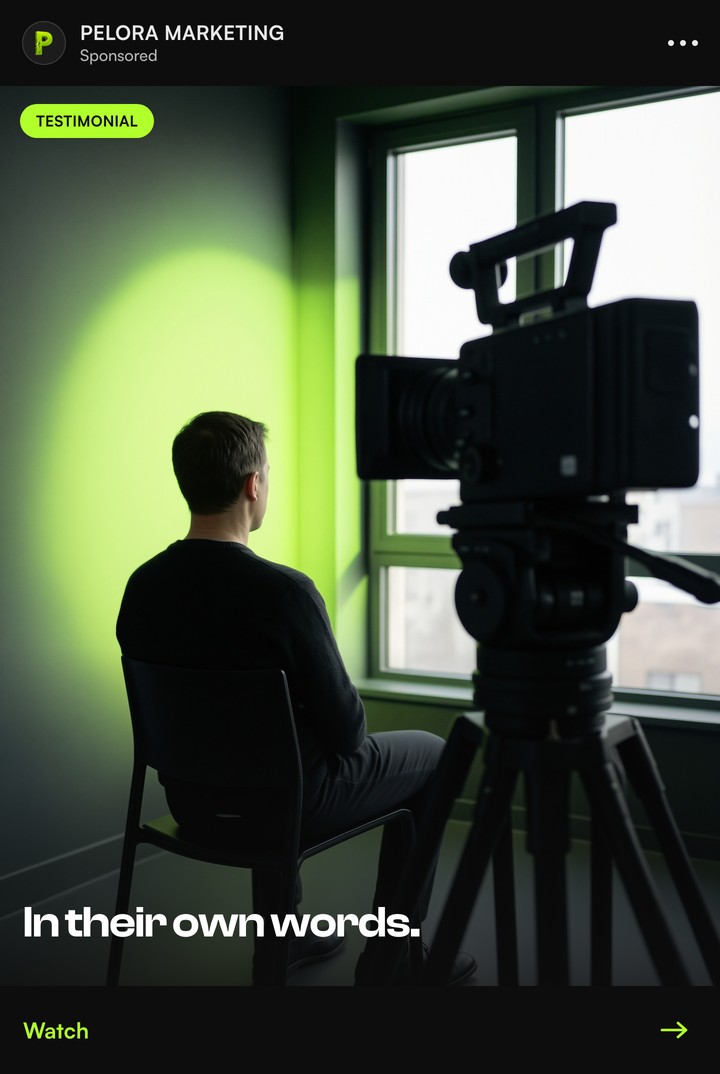
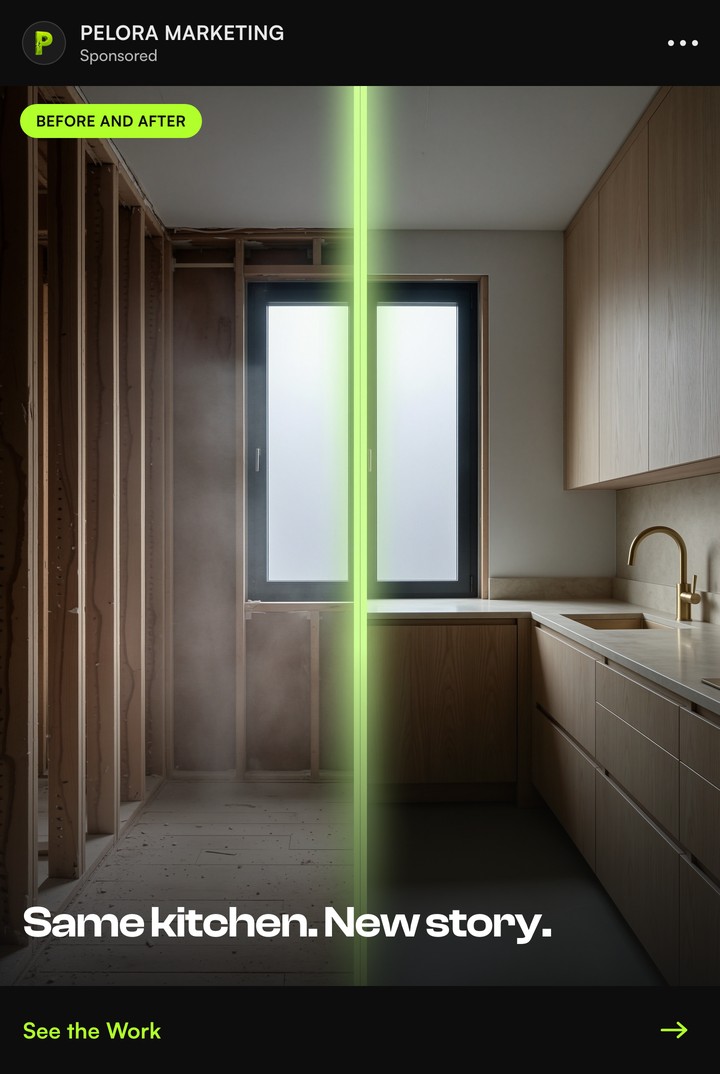
Testimonial and interview-style ads let a real customer or patient tell the outcome in their own words. Before and after and transformation ads show the change itself, the exact result a prospect is quietly hoping for. Authority ads position you as the expert by teaching one genuinely useful thing, so the viewer trusts you before the sales conversation starts.
Organic and UGC-style ads are shot to look like a real post, not a commercial, because that native feel is now the default for high-performing paid social. Product drop ads give a launch or a new offer its own moment. We capture all of these in one production so nothing feels stitched together later.
Shoot once, multiply into weeks of ads
Most video shoots produce one video. That is the expensive way to buy footage. We plan the shoot so a single day on location becomes weeks of ads.
Here is the math. One founder interview, a batch of customer testimonials, and two to three hours of b-roll can be cut into 20 to 40 vertical pieces: founder-story hooks, testimonial cuts, before and after sequences, authority clips, and a dozen different opening three seconds to test against each other. Same footage, many angles, many hooks.
Every frame is real. No stock, no AI-generated b-roll, no borrowed faces. Real footage is what makes UGC and founder ads believable, and believability is what makes them convert. It is also what keeps you compliant in regulated verticals, where a fabricated before and after can get an ad account shut down.
When a hook wins, we cut more in that direction. When one dies, we kill it inside 72 hours. You are never waiting a month for the next batch, because the batch is already shot.
Built for Orange County operators
PELORA is based in Newport Beach and shoots on location across Orange County and Southern California. We work with med spas and aesthetics, dental, medical weight loss, behavioral health and treatment centers, functional medicine, concierge nursing, home services, construction, and founder-led local brands.
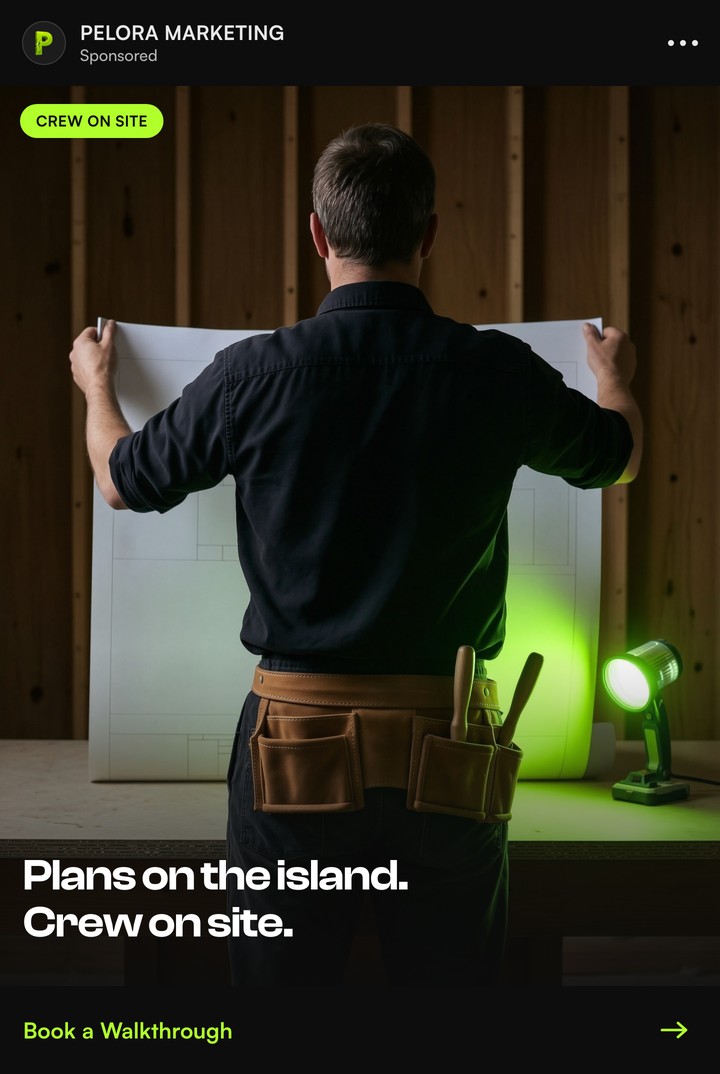
The angle changes by vertical. A med spa lives on before and after and transformation footage. A treatment center leads with founder and staff-led authority, filmed carefully so it respects patient privacy and platform rules, and that work has its own page here. A home services or construction owner wins on owner-story and job-site proof, the real crew doing real work. A dental or weight loss practice runs on patient testimonials and visible results.
Preston Durnford, who runs PELORA, has built, grown, and sold real companies, with mid seven-figure exits and businesses he still operates today. You are working with an operator who has spent his own money on ads and knows what a shoot has to return to be worth it, not a vendor who has only ever filmed for other people.
Where SEO, AEO, and GEO fit
Video ads live inside a bigger visibility picture, and three terms get confused constantly. Here is how we define them in 2026, distinctly.
SEO, search engine optimization, is getting your pages to rank in traditional search results on Google and Bing through relevance, authority, and technical health. AEO, answer engine optimization, is structuring your content so answer engines, meaning Google's AI Overviews, featured snippets, and voice assistants, can pull a direct answer straight from you. GEO, generative engine optimization, is earning citations inside generative AI answers from ChatGPT, Gemini, Copilot, and Perplexity, so the model names you as a source when someone asks.
They are not rivals. SEO gets you into the pool of pages the AI reads, AEO makes your answer easy to extract, and GEO makes the model choose you over a competitor when it writes the reply.
Video feeds all three when you use it right. Transcribed testimonials and founder interviews become answer-ready text on your site. A YouTube presence gives search and AI another surface to find you on. And the real customer stories in your ads are the same experience and trust signals that models weigh when they decide who to cite. The footage does double duty: selling on paid, and building the authority that gets you named in AI answers.
What it costs and what you get
We keep pricing plain. A one-off brand film starts around $4,500. Most brands work with us on a monthly retainer that runs from $3,500 to $50,000 depending on shoot frequency and how much creative you burn through, and a creative-focused retainer delivers 10 to 30 fresh ad creatives every month.
You get real footage you own, cut into a rotation of ad styles, delivered in the vertical formats each platform wants, with captions built in for sound-off viewing. Winners get scaled and iterated, losers get replaced, and you get the shot list for the next quarter before the current one runs out.
From kickoff to first ad live is usually 14 to 21 days. After that it is a cadence, not a one-time project.