What product marketing actually is
Product marketing is everything that turns a thing on a shelf into a thing people want and buy. It is the photography that makes your product look worth the price, the video and motion that show it in use, the words that explain why it matters, and the paid campaigns that carry all of it to the right buyers. Most small product brands do one piece well, usually the product itself, and leave the rest to a phone camera and a boosted post. That gap is the opportunity. When the creative is as considered as the product, a $40 serum can outsell a $20 one, because people are not buying the liquid, they are buying how it made them feel in the three seconds they watched your ad. We build that whole chain, from the first photo to the last click.
The ad is the product now
On Instagram, TikTok, and Meta in 2026, nobody meets your product on a shelf. They meet it in a feed, mixed between a friend's vacation and a dog video, and they decide in under two seconds whether to stop. That means the ad is the first physical experience of your product, and it has to do the work the shelf used to do. A flat photo on a white background does not survive that scroll. Motion does. A bottle that turns in the light, a texture that catches, a splash frozen mid air, these earn the extra half second that lets the message land. This is why we lead with creative instead of media buying. You can pour money into a great audience, but if the first frame is boring, the platform charges you more and shows you less. Better creative is cheaper reach.
From one product photo to an ad that moves
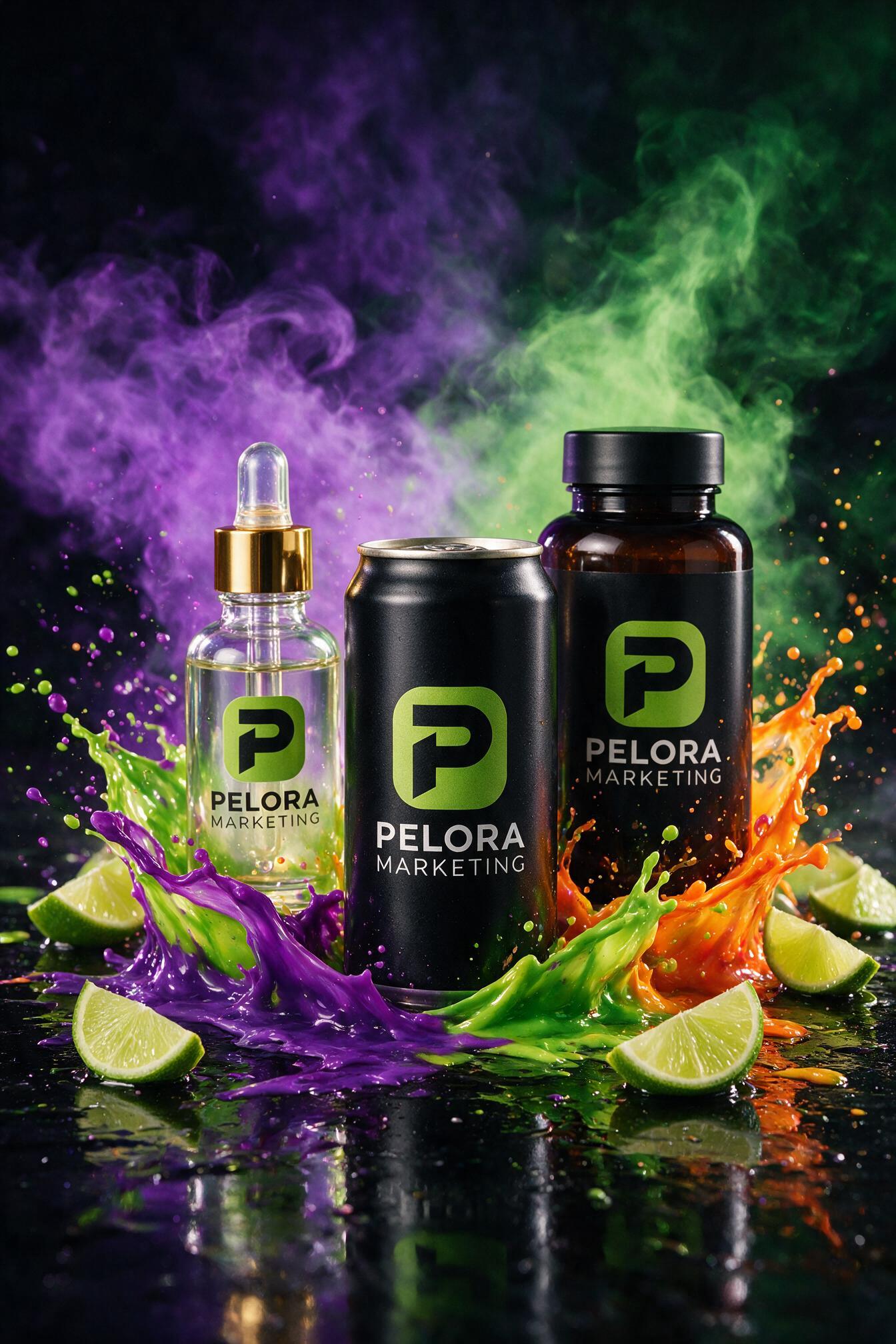
The animation at the top of this page shows the process. We started with a single still image of a product, the kind of clean, lit hero shot that used to require a studio, a photographer, and a shoot day. Then we brought it to life with motion, so the light moves, the liquid catches, and the frame feels alive instead of flat. What used to take a crew and a five figure budget, we now produce with a small team and the right tools, at a speed that lets us make many versions instead of one precious one. For your brand that means real product photography when the physical product needs to shine, generated and composited imagery when a full shoot is not worth it, and motion on top of both. The point is not the tool. The point is that you get scroll-stopping creative without a warehouse full of gear or a month of scheduling.
What product ads cost, with real math
Two numbers, kept separate. First, the creative and management: PELORA retainers start at $3,500 a month, and that includes the product photography and video production, because for a product brand the creative is the work, not an add on. Second, ad spend: paid by you, directly to Meta, TikTok, or Google, in your own accounts, never marked up by us. If we part ways, every account, pixel, and asset stays yours. As a planning floor, a product brand testing on Meta usually wants at least a few thousand dollars a month in spend so the platform gathers enough sales data to optimize, and Google Shopping can run leaner because the intent is higher. In the $1,500 Audit and Game Plan we run this against your real margins and average order value before you commit to a retainer, and if your product is better suited to Shopping than to paid social, or the other way around, we tell you plainly.
Can I just shoot it on my phone?
Sometimes, yes, and we will say so. A genuinely photogenic product, good natural light, and a steady hand can make a phone clip that performs, especially for founder led brands where the raw, real look is part of the appeal. Where phone footage falls down is consistency and volume. The platforms reward a steady stream of fresh, varied creative, and shooting ten strong versions a month on your own, while running the business, is where most owners quietly give up around week six. It is also hard to make a phone shot look premium, and if your product sits at a premium price, cheap looking creative fights your margin. The honest rule: if you can produce enough good creative yourself to keep the algorithm fed, do it. When you cannot, that is exactly the gap we fill, with a system built to produce volume without looking mass produced.
Getting your product found: SEO, AEO, and GEO
Ads rent attention. Search earns it, and for products it compounds. When someone types the best vitamin C serum for sensitive skin into Google, or asks ChatGPT what to buy, you want your product in that answer. Three moving parts get you there. SEO, classic search optimization, gets your product and category pages ranking on Google with the right titles, descriptions, structured data, and reviews. AEO, answer engine optimization, structures that same content so Google's AI Overviews and featured snippets quote you instead of a competitor. GEO, generative engine optimization, is the newest and the one most brands are ignoring: making sure ChatGPT, Perplexity, and Gemini know your product exists and recommend it when someone asks for a suggestion. More and more buying research now starts inside an AI chat, not a search bar, and the brands that show up there are the ones that structured their content for it early. We build all three into your product pages and your content, so your product keeps getting found long after an ad stops running.
Each term is on our AI search glossary, with its source's own words and the date we read them.
Where your product ads run
We match the platform to the product, not to habit. Meta, Facebook and Instagram, is the workhorse for most product brands: enormous reach, strong shopping tools, and a feed built for exactly the kind of motion creative we produce. TikTok rewards native, fast, personality led video and can send a product viral when the creative feels like content instead of an ad. Google Shopping catches people who are already searching to buy, showing your product, price, and photo right at the top of results, which is often the highest intent traffic a product brand can get. And retargeting quietly ties it together, so the person who watched your animation on Instagram sees your product again on Google the day they are ready. In the $1,500 Audit and Game Plan we map which of these deserves your first dollar based on your product, margin, and audience, then expand once the first channel is proven.