Influencer marketing for commercial construction

Creators run the ads now.

For commercial work creators means the people who buy from you: facility managers and owners on camera, on LinkedIn and YouTube, not TikTok.

80%of paid creator posts close under $300
30accounts reviewed for every creator we sign
2xevery post is read twice before it goes live

Influencer marketing for commercial construction means a creator with a real audience in your city posting about your company, run as an ad from their own account and pointed at a page built for it. The people who buy from you: facility managers, owners, and developers on camera, on LinkedIn and YouTube. Most creators cost under $300 a post; the fee is the finding, contracting, reading and reporting.

Facts on this page checked against their sources on 2 September 2026. Prices are what creators actually accepted, not rate-card asks.
For commercial construction

Who, where, and what they can say.

Who the creators are

Real people, small accounts.

The people who buy from you: facility managers, owners, and developers on camera, on LinkedIn and YouTube. Not TikTok.

Where it runs

From their handle, to your page.

LinkedIn thought-leader ads run from the person's profile, YouTube pre-roll, and email. Meta only for recruiting.

What they can say

B2B tier.

Client stories with permission, named people, no project-value claims without the owner's sign-off.

What it looks like

Their name. Your business. One label.

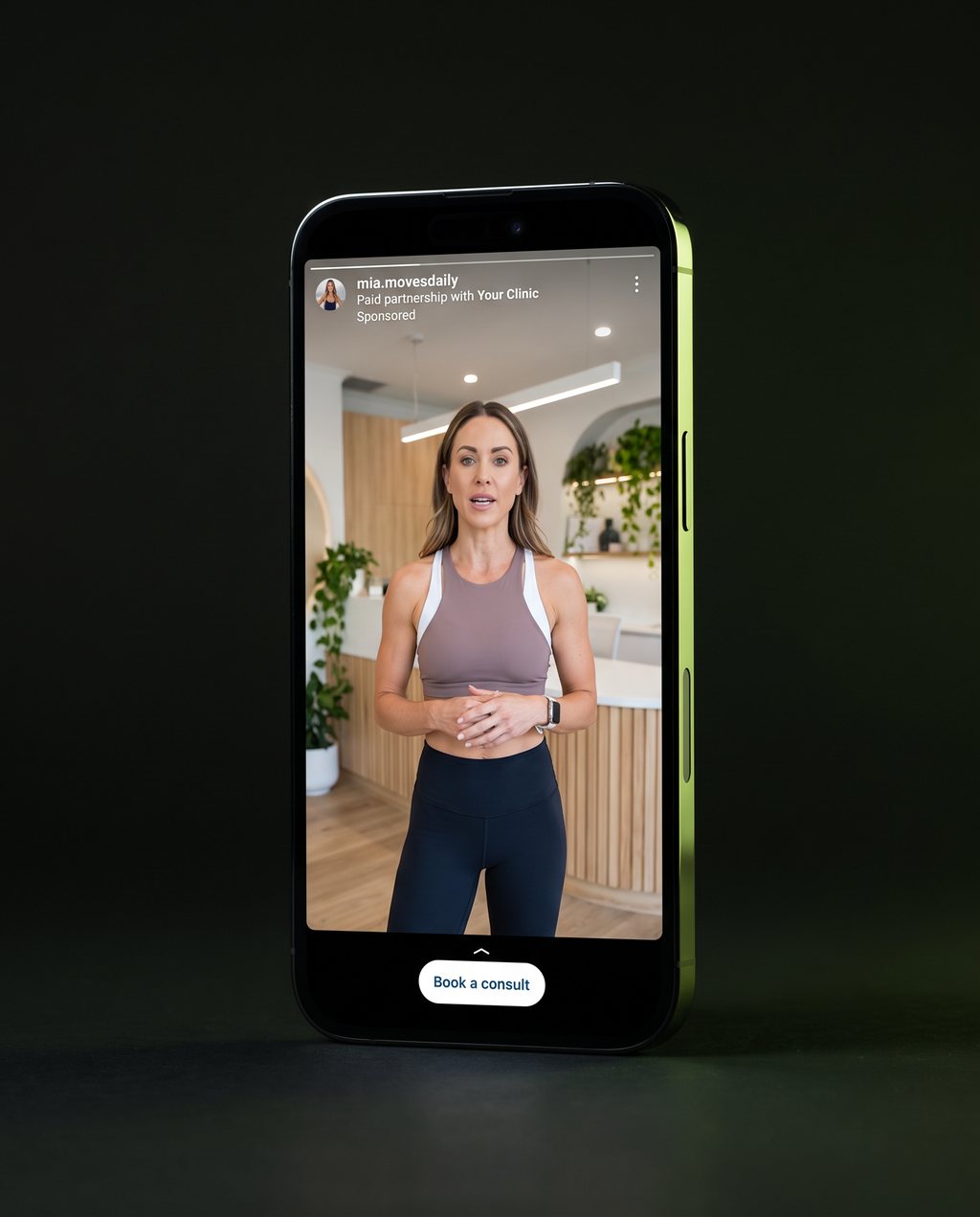
This is the shape of a partnership ad for a company. The creator is a real person with a small following, the label names your business, and the first line is a question their audience already has. The handle and the business here are examples, not clients.

DP
@dana.pm.fm
Paid partnership with Your Company · Sponsored
“What I look for in a GC before the bid.”
Book a consult →
Instagram Reel labelled Paid partnership with Your Clinic, running from the creator's handle
Three ways to run a creator

Their post. Your ad.

A creator can post and you boost it, a creator can hand you the video and you run it, or a creator can give you standing permission to run anything from their handle. Each one looks different to the person scrolling, and each one costs different money.

Instagram Reel labelled Paid partnership with Your Clinic, running from the creator's handle
Meta partnership ad

Runs from the creator's handle.

The creator tags your business as a partner. You run their post as an ad from their account, targeted like any campaign, with the label Meta puts on it. Meta used to call these branded content ads.

What the viewer sees: the creator's name, then "Paid partnership with Your Clinic," then your button.
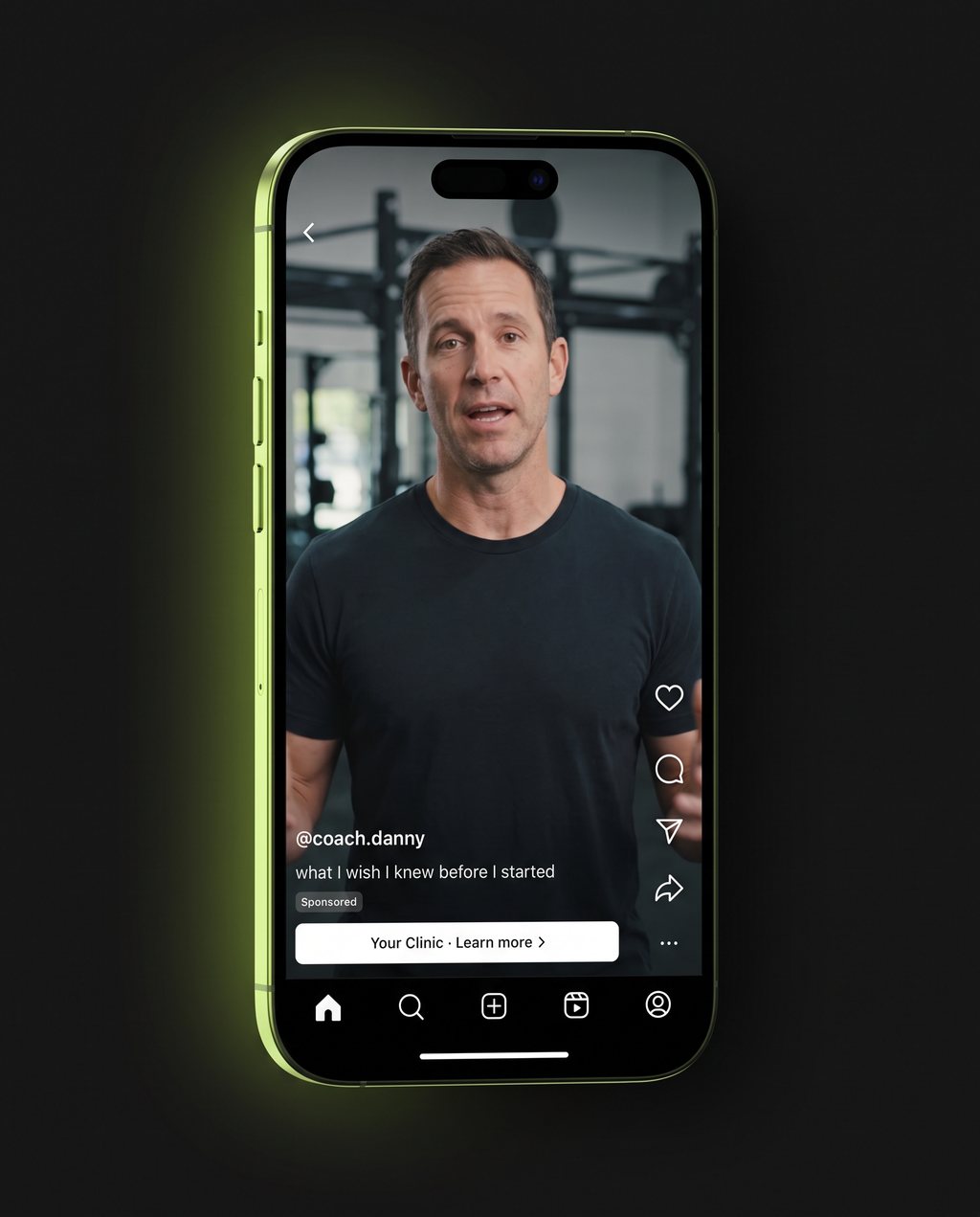
TikTok Spark Ad from a creator's account with a Your Clinic learn more button
TikTok Spark Ad

Their video, boosted by you.

The creator turns on ad authorization for one video and sends you a code good for 7, 30, 60 or 365 days. You run it from Ads Manager. Every like and comment stays on their original post, which is why the format works.

What the viewer sees: the creator's handle, a Sponsored tag, and your call to action.
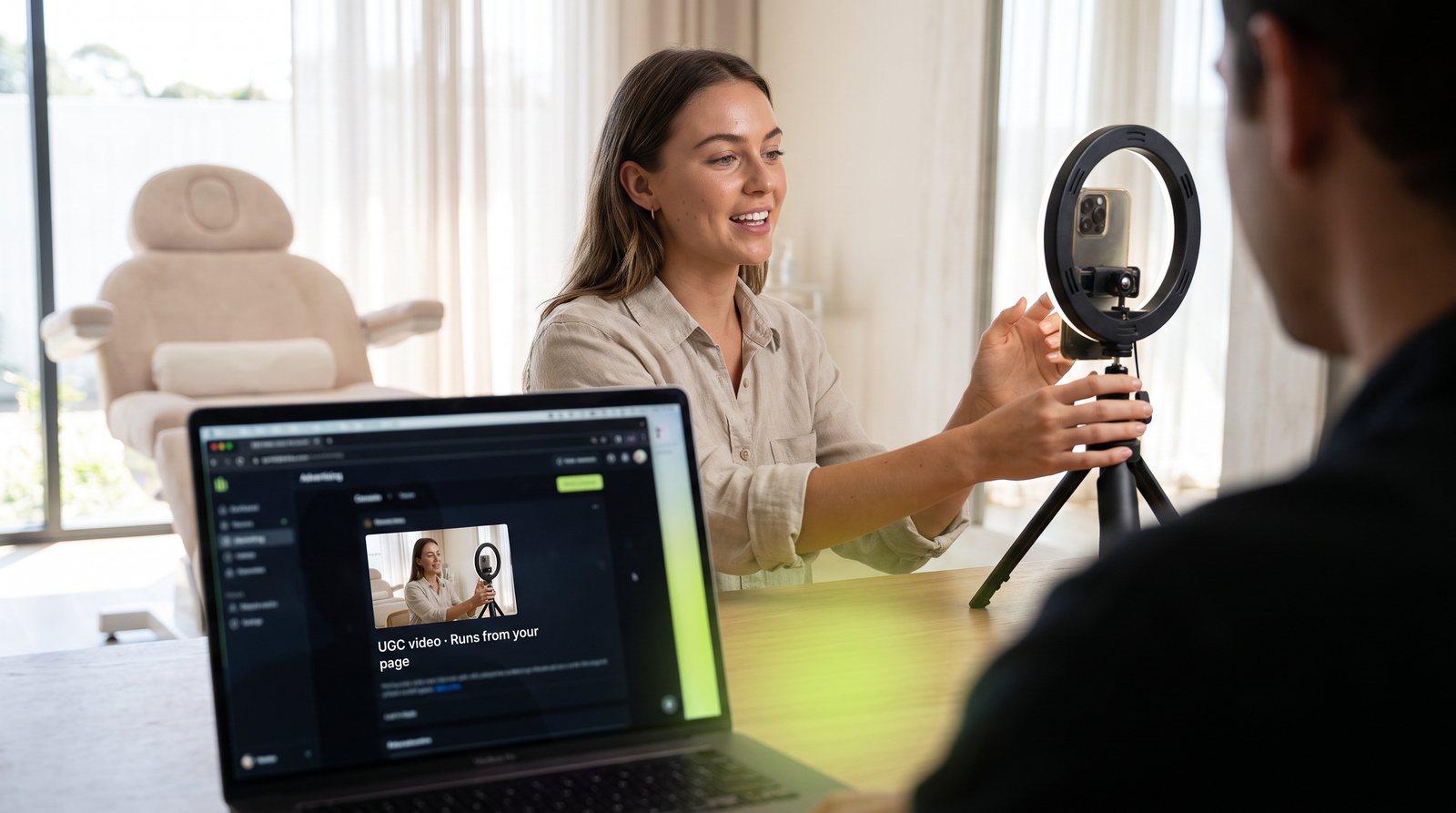
Creator filming a UGC video in a clinic, with the finished ad running from the clinic's own page
UGC video

Made for your page, not theirs.

The creator films to our brief and hands you the video with usage rights. It runs from your own account, in your own ad account, and the creator never posts it. Cheapest per video, and it needs no permission code.

What the viewer sees: your business name, a real person talking, no partnership label.
What a creator actually costs

Most posts close under $300.

Rate guides quote high. Transaction data does not. Across 21,000 paid collaborations in Collabstr's 2026 report, nearly 80 percent of deals were under $300 and another 18 percent were between $301 and $1,000. Every fee passes through to you at cost, itemized by creator and by post, and you approve each one before it is paid.

Creator sizeFollowersPer post, organicAdd ad rights, 30 daysWho they are
NanoUnder 10,000$150 to $400Plus 25 to 40 percentLocal accounts, patients, staff, trainers. Where most clinic programs live.
Micro10,000 to 100,000$400 to $1,500Plus 25 to 40 percentCity-level fitness, beauty and lifestyle creators with an engaged audience.
Mid100,000 to 500,000$2,000 to $5,000NegotiatedRegional names. Rarely worth it for a single-location business.
CredentialedAny size40 to 60 percent above tierNegotiatedAn MD, RD, PT or licensed clinician on camera. Only when the program needs one.

Budget rule: two posts a month with 30-day ad rights runs about $400 to $1,000 per small creator, up to about $3,000 for a larger one. Collabstr's average paid post in 2026 was $193 on Instagram, $186 on TikTok and $255 on YouTube. Health and fitness averaged $175.

Where 21,000 paid deals actually closed, Collabstr 2026

Per post, organic, by creator size

Who gets paid what

YouApprove every creator and every fee before it is paid. One invoice, two lines.
PELORA, $3,500The management: find, contract, brief, read, run, pay, report. Fixed, on its own line.
Creators, at costTheir fees pass through itemized by creator and by post. We pay them and file the 1099.
What we do for the fee

Six steps. Every creator.

About 30 accounts get looked at for every one that signs. This is the work between "we should use creators" and a post that is live, legal and pointed at a page that converts.

Find and vet

Audience quality, fake-follower rate, past sponsors, brand safety. We look at about 30 accounts per creator we activate.

Negotiate and contract

Rate, deliverables, usage rights and exclusivity on our standard agreement. About six message rounds per deal.

Brief

What they can say, what they cannot, the one idea the post is about, and the page it points to. Posted in a shared channel with the creator.

Review, twice

Every post is read before it goes live, two rounds, 48-hour turnaround. Claims, disclosure, and anything a platform or a board could object to.

Run it as your ad

Permission requested, ad built from their handle, targeted, and pointed at a page built for that ad.

Pay and report

We pay the creator, collect the W-9, file the 1099, and show you what each one earned: reach, clicks, code redemptions, cost per post.

From signed to live

Week 1 to 2Outreach and rateAbout six message rounds per deal. Reply rates on cold outreach average about a third.
ThenContract and briefStandard agreement, one round of redlines, the brief posted in a shared channel.
ThenTwo review rounds48-hour turnaround each. Claims, disclosure, and anything a board could object to.
Week 2 to 4Live, from their handlePermission requested, ad built, pointed at its own page. Most creators go live two to four weeks after signing.
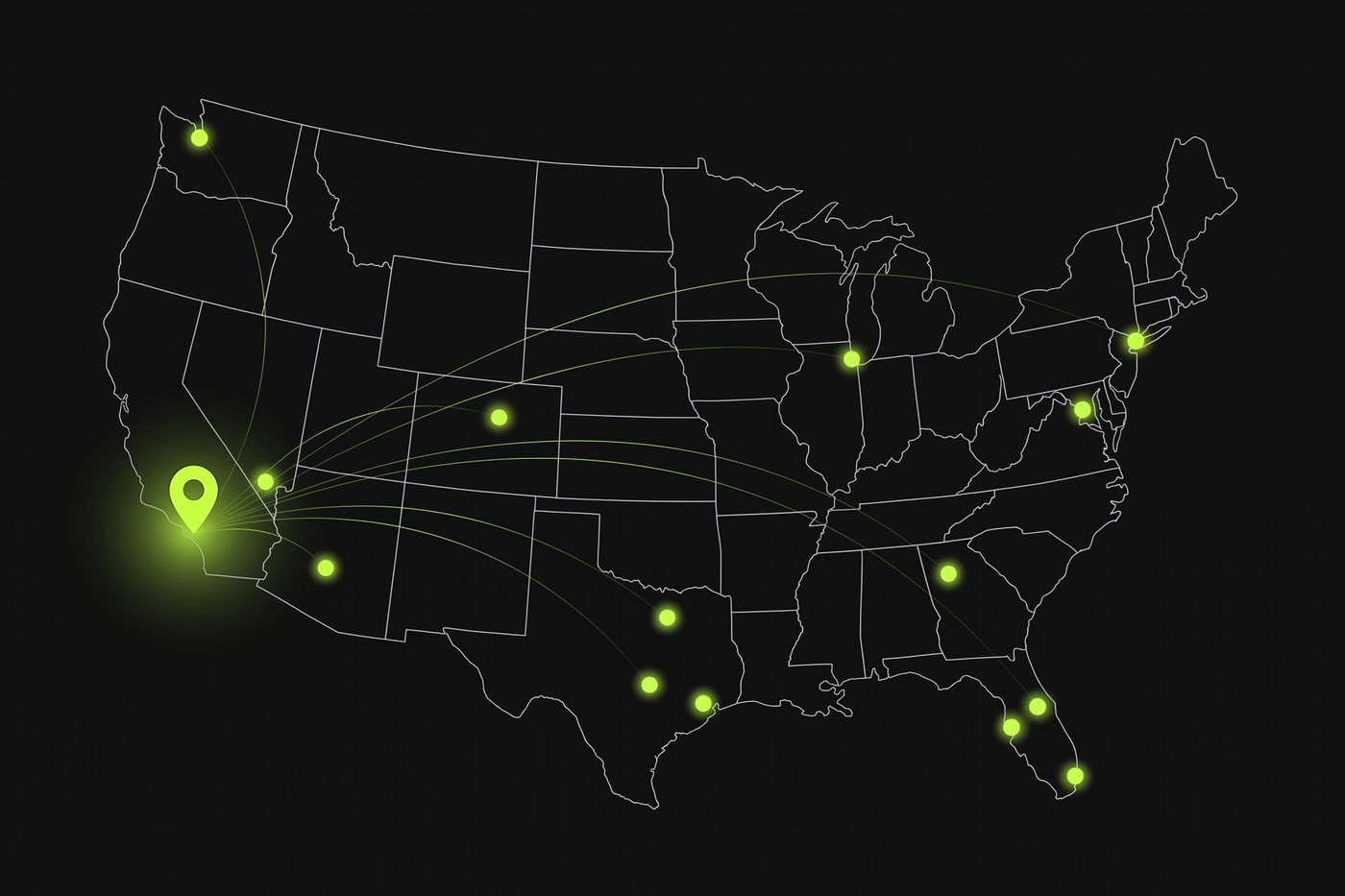
Map of the United States with PELORA's Newport Beach office and client cities across the country
Where we work

Newport Beach office. Clients anywhere.

We run this from Newport Beach and we work remote with clinics and brands across the United States. We get calls from Florida and we do that work. Nothing in a creator program needs us in the room.

Creators get sourced in your city, wherever that is, because the ad has to sound local even when we are not. Meta and TikTok run the same from any state. What changes is the platform rule for your category and the state rule for your license, and we read both before anything goes live.

CaliforniaFloridaTexasArizonaNevadaColoradoNew YorkAnywhere in the US
Pricing

Included from $7,500. Or added to any tier.

Creator fees are separate and pass through at cost. The prices below are the management: finding, contracting, briefing, reading, running and reporting.

Inside a retainer
2 to 4
creators a month, included

Two creators a month inside the $7,500 Scale tier, four inside the $9,000 Full Program tier. Creator fees billed at cost on top.

Creator program
$3,500
a month, attached to any tier

Up to five creators live in any month. Find, vet, contract, brief, two review rounds, run from their handle, pay, 1099, monthly report. Prescription products add $1,000 a month.

UGC videos
$5,500
a month for 8 videos

Eight finished creator videos to our brief, with rights for your own channels and your ads. Extra videos $500 to $750 each.

Related

Nearby industries.

Questions

Asked on every call.

Who are the creators for commercial construction?
The people who buy from you: facility managers, owners, and developers on camera, on LinkedIn and YouTube. Not TikTok.
Where do creator ads for commercial construction run?
LinkedIn thought-leader ads run from the person's profile, YouTube pre-roll, and email. Meta only for recruiting.
What can a creator say about a company?
B2B tier. Client stories with permission, named people, no project-value claims without the owner's sign-off.
Does this work on LinkedIn?
Yes. Thought-leader ads run from a named person's profile to the audience you pick, and client stories run with permission. Same discipline: one clear idea, a named person, a page built for it.
What does a creator cost?
Most paid creator posts close under $300. Small accounts run $150 to $400 a post, mid-size $400 to $1,500, and ad rights add about a third. Fees pass through at cost, itemized, and you approve each one before it is paid.
Do you work with commercial construction outside California?
Yes. We run this from Newport Beach and work remote with commercial construction across the United States. Creators get sourced in your city, wherever that is. We get calls from Florida and we do that work.
Who handles the contract, the payment and the 1099?
We do. Every creator signs our standard agreement, we pay them, collect the W-9 and file the 1099. You see every fee itemized by creator and by post before it is paid.
How long until the first post is live?
Outreach and negotiation take one to two weeks, then the contract, the brief and two review rounds. Most creators go live two to four weeks after signing.

Rates: Collabstr 2026 Influencer Marketing Report, 21,000-plus paid collaborations. Ad rights: Modash and Collabstr, 2026. Platform mechanics: Meta Business Help on partnership ads and TikTok Ads Help on Spark Ads, checked 2 September 2026. Warning letters: FDA, February 20 and June 16, 2026. Competitor patterns: Meta Ad Library, 2 September 2026.