

Influencer marketing for family offices and funds

Quiet by rule, not by choice.

A single-family office keeps its exclusion from the Advisers Act only if it does not hold itself out to the public as an investment adviser, and the SEC said it cannot market non-public offerings to anyone who is not a family client. So a family office's creators talk to founders, operators and future hires, never to prospective clients.

Nearly 80%of paid creator posts close under $300, Collabstr 2026
10generations from a common ancestor, the family office rule's outer limit on who counts as family
2xevery post is read twice before it goes live

UpdatedSeptember 26, 2026SEC and platform rules checked at the sources below

Influencer marketing for a family office is narrow on purpose. It means founders you invested in, operators, and the podcast hosts and newsletter writers founders follow, telling the story of working with your office, aimed at the next founder or the next hire. The SEC's family office rule decides the rest: no holding out as an investment adviser, and no marketing non-public offerings to anyone who is not a family client.

The SEC and platform rules on this page were read at the source on 26 September 2026. Creator rates show what creators accepted, not what rate cards ask.
For family offices

Who speaks for the office, and to whom.

Who the creators are

Founders you backed, and their hosts.

Founders and operators you invested in, on camera with permission. The podcast hosts and newsletter writers founders read. The principal or CIO as a guest, when they want to be.

Where it runs

Podcasts, LinkedIn, and little else.

Guest spots and founder stories on the shows founders follow, and LinkedIn posts with its brand partnership label. Paid reach only when it is aimed at founders or hires.

What they can say

Deals and hiring, never advice.

What it is like to take your capital. Nothing that offers investment advice to the public, and nothing that markets a co-investment or other non-public offering to people outside the family.

What it looks like

Their company. Your capital. One label.

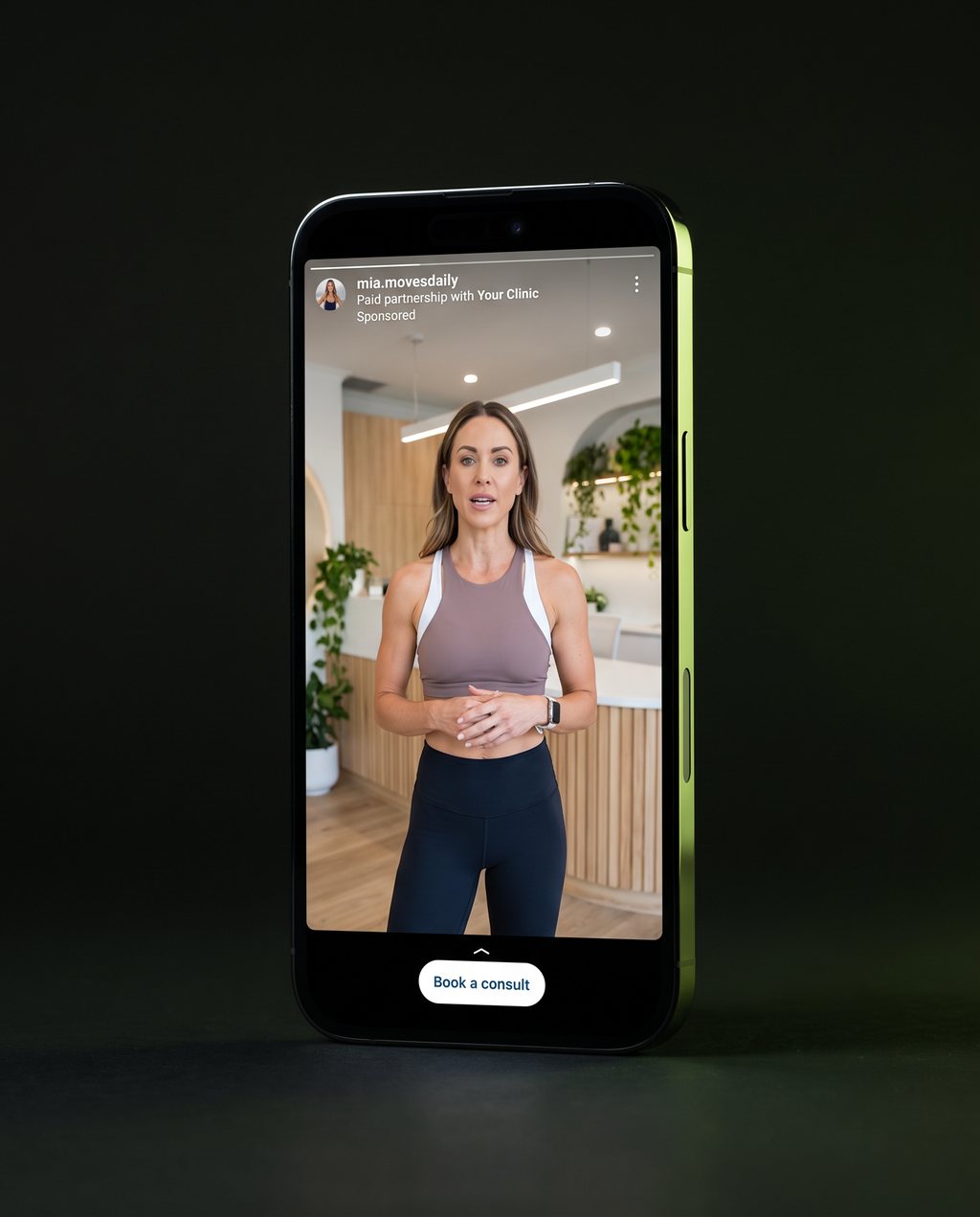
This is the shape of a partnership ad for a family office. The creator is a founder who took your capital, the label names your office, and the hook speaks to the next founder, not to an investor. Handle and office are placeholders, not clients.

RB
@rebuilt.by.rosa
Paid partnership with Your Office · Sponsored
“Why we took family office money instead of a fund's.”
Pitch the office →
Instagram Reel labeled Paid partnership with Your Business, running from the creator's handle
Three ways to run a creator

Their story. Your next deal.

A founder can post about working with you, the principal can join a show founders follow, or your team can explain how you invest on camera. Each one is aimed at founders and hires, which is the audience the family office rule leaves open.

Instagram Reel labeled Paid partnership with Your Business, running from the creator's handle
Meta partnership ad

A founder's post, to founders.

A founder you invested in adds your office as a partner on their post and shares the partnership ad code, and the post runs from their account to other founders in your sectors.

What the viewer sees: the founder's name, then "Paid partnership with Your Office," then your button.
Vertical video ad running from a host's handle, marked Sponsored, with a Learn more button
Guest spot

The principal on their show.

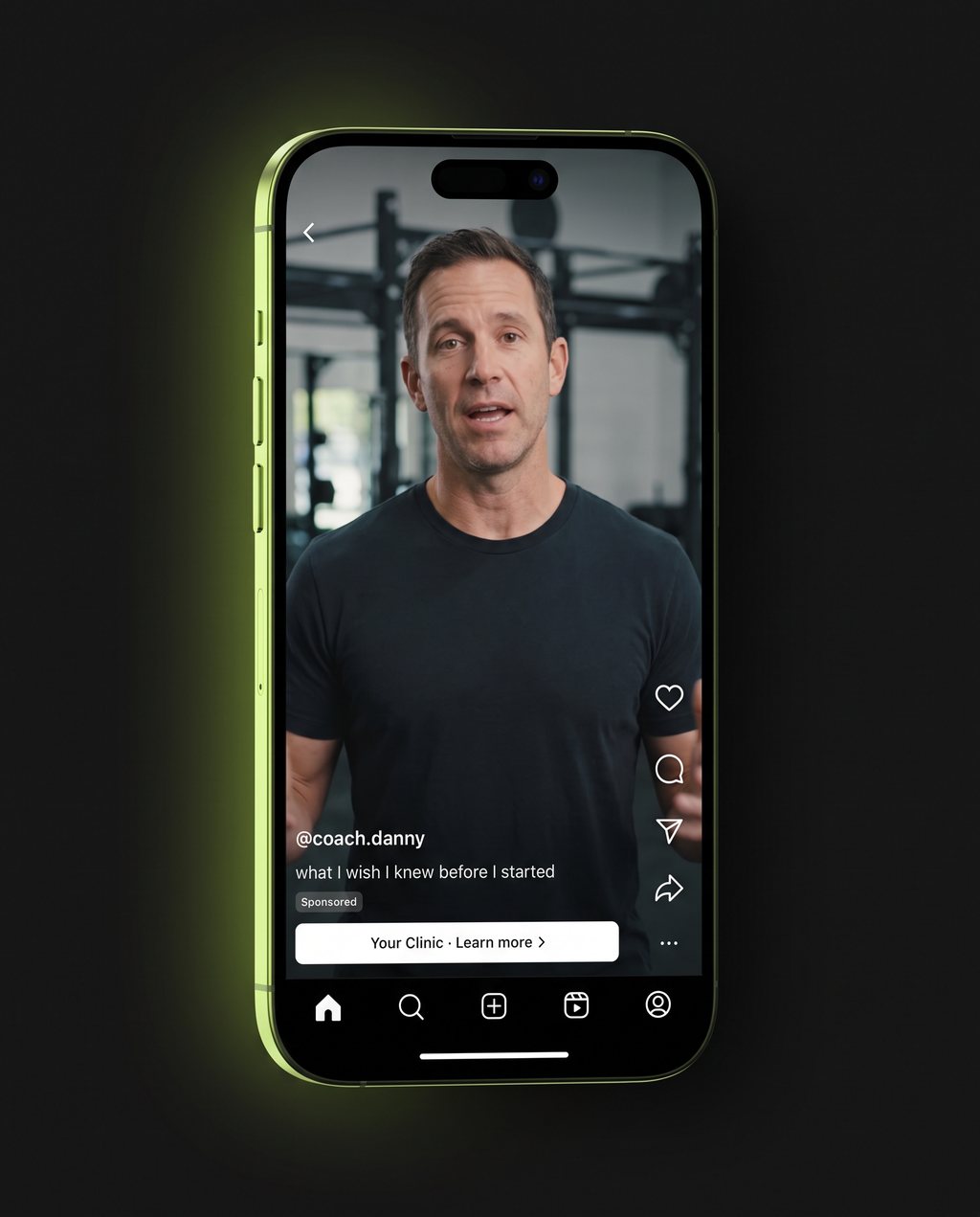
The principal or CIO sits down with a host founders already follow, and with the host's permission a clip then runs as an ad. The talk stays on building companies and patient capital, never on advice for listeners.

What the viewer sees: the host's handle, a Sponsored tag, and your button.
Creator filming a UGC video in a clinic, with the finished ad running from the clinic's own page
Team video

How you invest, explained once.

A videographer films your team explaining what you look for in a company and how a deal with you works, and it runs from your own account. It speaks to founders, never to people looking for an adviser.

What the viewer sees: your office's name, your own team, no partnership label.
The platforms we use

Podcasts and LinkedIn first. Paid reach, sparingly.

A family office shows up on the podcasts and LinkedIn feeds founders choose to follow. Meta carries paid reach only for posts aimed at founders or hires. TikTok treats investment services as restricted branded content, so we leave it out.

Podcasts and YouTube

Guest spots and founder stories

The principal as a guest, or a founder telling their story, on the shows founders already follow. The episode earns its keep as itself, and a clip can run with the host's permission.

  • On YouTube the paid promotion setting goes on for sponsored segments, adding a disclosure label
  • Best for patient capital, operating help and what a first meeting looks like
  • Average paid integration $255, Collabstr 2026

LinkedIn

Brand partnership posts

Anyone paid or gifted for a post uses LinkedIn's brand partnership label, as LinkedIn requires when content is shared in exchange for value. The office's own posts stay on companies and people, never on advice.

  • LinkedIn makes labeled posts publicly searchable, so each one is written to be read by anyone
  • Each post needs the label switched on again, and we check that it is
  • LinkedIn ads are not part of the creator program
Instagram and Facebook

Partnership ads to founders

When a founder's story is worth paid reach, it runs from their account with a Paid partnership label naming your office, aimed at founders in your sectors.

  • Nothing that promotes an investment product, which Meta's financial rules cover
  • Aimed at founders and hires, never at prospective clients
  • Ad rights add about 25 to 30 percent to the post fee per 30 days; creators charge about 39 percent more when ad rights are included ($307 against $221 on average, Collabstr 2025)

How we pick the mix: before the first brief we listen to the shows founders in your sectors follow and read what other direct investors post on LinkedIn, so the first piece adds something new.

What a creator actually costs

Most posts close under $300.

Rate guides quote high. Transaction data does not. Across 21,000 paid collaborations in Collabstr's 2026 report, nearly 80 percent of deals were under $300 and only 2 percent were over $1,000. For a family office the budget is usually small and the list short: a few shows and a few founders. Founders who take nothing still disclose anything of value they receive. Outside creators are paid by you, directly; we never invoice, hold, route or mark up creator money.

Creator sizeFollowersPer post, organicAdd ad rights, 30 daysWho they are
NanoUnder 10,000$150 to $400Plus 25 to 30 percentFounders and operators you invested in, plus founder-focused writers. Where a family office program starts.
Micro10,000 to 100,000$400 to $1,500Plus 25 to 30 percentRegional podcast hosts and business writers with an engaged founder audience.
Mid100,000 to 500,000$2,000 to $5,000NegotiatedNational names. Rarely right for an office that prefers to stay quiet.
CredentialedAny sizeNegotiatedNegotiatedA former operator, CPA or attorney on camera. Only when the topic needs one.

Budget rule: two posts a month with 30-day ad rights runs about $400 to $1,000 per small creator, up to about $3,000 for a larger one. Collabstr's average paid post in 2026 was $193 on Instagram, $186 on TikTok and $255 on YouTube.

What a paid creator post actually costs

Average, 21,000 deals
Instagram$193
TikTok$186
YouTube$255

Source: Collabstr, 2026 Influencer Marketing Report, 21,000 paid collaborations, March 2026.

Where an influencer dollar goes

Industry average
70% creators
30% agency
Paid to creatorsAgency management

Source: ANA, Influencer Marketing Agency Compensation, survey of 84 client-side marketers fielded October to December 2025, reported February 2026. That sample skews to large advertisers, half of them spending over $100 million a year. At PELORA the management fee is fixed at $4,500 a month, so on a small program our share is higher than 30 percent and on a large one it is lower. Either way it sits on its own line of your invoice. Creator fees never appear on it, because you pay creators directly.

Where 21,000 paid deals actually closed, Collabstr 2026

Per post, organic, by creator size

Who gets paid what

YouApprove every creator and every fee before it is paid. You get one invoice from us, for our fee only.
→
PELORA, $4,500The management: find, contract, brief, read, run, report. A fixed monthly fee.
→
Creators, paid by youOutside creators are paid by you. A founder who films for nothing still discloses anything of value. The agreements, briefs and approvals are ours; creator money never passes through us.
What we do for the fee

Six steps. Every post kept in bounds.

We review about 30 accounts for each outside creator we expect to sign, and a family office list is short: founders you backed and the shows they trust. These six steps take it to a post that is live, lawful and aimed at founders, with your counsel reviewing anything near the family office rule.

  1. 1

    Find and vet

    The founders you backed come first, then a small number of hosts. Followers must be real, which the FTC's reviews rule requires, and the audience must be founders and operators. You approve the list before anyone is contacted.

    Week 1
  2. 2

    Negotiate and contract

    Fee or none, deliverables, usage rights and confidentiality, on our standard agreement. Nothing about the family's holdings goes in without the family's approval.

    Week 1 to 2
  3. 3

    Brief

    One story per piece and the founder page it points to. Never: investment advice for the audience, an offer to co-invest, or anything that presents the office as an adviser open to new clients.

    Week 2
  4. 4

    Review, twice

    Nothing posts before two reads, each returned in 48 hours: the disclosure, the audience, and any line that could read as holding out. Anything borderline goes to your counsel.

    Week 2 to 3
  5. 5

    Run it as your ad

    When paid reach helps, the ad is built from the founder's or host's handle on Meta, aimed at founders in your sectors, and pointed at a page for founders.

    Week 2 to 4
  6. 6

    You pay, we report

    You pay outside creators directly; creator money never passes through us. Each month you see how many founder conversations began and which stories began them.

    Monthly

From signed to live

Week 1 to 2Outreach and termsFounders, then a few shows. An outside deal takes about six messages; about one cold message in three gets an answer.
ThenAgreement and briefConfidentiality terms, and a brief that stays on deals and hiring.
ThenTwo review rounds48 hours each: disclosure, audience, anything that reads as holding out.
Week 2 to 4Live, from their handlePermission, ad to founders, founder page. Two to four weeks after signing, most often.
The rules for family offices

No holding out, no outside offers.

The family office rule is why a family office can run without registering as an investment adviser. Creator content is public, so it has to stay inside the rule's conditions.

Family office rule

Do not hold out.

To stay excluded from the Advisers Act, a family office must not hold itself out to the public as an investment adviser. The SEC explained that holding out suggests the office is seeking typical advisory relationships with non-family clients.

Non-public offerings

No marketing outside the family.

In adopting the rule, the SEC said a family office relying on it could not market non-public offerings to persons or entities that are not family clients. A creator pitching a co-investment to their audience would do exactly that.

Multi-family offices

Registered means the Marketing Rule.

An office that serves other families as a registered adviser follows the SEC's Marketing Rule instead: a paid creator who recommends it gives an endorsement, disclosed clearly as paid and as a client or not, under a written agreement above $1,000 a year.

Map of the United States with Newport Beach, California marked
Where we work

Newport Beach office. Family offices anywhere.

We run this from Newport Beach and work remotely with family offices across the United States. Florida offices call us and we do that work. A creator program never needs us in your office.

Creators get sourced where your founders are, by sector more than by city. The family office rule is federal; your counsel's reading of it governs what we build.

CaliforniaFloridaTexasArizonaNevadaColoradoNew YorkAnywhere in the US
Pricing

Included from $14,000. Or added to any tier.

Outside creator fees are yours and paid directly; we never invoice, hold, route or mark up creator money. The prices below are the management: finding, contracting, briefing, reading, running and reporting.

Inside a retainer
Enterprise
$14,000 a month and above, included

Influencer and paid partnership ads, sourced and managed, are part of the Enterprise tier and every tier above it. Creator fees are on top, paid by you directly to each creator.

Creator program
$4,500
a month, attached to any tier

Up to five creators live in any month. Find, vet, contract, brief, two review rounds, run from their handle, monthly report. Creator fees are paid by you, directly.

UGC videos
$5,500
a month for 8 videos

Eight finished creator videos to our brief, with rights for your own channels and your ads. Extra videos $500 to $750 each.

Questions

Asked by family offices.

Can a family office use influencer marketing at all?
Yes, for deal flow and hiring, not for clients. A single-family office keeps its exclusion only if it does not hold itself out to the public as an investment adviser, so creator content speaks to founders and future team members about working with the office.
What does holding out mean for a family office?
Presenting the office to the public as an investment adviser. The SEC said holding out suggests the office is seeking typical advisory relationships with non-family clients, which is inconsistent with the basis for the exclusion. A post that offers the audience investment help risks exactly that.
Can a creator help us raise money for a co-investment?
Not from people outside the family, if you rely on the family office rule. In adopting the rule, the SEC said a family office relying on it could not market non-public offerings to persons or entities that are not family clients. We keep every post off co-investments.
What changes for a multi-family office?
If it is a registered investment adviser, the SEC's Marketing Rule applies. A paid creator who recommends the office is giving an endorsement, which must disclose client status, compensation and material conflicts clearly and prominently, with a written agreement once pay passes $1,000 in 12 months.
Where do family office creators post?
On the podcasts and newsletters founders follow, and on LinkedIn with its brand partnership label, which LinkedIn requires for content shared in exchange for value. Paid reach on Meta is used sparingly, and only for posts aimed at founders or hires.
What does a creator cost?
Under $300 a post for most outside creators, and nothing from founders who choose to film for free. Small accounts charge $150 to $400 and micro accounts $400 to $1,500, with about 25 to 30 percent per 30 days for ad rights. You pay outside creators yourself, never through us.
Who handles the agreement and the payment?
We draft the agreements with their confidentiality terms and approve every post. You pay outside creators directly.
Do you work with family offices outside California?
Yes, nationwide. Newport Beach is our base and the work is remote; family offices in Florida are among those who call us. Your counsel's reading of the family office rule sets the limits we work within.