
Influencer marketing for painting and home services

Old paint changes the script.

For a painter or home service company the creators are homeowners filming the job and local accounts with a following in your county. In a home built before 1978, EPA's lead rule covers offering paint work, not only doing it, so your firm has to be certified. And in California, an unlicensed business may only advertise jobs under $1,000.

Nearly 80%of paid creator posts close under $300, Collabstr 2026
1978homes built before it fall under EPA's lead-safe rule for work that disturbs paint
2xevery post is read twice before it goes live

UpdatedSeptember 26, 2026Lead paint, licensing and FTC rules checked at the sources below

Influencer marketing for painting and home services means homeowners you worked for, and neighborhood creators, filming a real job and run as an ad from their account to the area you serve. The rules that bite are the EPA's and your state's: in housing built before 1978 your firm must be EPA certified to perform, offer or claim to perform work that disturbs paint, in California an unlicensed business can advertise only jobs under $1,000 and must say so, and any guarantee a creator mentions is your written one.

The EPA, state and FTC rules on this page were checked at the source on 26 September 2026. Creator rates are what creators took in real deals, not rate-card asks.
For painters and home services

Who films the job, where, and what they say.

Who the creators are

Your customers, then your county.

Homeowners you painted or repaired for, filming the before, the prep and the finish. Then local home, DIY and neighborhood accounts with a following where your vans go.

Where it runs

Meta to your area, YouTube for how-tos.

Instagram and Facebook partnership ads to the area you serve, and YouTube for the longer prep-and-finish video. TikTok for posts on the creator's own account.

What they can say

EPA, license board, FTC.

Only your real job. A clear paid label, including for a discount. In homes built before 1978, only if your firm is EPA certified. Any guarantee exactly as written, never bigger.

What it looks like

Their living room. Your crew. One label.

Here is how a painter's partnership ad reads. The homeowner is the creator, your company is named in the label, and the opening line answers what neighbors ask before they hire. Handle and company are made up for the example.

OF
@our.first.house
Paid partnership with Your Company · Sponsored
“We hired a painter. Here is what nobody warned us about.”
Get an estimate →
Instagram Reel labeled Paid partnership with Your Business, running from the creator's handle
Three ways to run a creator

Their before and after. Your ad.

A homeowner can post and you run that post as an ad, a neighborhood creator can give you standing permission for a season of jobs, or a creator can film a job to our brief and hand you the video. Single jobs suit single posts; a busy exterior season suits standing permission.

Instagram Reel labeled Paid partnership with Your Business, running from the creator's handle
Meta partnership ad

One job, run from their handle.

The homeowner tags your company as a partner on their before-and-after post and sends a partnership ad code. You run it as an ad from their account to the area you serve.

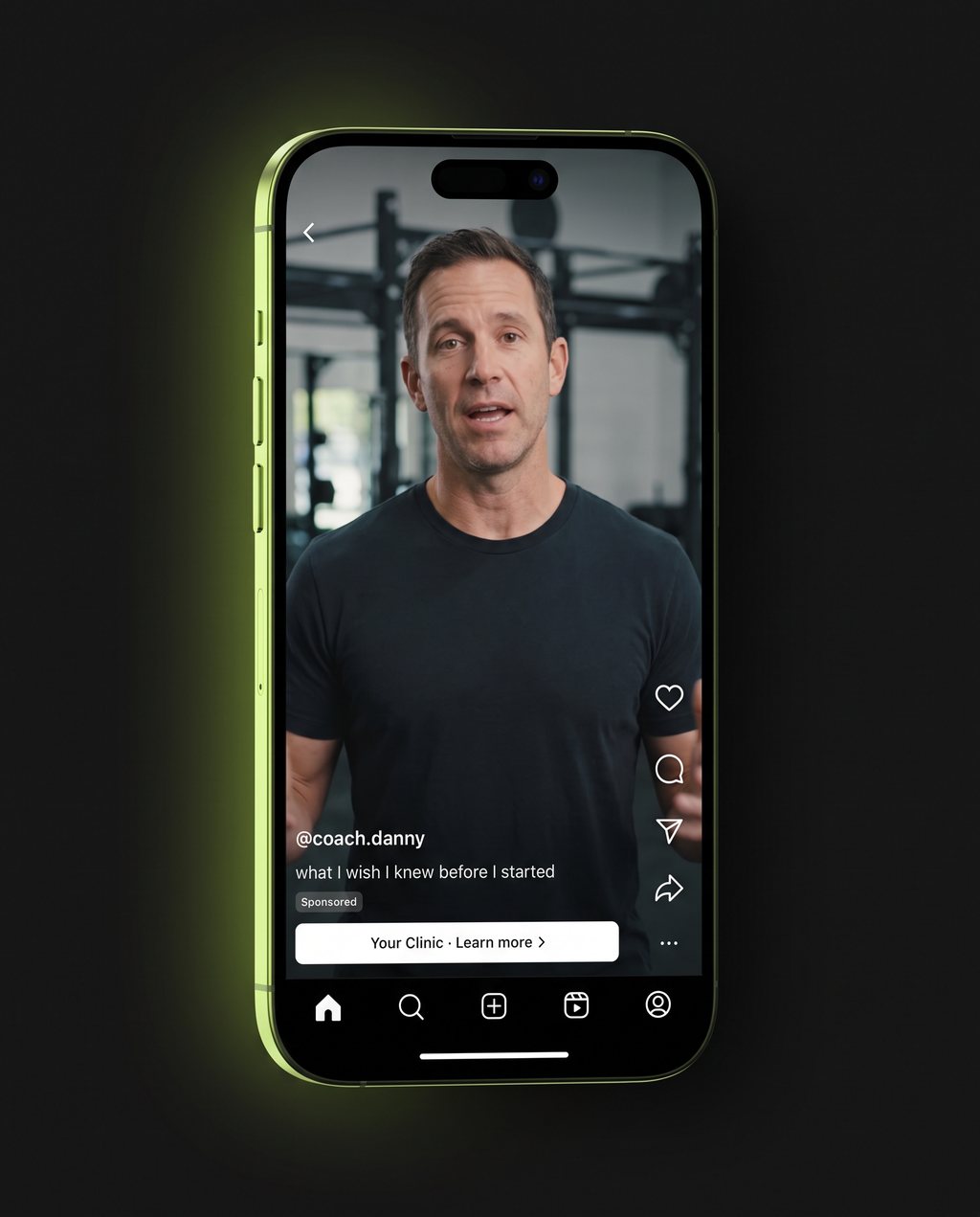
What the viewer sees: the homeowner's name, then "Paid partnership with Your Company," then your button.
Vertical video ad running from a creator's handle, marked Sponsored, with a Learn more button
Standing permission

A season of jobs, one approval.

A neighborhood creator who films several of your jobs grants your page permission once, at account level. Each new job can run as an ad from their handle without a new code, which suits spring and summer exterior work.

What the viewer sees: the creator's handle, a Sponsored tag, and your button.
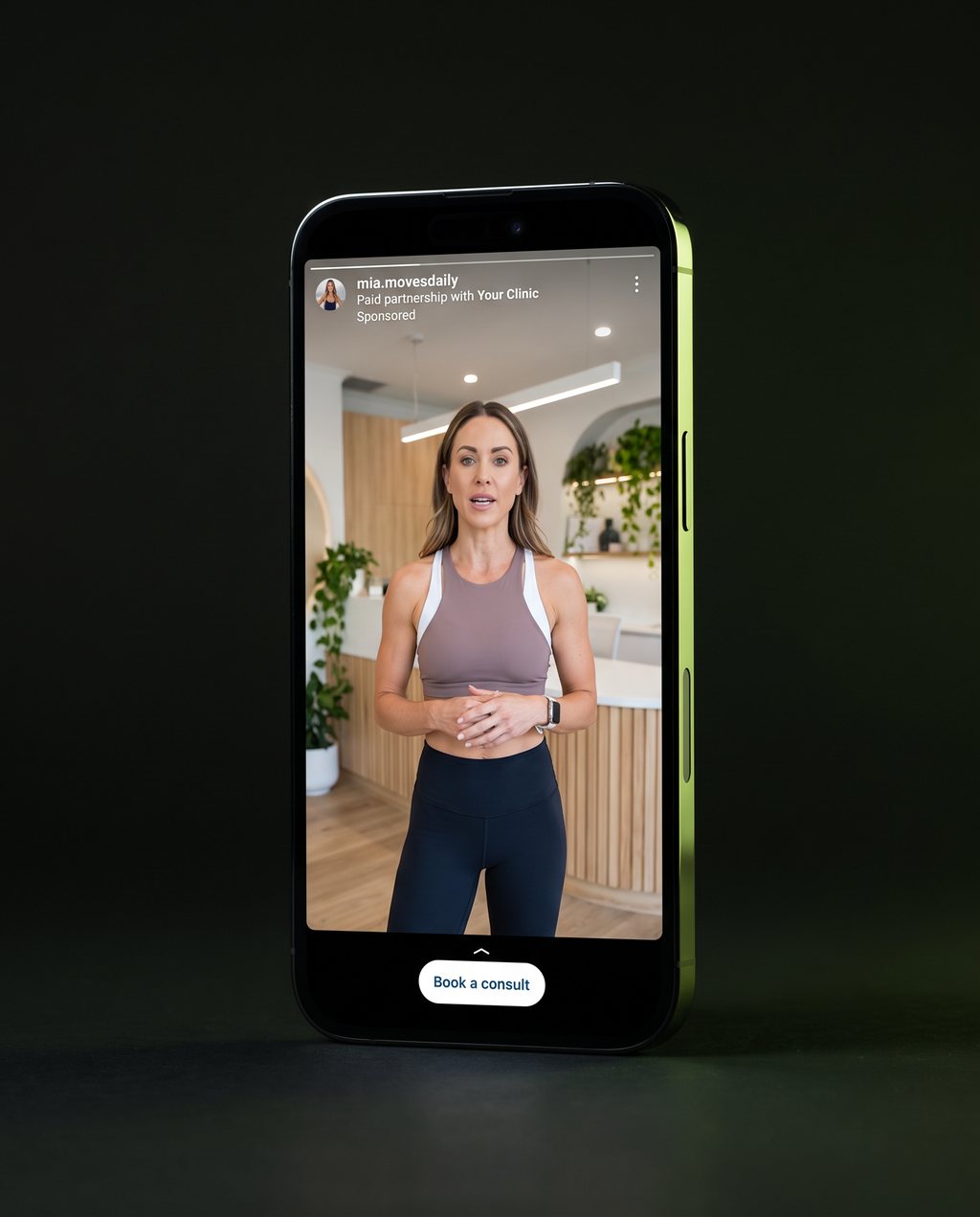
Creator filming a UGC video in a clinic, with the finished ad running from the clinic's own page
UGC video

Prep and finish, for your page.

A creator films your crew's prep, protection and finish to our brief and hands over the video with usage rights for your own account. On a home built before 1978 we only film work done under your EPA firm certification.

What the viewer sees: your company name, a real crew at work, no partnership label.
The platforms we use

Meta and YouTube for ads. TikTok for creator posts.

Meta carries the local ads and YouTube carries the longer explainer. TikTok is for posts on the creator's own account; TikTok ads sit outside the creator program. Here is what each one asks of you.

Instagram and Facebook

Partnership ads

The ad runs from the homeowner's account with a Paid partnership label naming your company, built and targeted in Ads Manager like any campaign.

  • Targeted to the area you actually serve, pointed at an estimate page
  • Your license number goes in the caption where your state requires it
  • Ad rights add about 25 to 30 percent to the post fee per 30 days; creators charge about 39 percent more when ad rights are included ($307 against $221 on average, Collabstr 2025)

YouTube

How-tos and walkthroughs

The long version: why prep takes longer than paint, what a color change involves, how a crew protects the furniture and the floors. Through Google Ads creator partnerships, the video can run as an ad from the creator's own channel, including Demand Gen In-feed and Shorts placements.

  • YouTube's paid promotion setting goes on, adding a disclosure label to the video
  • Best for prep explainers, color consultations and exterior jobs
  • Average paid integration $255, Collabstr 2026
TikTok

Creator posts, organic

Homeowners post on their own TikTok and switch on the commercial content disclosure toggle, which TikTok asks for on any post made for payment or another incentive. TikTok ads are a separate add-on, not part of this program.

  • A discount on the job is an incentive, so the toggle goes on
  • Quick transformations suit TikTok; the full prep story suits YouTube
  • Clips that do well on TikTok can run again as Meta ads, with permission

How we pick the mix: before the first brief we read what painters and home service companies in your county already run in the Meta Ad Library, so the first post starts from your local market, not from a guess.

What a creator actually costs

Most posts close under $300.

Rate guides quote high. Transaction data does not. Across 21,000 paid collaborations in Collabstr's 2026 report, nearly 80 percent of deals were under $300 and only 2 percent were over $1,000. Homeowners often film for money off the job instead of a fee. The FTC treats a discount as a material connection, so that post is labeled as paid too. You pay homeowners and creators directly; we never invoice, hold, route or mark up creator money.

Creator sizeFollowersPer post, organicAdd ad rights, 30 daysWho they are
NanoUnder 10,000$150 to $400Plus 25 to 30 percentHomeowners you worked for, and neighborhood accounts. Where a home services program starts.
Micro10,000 to 100,000$400 to $1,500Plus 25 to 30 percentCounty-level home, DIY and real estate creators with an engaged local audience.
Mid100,000 to 500,000$2,000 to $5,000NegotiatedRegional home and design names. Rarely worth it for one service area.
CredentialedAny sizeNegotiatedNegotiatedA certified renovator, color consultant or home inspector on camera. Only when the job needs one.

Budget rule: two posts a month with 30-day ad rights runs about $400 to $1,000 per small creator, up to about $3,000 for a larger one. Collabstr's average paid post in 2026 was $193 on Instagram, $186 on TikTok and $255 on YouTube.

What a paid creator post actually costs

Average, 21,000 deals
Instagram$193
TikTok$186
YouTube$255

Source: Collabstr, 2026 Influencer Marketing Report, 21,000 paid collaborations, March 2026.

Where an influencer dollar goes

Industry average
70% creators
30% agency
Paid to creatorsAgency management

Source: ANA, Influencer Marketing Agency Compensation, survey of 84 client-side marketers fielded October to December 2025, reported February 2026. That sample skews to large advertisers, half of them spending over $100 million a year. At PELORA the management fee is fixed at $4,500 a month, so on a small program our share is higher than 30 percent and on a large one it is lower. Either way it sits on its own line of your invoice. Creator fees never appear on it, because you pay creators directly.

Where 21,000 paid deals actually closed, Collabstr 2026

Per post, organic, by creator size

Who gets paid what

YouApprove every creator and every fee before it is paid. You get one invoice from us, for our fee only.
→
PELORA, $4,500The management: find, contract, brief, read, run, report. A fixed monthly fee.
→
Creators, paid by youYou pay each homeowner or creator directly, in cash or a documented discount. We paper the deal, brief them and approve the work; we never invoice, hold, route or mark up creator money.
What we do for the fee

Six steps. Every job on camera.

We look at about 30 accounts for each creator we expect to sign, starting with customers you already served. These six steps are the whole road from the idea of using creators to a post that is live, lawful and pointed at an estimate page.

  1. 1

    Find and vet

    Past customers first, then neighborhood creators. We confirm the job on camera was yours, note the year the home was built, and check the audience is real: the FTC's reviews rule bans buying fake followers or views. You see the shortlist before anyone is contacted.

    Week 1
  2. 2

    Negotiate and contract

    Fee or discount, deliverables, usage rights and run time, on our standard agreement. A discount is written down, because it is disclosed.

    Week 1 to 2
  3. 3

    Brief

    One job per post and the estimate page it points to. Never: a pre-1978 home without your EPA firm certification, a guarantee in words other than your written one, or a price the estimate cannot keep.

    Week 2
  4. 4

    Review, twice

    Nothing posts until it is read twice, each round back within 48 hours: the paid label, the license number, the age of the home, and every guarantee or price line.

    Week 2 to 3
  5. 5

    Run it as your ad

    Once the creator grants permission, we build the ad from their handle, aim it at the area you serve, and send it to an estimate page for that service.

    Week 2 to 4
  6. 6

    You pay, we report

    You pay each homeowner or creator directly; creator money never passes through us. Each month you see estimate requests, cost per estimate, and the services and neighborhoods behind them.

    Monthly

From signed to live

Week 1 to 2Outreach and termsPast customers, then neighborhood creators. Deals take about six messages each; roughly a third of cold messages get an answer.
ThenAgreement and briefAny discount in writing, plus a brief with your certification, license number and guarantee wording.
ThenTwo review rounds48 hours each: the label, the license number, the home's age and the guarantee.
Week 2 to 4Live, from their handlePermission, ad, estimate page. Most go live two to four weeks after signing.
The rules for home services

Lead-safe, licensed, and honest about guarantees.

Besides the platform rules, three sets bite on a painter's creator post: EPA's lead rule for older homes, your state's licensing rule, and the FTC's guides on advertising a guarantee.

EPA

Certified for pre-1978 homes.

EPA's rule says no firm may perform, offer or claim to perform renovations in target housing without EPA certification. Target housing is housing built before 1978, with narrow exceptions, and renovation includes work that disturbs painted surfaces, such as sanding and scraping. We treat a creator ad for that work as an offer.

California

Licensed, or say you are not.

An unlicensed business in California may advertise construction work only for jobs under $1,000 in total, and the ad must say it is not licensed. Painting and decorating is its own license class there, C-33.

FTC

Guarantees as written.

The FTC's guides on advertising a guarantee apply to any warranty or guarantee an ad mentions, and an ad that says lifetime should make clear whose life it means. A creator repeats your written guarantee, never a bigger one.

Map of the United States with Newport Beach, California marked
Where we work

Newport Beach office. Home services anywhere.

Newport Beach is home base; the work is remote, for painters and home service companies across the country. Florida companies call us and we do that work. A creator program never needs us at the job.

Creators get sourced where your crews work, because the homeowner in the ad has to live there. EPA runs the lead rule in most states, and 14 states, including North Carolina, Oregon and Wisconsin, run their own EPA-authorized programs. Licensing rules change by state, so we read yours before the first post.

CaliforniaFloridaTexasArizonaNevadaColoradoNew YorkAnywhere in the US
Pricing

Included from $14,000. Or added to any tier.

Creator fees, and any discount you give a homeowner, are yours and paid directly; we never invoice, hold, route or mark up creator money. The prices below are the management: finding, contracting, briefing, reading, running and reporting.

Inside a retainer
Enterprise
$14,000 a month and above, included

Influencer and paid partnership ads, sourced and managed, are part of the Enterprise tier and every tier above it. Creator fees are on top, paid by you directly to each creator.

Creator program
$4,500
a month, attached to any tier

Up to five creators live in any month. Find, vet, contract, brief, two review rounds, run from their handle, monthly report. Creator fees are paid by you, directly.

UGC videos
$5,500
a month for 8 videos

Eight finished creator videos to our brief, with rights for your own channels and your ads. Extra videos $500 to $750 each.

Questions

Asked by painters and home service companies.

How do painting companies use influencer marketing?
Mostly through homeowners they already painted for, filming the job on their own account, run as an ad to the area they serve. Neighborhood creators fill the gaps. Every post is labeled as paid, and on homes built before 1978 the firm needs EPA certification to offer the work.
Do we need EPA lead-safe certification to advertise painting in older homes?
Yes, if the work disturbs paint in housing built before 1978, with narrow exceptions such as most housing for the elderly. EPA's rule says no firm may perform, offer or claim to perform renovations in that housing without certification, and renovation includes sanding and scraping painted surfaces. We confirm your firm certification before any post about an older home.
Can an unlicensed handyman run creator ads in California?
Only for jobs under $1,000, and the ad has to say the business is not licensed. We treat a paid creator post as the business's own advertising, so the same rule applies to it. Work at or above $1,000 needs a licensed contractor behind the ad.
Can we give a homeowner a discount for a video of their job?
Yes, and the post says so. The FTC treats a discount as a material connection that has to be disclosed. The discount pays for the filming, never for a five-star review, which the FTC's reviews rule bars.
Can a creator say our work has a lifetime guarantee?
Only in your written words. The FTC's guides say an ad that uses lifetime should make clear whose life it refers to, and a creator's post you pay for is your ad. We give the creator the exact line from your written guarantee.
What does a creator cost?
Usually less than $300 a post. Small accounts charge $150 to $400 and micro accounts $400 to $1,500, and ad rights add about 25 to 30 percent for each 30 days. A homeowner can take a documented discount instead. You pay creators yourself, after approving each one.
Who handles the agreement and the payment?
We draft the agreement and the brief and approve each post. Payments go straight from you to each homeowner or creator.
Do you work with home service companies outside California?
Yes. We are based in Newport Beach and work remotely with painters and home service companies nationwide, and Florida companies are among those who call us. Before the first post we check your state's licensing and advertising rule.