Describe the care, not the viewer.
Behavioral health ads fail on one sentence more than any other: the one that tells the viewer what they have. Meta allows "Depression counseling" and bans "Depression getting you down?" Google treats mental health counseling as a sensitive category, so the audiences you build yourself are off. And the moment the program treats drug or alcohol addiction, a second set of rules starts. Each line below is quoted, with the date we read it.
For a behavioral health practice, a compliant ad names the service, the setting and who provides it, and never tells the viewer they have a condition. Google closes every audience you build yourself for mental health counseling, so there is no remarketing and no client list. Therapy and psychiatry seen in person need no LegitScript certification. Online prescribing needs it on Google, which lists telemedicine providers as a certified business type, and on Meta only when the ad promotes a prescription drug. Drug and alcohol addiction treatment needs it on both. TikTok prohibits creator posts for therapy and mental health services.
Every rule on this page was read on the platform's or regulator's own page on 26 September 2026. Rules change; the date is on each item.Four rules on every behavioral health ad.
- Offer the care. Never assert the condition. Meta's own examples allow "Depression counseling" and ban "Depression getting you down? Get help now."
- No remarketing, no client list, no lookalike. Google names counseling for depression, anxiety and addiction as a sensitive category, where audiences you build cannot be used.
- LegitScript only if you treat drug or alcohol addiction, prescribe online, or promote a prescription drug. Google's addiction policy says services unrelated to drug and alcohol addiction are out of scope; its drug policy names telemedicine providers as a certified type.
- No creator posts on TikTok. Its Branded Content Policy prohibits therapy and other mental health consulting services.

Five lines that get flagged.
- A question about their mind. Meta bans ads that imply knowledge of a person's physical or mental health. "Struggling with anxiety?" is the shape. "Anxiety treatment for adults, in person or online" is not.
- An audience built from your clients. Google lists Customer Match, your data segments and lookalike segments among the audiences that cannot be used when promoting in a sensitive category. Mental health counseling is one.
- Addiction care without the paperwork. Google restricts recovery-oriented drug and alcohol services to certified advertisers, and Meta requires LegitScript and its written permission. A page that sells detox beside therapy is, in our reading, an addiction services page.
- A pixel on the intake form. HHS says tracking on a page where someone books an appointment or types a reason for care may collect protected health information, and sharing it for marketing without authorization is not permitted.
- A harmful or unproven claim. Google's misrepresentation policy bars harmful health claims and names gay conversion therapy as an example. It also requires a visible no-guarantee disclaimer on any testimonial that claims a specific result.
What Google, Meta and TikTok say about mental health.
Each card quotes the platform's own policy page, read on 26 September 2026. We run this read on every behavioral health ad before it goes live.
Mental health care or addiction treatment: what changes
| Your ad sells mental health care | Your ad sells drug or alcohol treatment | |
|---|---|---|
| No certification for in-person care; telemedicine that prescribes needs LegitScript. Predefined Google audiences only: no remarketing, Customer Match or lookalikes. Keywords are judged one at a time, so we submit and read the verdict. | LegitScript's Addiction Treatment Certification, then Google's own certification. The policy covers treatment providers, sober living, referral agencies and crisis hotlines. | |
| Meta | No permission needed to promote the practice or telehealth generally; promoting a prescription drug needs LegitScript and Meta's authorization. The copy names the service, never the viewer's condition. | LegitScript certification and written permission from Meta, for in-person, online and hotline services. |
| TikTok | No creator posts for therapy or mental health consulting. We do not run TikTok ads for behavioral health. | The same, and TikTok's ad policy bars any depiction of drug use. |
| What it costs | No certification fee. | LegitScript: $1,395 to $1,595 per facility to apply, then $2,550 to $3,095 per facility a year, lower at higher facility counts. Individual practitioners: $535 to apply, then $1,070 a year. Expedited review is $2,500 more. |
| Privacy | A HIPAA marketing authorization before any client story. No ad pixel that sees who booked or why. | All of that, plus 42 CFR Part 2, which covers current and former patients of a federally assisted addiction program. |
Platform lines read on each platform's own page on 26 September 2026. LegitScript fees as our pages state them, from LegitScript's addiction treatment certification page, checked 25 September 2026. LegitScript sets and changes them, so confirm the current figure before you apply.
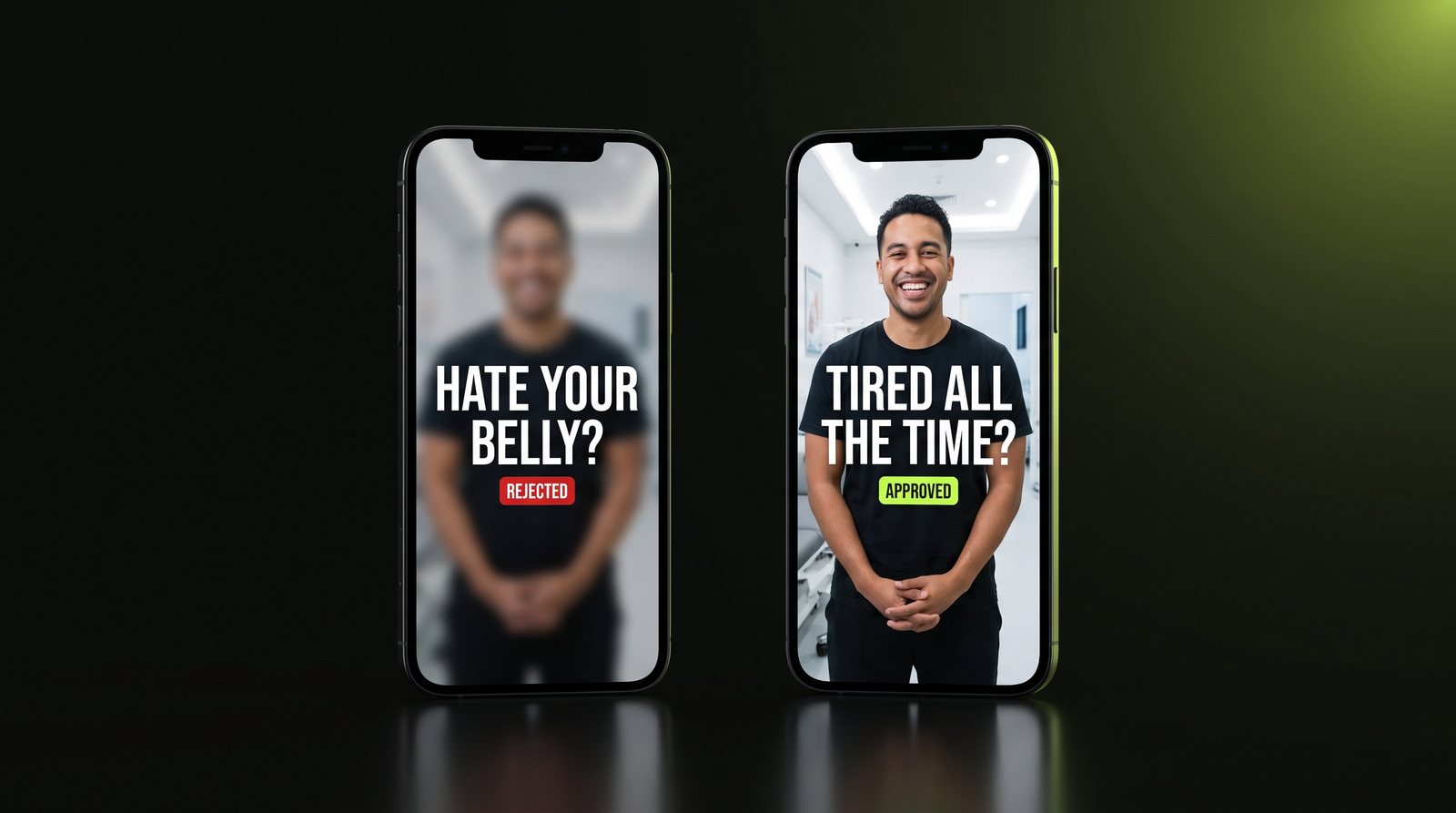
The same rule, one line apart.
The two phones show a weight loss ad, but the rule behind them decides most behavioral health ads. Meta bans copy that implies it knows a person's physical or mental health. In our category the pair reads "Anxiety treatment for adults, in person or online" against "Is anxiety running your life?"
Same service, same clinician, same page. The approved version describes what you offer. The rejected one describes the reader. The phones are an illustration, not a client's account.
Every behavioral health post, read by a person.
No tool removes the compliance read. Every ad and every post is read by a person against Meta's personal attributes rule, Google's sensitive category rules and, for addiction services, both platforms' certification rules, two rounds, before it runs. Anything that names a prescription gets a drug-ad review, which is why a creator program for prescription products adds $1,000 a month.
- ClaimsNo cure, no guarantee, no timeline for recovery. An outcome number only with its source beside it.
- ConsentA written HIPAA marketing authorization from every client shown, separate from consent to treatment, on file with the ad.
- AudiencePredefined Google audiences and broad targeting only. We never upload a client list for ad targeting.
- The pageNo ad pixel on the intake or booking form. HHS gives a reason for care typed into a booking form as an example of protected health information.

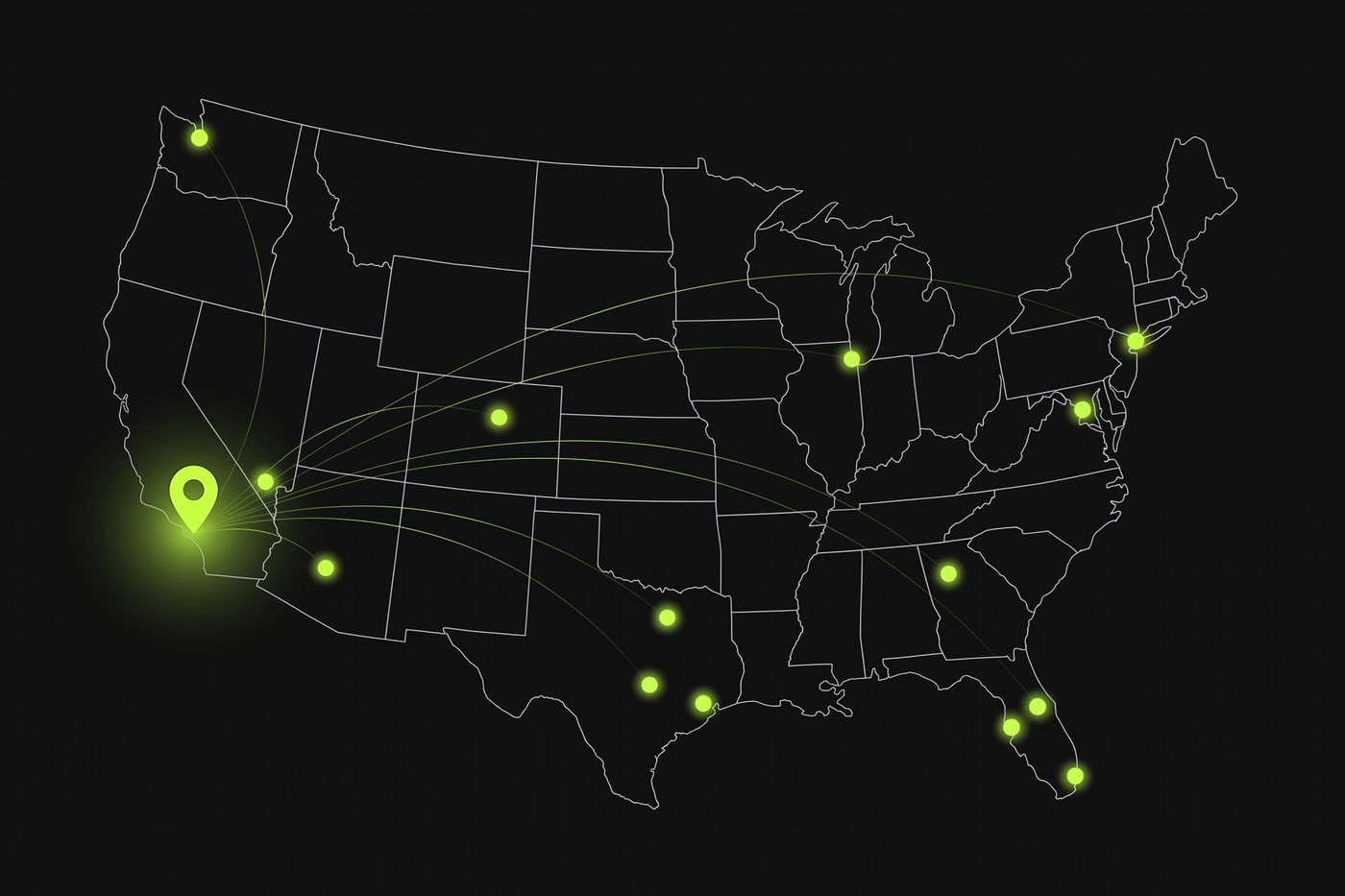
Newport Beach office. Clients anywhere.
Platform rules are national; license, privacy and telehealth rules are state by state. DEA's telehealth flexibilities for prescribing controlled medications run through December 31, 2026, so an online psychiatry ad promises only what the prescriber's license and that rule allow. We run this from Newport Beach and work remote with practices across the United States.
Get the account read first.
Fifteen minutes. Bring the ad that got rejected, or the intake page you are unsure about. We will tell you which line did it and what runs instead.
Asked by behavioral health practices.
Can a mental health practice run Google Ads?
How do we write Facebook and Instagram ads for therapy that get approved?
Do we need LegitScript for a behavioral health practice?
Can we retarget people who visited our website?
Can creators post about our practice on TikTok?
Can a former client share their story in an ad?
Do you work with behavioral health practices outside California?
Sources, all read on September 26, 2026: Google Ads, Health in personalized advertising, Personalized advertising, Addiction services, Healthcare and medicines, Unreliable claims; Meta Transparency Center, Privacy Violations and Personal Attributes (change log Jun 26, 2024) and Drug and Alcohol Addiction Treatment; TikTok Branded Content Policy (effective August 31, 2026) and Dangerous Products or Services (April 2025); FTC release on BetterHelp, March 2, 2023; HHS, Use of Online Tracking Technologies by HIPAA Covered Entities and Business Associates; 45 CFR 164.508; 42 CFR 2.11; DEA release of December 31, 2025. LegitScript fees checked September 25, 2026.