Alumni are still patients.
Addiction treatment is the one health category where Google, Meta and federal law all name the business model. Google and Meta want LegitScript before an ad runs. The FTC can seek civil penalties for deceptive treatment and referral marketing. Federal and state kickback laws reach how referrals are paid. And under 42 CFR Part 2, a patient is still a patient after discharge. Each line below is quoted, with the date we read it.
For an addiction treatment center, a compliant ad runs only after LegitScript Addiction Treatment Certification and Google's certification or Meta's written permission. It names the levels of care you are licensed for, never promises recovery, and never presents your own line as an independent referral service. Alumni appear only with written consent that covers 42 CFR Part 2, and no referral source is ever paid per patient.
Every rule on this page was read on the platform's or regulator's own page on 26 September 2026. Rules change; the date is on each item.Four rules on every treatment center ad.
- Certified before it runs: LegitScript, then Google's own certification and Meta's written permission for Facebook and Instagram.
- The license writes the copy. Name only the levels of care you are licensed or certified for, in the states where you are.
- Nothing per referral. Federal law bars paying to induce a referral to a recovery home or clinical treatment facility, and Florida's patient brokering law reaches any health care provider.
- Alumni are patients. 42 CFR Part 2 covers former patients, so an alumni story runs only with written consent.

Five ways it goes wrong.
- No certification on file. Google lets only advertisers it has certified promote recovery-oriented drug and alcohol services, and Meta requires LegitScript and its written permission. Without them the ad does not run.
- A helpline that hides who answers. The FTC's first case under the Opioid Addiction Recovery Fraud Prevention Act was against a network that promised callers an expert-vetted match. The FTC alleged the owner deciding membership had no qualifying experience.
- A referral paid by the head. For services covered by a health care benefit program, federal law sets a fine of up to $200,000, up to 10 years in prison, or both, for each occurrence of paying to induce a referral to a recovery home or clinical treatment facility.
- A face without the right consent. Part 2 defines a patient to include "both current and former patients." An alumni video tells the viewer the person was treated, which is why we handle it as a disclosure.
- A promise of recovery. The FTC can seek civil penalties for deceptive practices about any substance use disorder treatment service, which the law defines to include treatment, referrals and recovery housing.
What Google, Meta and the FTC say about treatment ads.
Each card quotes the rule's own page, read on 26 September 2026. We run this read on every treatment center ad, page and alumni story before it goes live.
Your own program or a referral line: what changes
| Your ad sells your own program | Your ad routes callers to others | |
|---|---|---|
| LegitScript and Google certification, and only the levels of care you are licensed for. | The same certification, since the policy names lead generators and referral agencies. Google says services LegitScript will not certify are not allowed to advertise. | |
| Meta | LegitScript and Meta's written permission, for in-person, online and hotline services. | The same. Meta's policy lists hotlines and groups that give information about treatment. |
| FTC | Civil penalties are available for deceptive claims about any substance use disorder treatment service. | The law's definition includes referrals. R360 promised an expert-vetted network; the FTC alleged no qualified expert chose the centers. |
| Kickbacks | Federal law's employee exception holds only when pay does not vary with the number of people referred. | No commission, bonus or split fee to induce a referral. Florida's law says so for any person, including providers and facilities. |
| What it costs | LegitScript, per facility: $1,395 to $1,595 to apply, then $2,550 to $3,095 a year, lower at higher facility counts. Expedited review is $2,500 more. | Individual practitioners: $535 to apply, then $1,070 a year. Not every referral or lead service is eligible for certification. |
Platform and FTC lines read on each source's own page on 26 September 2026. LegitScript fees as our pages state them, from LegitScript's addiction treatment certification page, checked 25 September 2026. LegitScript sets and changes them, so confirm the current figure before you apply.
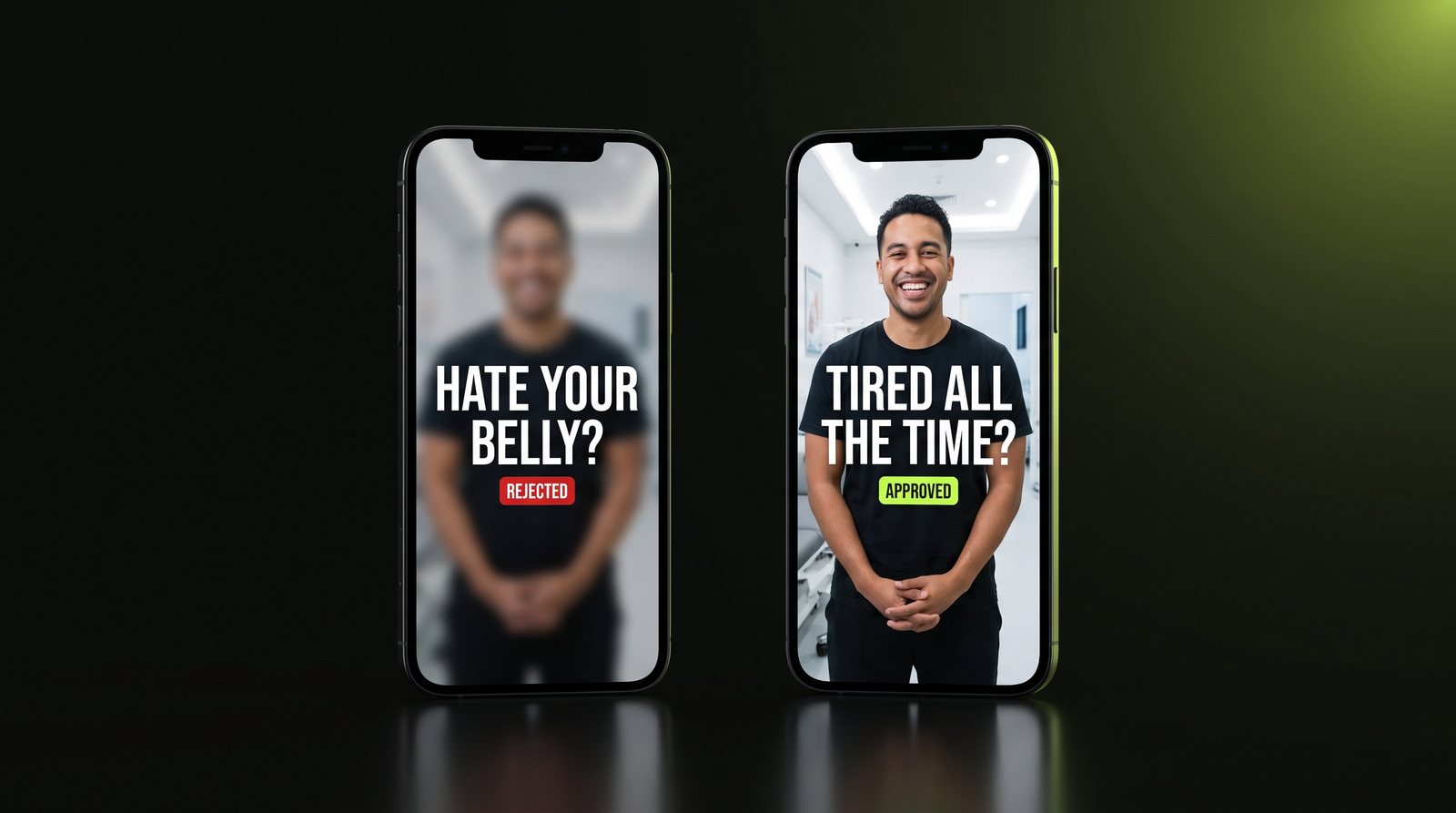
Describe the program, not the person.
The two phones show a weight loss ad, but the rule behind them, Meta's ban on copy that implies it knows a person's health, decides treatment ads too. "Is drinking ruining your life?" tells the viewer what they have. "Medically supervised detox and outpatient care for alcohol use" tells them what you offer.
Same center, same page, same phone number. One line is about the person and one is about the program. The phones are an illustration, not a client's account.
Every treatment center post, read by a person.
No tool removes the compliance read. Every ad, landing page and alumni story is read by a person against Google's and Meta's certification rules, the FTC's recovery fraud law and your license, two rounds, before it runs. Anything that names a medication for opioid or alcohol use disorder gets a drug-ad review, which is why a creator program for prescription products adds $1,000 a month.
- ClaimsNo cure, no success rate without its source, no promise of lasting recovery.
- ConsentWritten consent from every alum or family member shown, reviewed by your counsel for HIPAA and 42 CFR Part 2, on file with the ad.
- ReferralsNo ad that presents your line as an independent helpline. The number reaches your admissions team, and the ad says whose it is.
- The pageThe levels of care and the states you are licensed for, named on the page and matching what LegitScript certified.


Newport Beach office. Clients anywhere.
Platform rules are national; licensing and patient brokering laws are state by state. Florida makes it unlawful for any person, including a health care provider or facility, to pay or receive a commission, bonus or split fee for a referral. Preston Durnford built and ran Epic Journey Recovery, so this work comes from the operator's side of the phone. We run it from Newport Beach and work with centers across the United States.
Get the account read first.
Fifteen minutes. Bring the ad Google or Meta rejected, or the certification you are waiting on. We will tell you what is holding it and what you can do while you wait.
Asked by treatment centers.
Can a treatment center run Google Ads?
Can a rehab advertise without LegitScript?
What does LegitScript cost for a treatment center?
Can alumni appear in our ads?
Can we pay for referrals or leads?
Can we mention Suboxone or naltrexone in our ads?
Do you work with treatment centers outside California?
Sources, all read on September 26, 2026: Google Ads, Healthcare and medicines, Addiction services and the prescription drug list; Meta Transparency Center, Drug and Alcohol Addiction Treatment, Privacy Violations and Personal Attributes, and the Business Help Center page on prescription drugs; FTC, Opioid Addiction Recovery Fraud Prevention Act of 2018 and the R360 release of May 2022; 18 U.S.C. 220; Florida Statutes 817.505; 42 CFR 2.11; 45 CFR 164.508. LegitScript fees checked September 25, 2026.