Sell the drip, not the cure.
IV therapy sits between wellness and medicine, and each platform draws the line in a different place. Hydration, vitamins and the visit can be advertised. A cure for a hangover or a named disease cannot. Some of what goes in the bag, like ondansetron or ketorolac, is a prescription drug name Google lets you say but not bid on. And in Texas, a 2025 law sets who may order and who may give the drip. Each line below is quoted, with the date we read it.
For an IV therapy business, a compliant ad sells hydration, vitamins and the visit to adults 18 and older, names the clinicians involved, and never claims to cure a hangover or a disease. Prescription drug names in the bag can appear in Google ad copy but are not keywords without certification. On TikTok, creators cannot promote the service. In Texas, the 2025 IV law decides who may order and who may give the drip.
Every rule on this page was read on the platform's or regulator's own page on 26 September 2026. Rules change; the date is on each item.Four rules on every drip ad.
- 18-plus on Meta. Ads for health products and services must target adults.
- No cure, for a hangover or a disease. FDA warned seven companies in 2020 over supplements that claimed to cure, treat, mitigate or prevent hangovers.
- Drug names in the copy, not the keywords. Ondansetron, Zofran and ketorolac are on Google's prescription drug list.
- A clinician in the picture. Texas's 2025 law sets who may order and who may give elective IV therapy outside a physician's office.

Five lines that get flagged.
- A hangover cure. FDA's 2020 letters went to companies whose products, labeled as dietary supplements, claimed to cure, treat, mitigate or prevent hangovers, and called them unapproved new drugs. In our reading the same words on a drip menu invite the same question, so we keep them off.
- A drug named as a keyword. Ondansetron, Zofran and ketorolac are on Google's prescription drug list. In the US they can appear in ad text; bidding on them needs certification.
- A disease claim. Meta bans claims to cure, heal or eliminate an exhaustive list of diseases, including diabetes, thyroid and cancer. Claims about managing symptoms are carved out.
- An audience built from customers. Google counts invasive medical procedures, including injections, as sensitive health content. In our reading an IV is one, so remarketing and Customer Match are off.
- A promised feeling on a clock. TikTok's ad policy does not allow before-and-after results, and Meta's clickbait rule bars promising a specific outcome in a set timeframe without a qualifier.
What Meta, Google, FDA and Texas say about drips.
Each card quotes its source's own page, read on 26 September 2026. We run this read on every drip ad and menu before it goes live.
Wellness drip or treatment claim: what changes
| Your ad sells hydration and the visit | Your ad names a drug or a condition | |
|---|---|---|
| Meta | 18-plus. The drip, the ingredients by name, the setting and the clinician. No outcome on a timeline without a qualifier. | No cure, heal or eliminate claim for a named disease. Promoting a prescription drug needs Meta's authorization, which is limited to online pharmacies, telehealth providers and manufacturers. |
| No certification. Keywords on the service and the place; in the live campaign we wrote up publicly, IV therapy and IV hydration terms with a city passed. | Prescription drug names in the ad copy only. As keywords, they need certification. | |
| TikTok | Ads for medical institutions may be allowed for adults. No creator posts. | No ads for drugs for enhancement or performance; prescription drug ads need regulator approval, such as FDA's. |
| Texas | Elective IV therapy outside a physician's office follows the 2025 law's delegation rules. | The same, and the ad names who orders and who gives it. |
| FDA | Hydration and vitamins described as they are. | FDA called the 2020 hangover products, labeled as dietary supplements, unapproved new drugs for claiming to cure, treat, mitigate or prevent hangovers. In our reading the same claim on a drip is a drug claim. |
Platform lines read on each platform's own page on 26 September 2026; FDA and Texas sources read the same day. IV rules differ by state, so we read yours before the first ad.
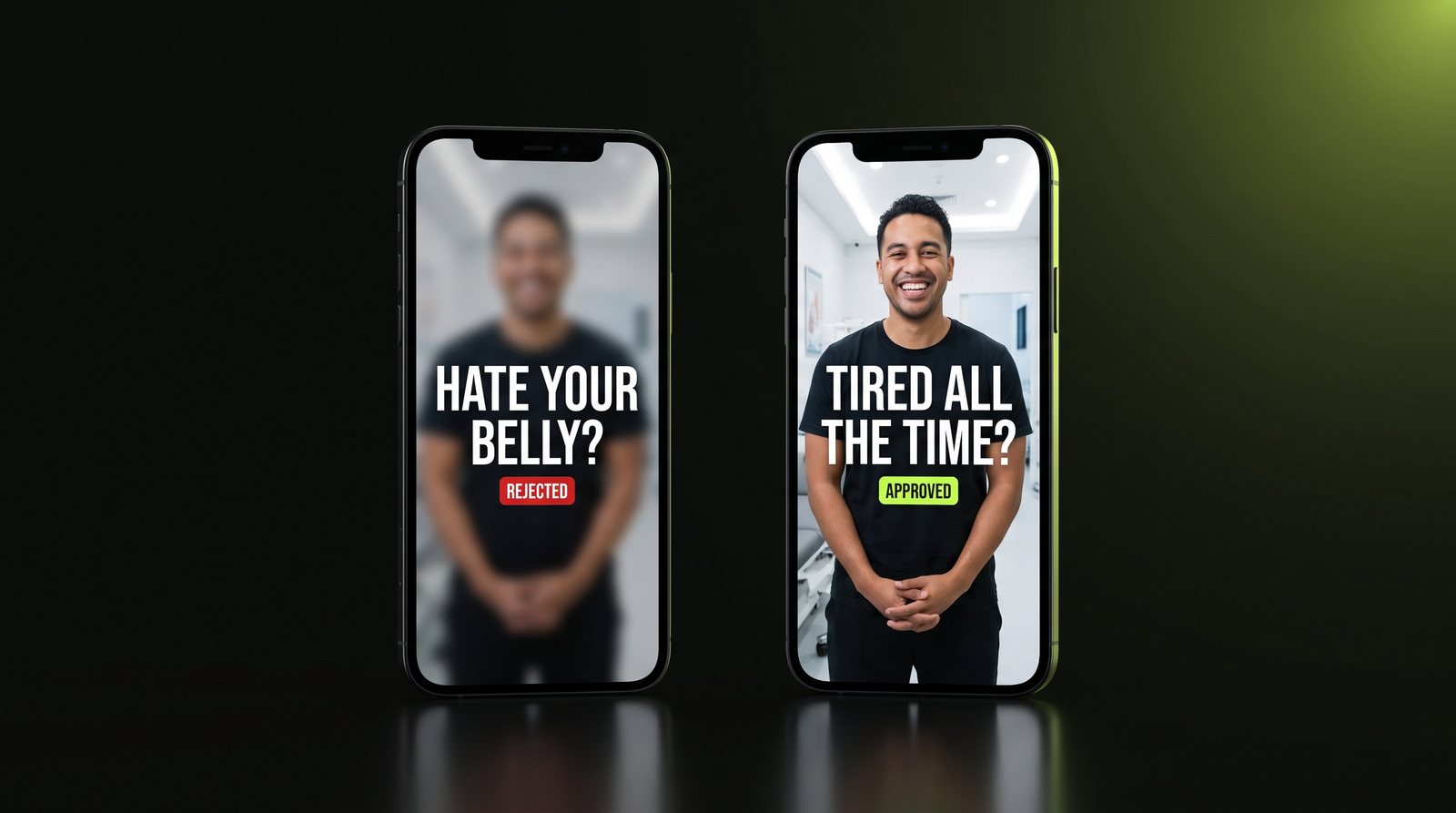
Feel-good, without the promise.
The two phones show a weight loss ad, and the rule behind them, Meta's ban on copy that attacks or assumes something about the viewer's body, applies to drips too. "Hungover and useless?" is about the person. "Hydration and B vitamins, given by a registered nurse" is about the visit.
Same menu, same price. The approved line works because it describes what a drip is, not what it cures. The phones are an illustration, not a client's account.
Every drip ad, read by a person.
No tool removes the compliance read. Every ad, menu and creator post is read by a person against Meta's health rules, Google's drug list, TikTok's rules and your state's IV rules, two rounds, before it runs. Anything that names a prescription drug in the bag gets a drug-ad review, which is why a creator program for prescription products adds $1,000 a month.
- ClaimsNo cure, no immunity, no detox promise. The ingredients, the time it takes and the price.
- ConsentA written marketing authorization from every client shown, separate from treatment consent.
- CliniciansEvery clinician named with the license they hold, including who orders the drip.
- The pageThe drip menu names each ingredient and marks which ones need a prescription.

Newport Beach office. Clients anywhere.
Platform rules are national; IV rules are state by state, and Texas's Jenifer's Law is among the newest. We read yours before the first ad. We run this from Newport Beach and work remote with IV businesses across the United States.
Get the account read first.
Fifteen minutes. Bring the drip ad that got rejected, or the menu you want to promote. We will tell you which line did it and what runs instead.
Asked by IV therapy businesses.
Can IV therapy businesses run Facebook and Instagram ads?
Can we advertise IV therapy as a hangover cure?
Can we run Google Ads for IV therapy?
Can we name NAD+ or glutathione in our ads?
Can influencers promote our drip bar on TikTok?
Does Texas's IV law affect our ads?
Do you work with IV therapy businesses outside California?
Sources, all read on September 26, 2026: Meta Transparency Center, Health and Wellness (change log Jul 22, 2026) and the Business Help Center page on prescription drugs; Google Ads, Restricted drug terms, the prescription drug list and Health in personalized advertising; TikTok Branded Content Policy (effective August 31, 2026), Healthcare and Pharmaceuticals (September 2026), Dangerous Products or Services (April 2025) and Misleading and False Content (April 2026); FDA constituent update of July 29, 2020 on hangover products; Texas H.B. 3749, enrolled text; our published write-up of a September 15, 2026 Google refusal, Why did Google reject my hormone and testosterone keywords?