A drip bar is easy to film: the chair, the nurse, the bag, the walk out. The trouble starts in the caption. The FTC's first IV therapy case was about disease and fast, lasting results, and Texas now defines elective IV therapy as care for temporary discomfort and temporary wellness. That is the lane a creator stays in.
2018the year of the FTC's first action against an IV cocktail marketer
18+Meta's age rule for ads for health products and services
UpdatedSeptember 26, 2026FTC, Texas, Meta and TikTok rules read at the sources listed at the bottom
Influencer marketing for an IV therapy clinic or drip bar means local creators, nurses and clients filming the visit, run as Meta partnership ads from their accounts to adults and pointed at a booking page. The claims stay small: hydration, how the visit felt, how easy it was to book. No disease, no cure, no immunity promise, and nothing on TikTok, which bans creator posts for medical treatments.
FTC, Texas, Meta and TikTok lines on this page read at the source on 26 September 2026. Creator rates are what creators actually accepted, not rate-card asks.
For IV therapy and drip bars
Who films, where it runs, what they can claim.
Who the creators are
Clients, nurses, local regulars.
Clients filming their visit, your nurses explaining what happens in the chair, and local fitness, event and travel creators whose audience lives near your lounge or your service area.
Where it runs
Meta and YouTube. Not TikTok.
Instagram and Facebook partnership ads to adults in your area, and YouTube for the visit start to finish. TikTok prohibits branded content for medical treatments, and an IV drip is one.
What they can say
How it felt, not what it cured.
Hydration, the visit, the nurse, the time it took. No disease, no cure, no fast or lasting results, no immunity promise, and never a drip framed as treatment for being sick.
What it looks like
Race weekend. Your drip bar. One label.
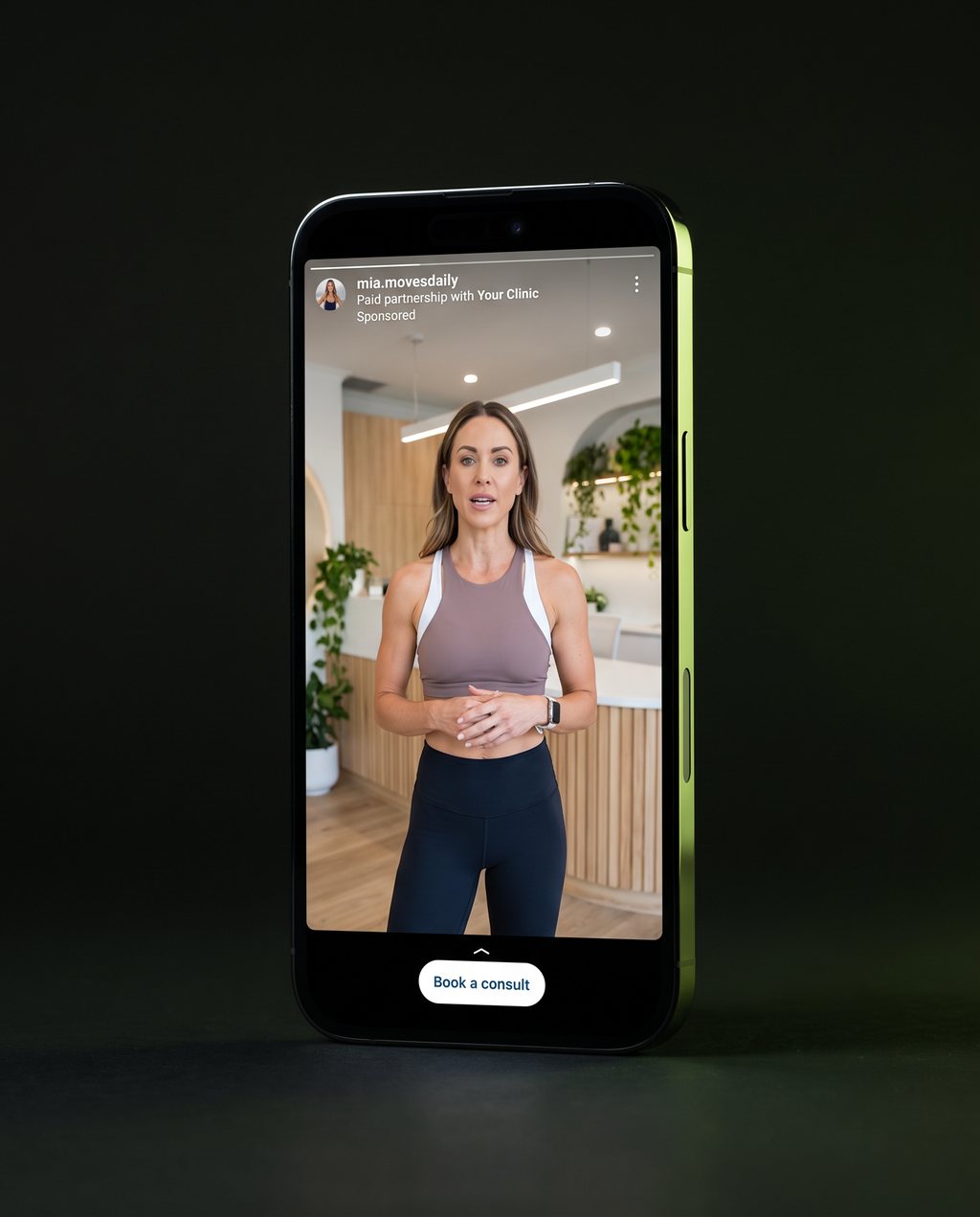
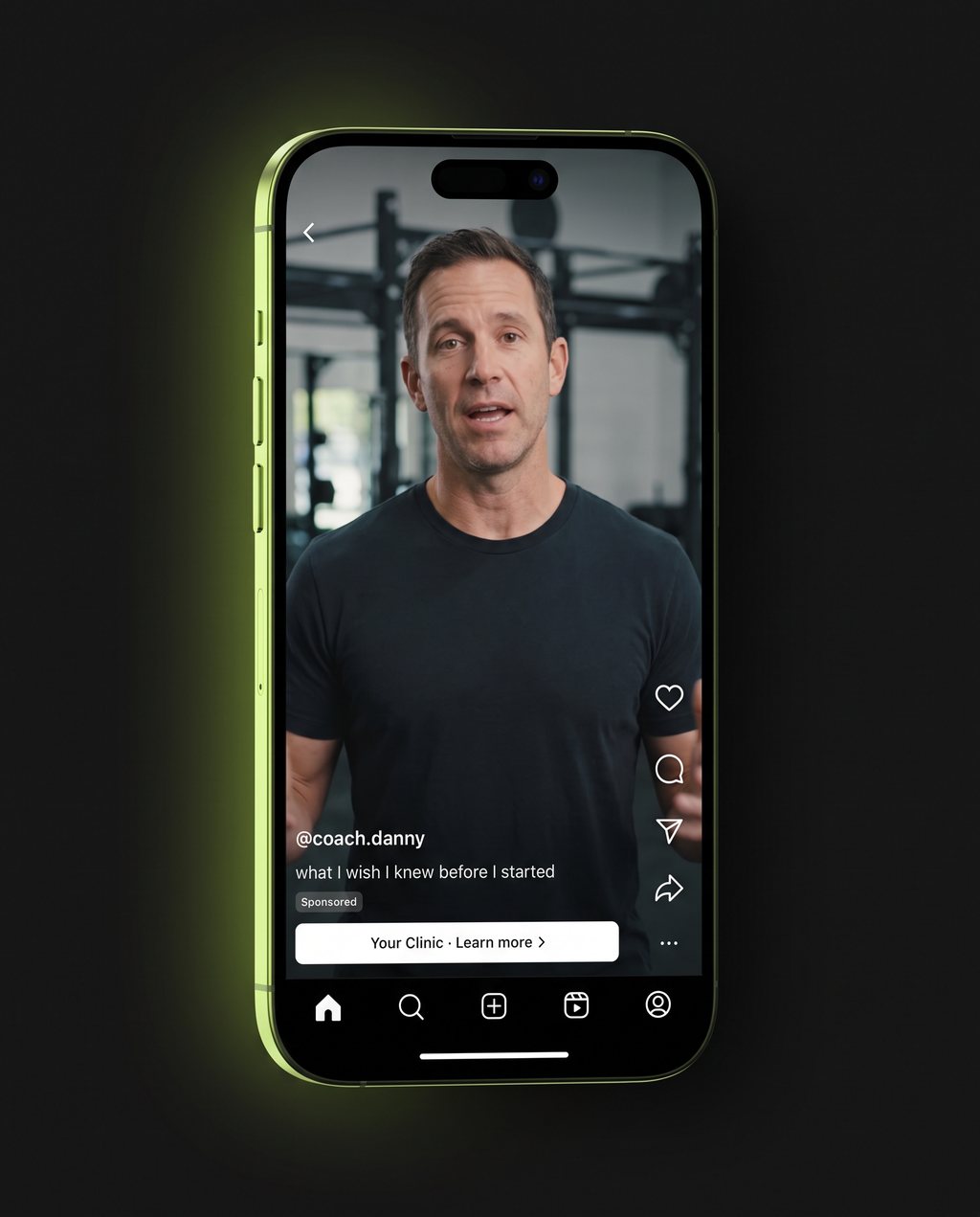
This is the shape of a partnership ad for a drip bar. The creator films the visit from check-in to walk-out, the label names your business, and the caption talks about the experience, not a result. The handle and the business here are examples, not clients.
KT
@kai.trains.oc
Paid partnership with Your Drip Bar · Sponsored
“Race weekend, filmed from check-in to walk-out.”
Book a visit →
Three ways to run a creator
Their visit. Your ad.
A client can post and you run that post as an ad, a regular can give you standing permission, or a creator can film for your page only.
Meta partnership ad
The visit, run from their handle.
The client tags your business as a partner and sends a partnership ad code. You run that post as an ad from their account to adults near your location, pointed at a booking page.
What the viewer sees: the client's name, then "Paid partnership with Your Business," then your button.
Standing permission
The regular, on repeat.
A regular who posts about each visit grants your page permission once, at account level. New visits can run as ads without a new code, each read before it runs for the same small claims.
What the viewer sees: the regular's handle, a Sponsored tag, and your booking button.
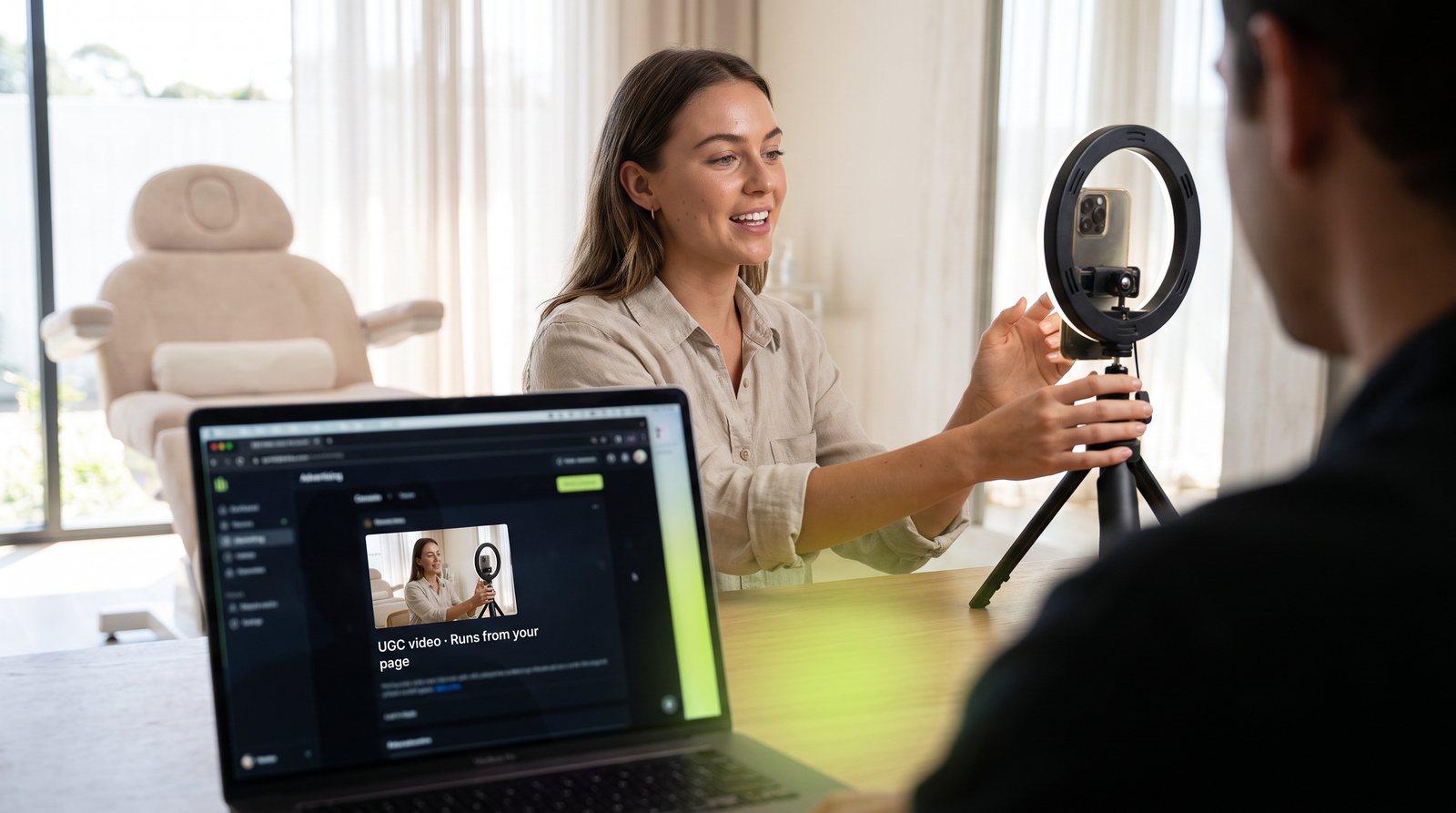
UGC video
Shot in your lounge, for your page.
A creator films your space, your nurse and a visit to our brief and hands you the video with usage rights. It runs from your own account, and anyone acting as a client rather than being one is labeled that way.
What the viewer sees: your business name, a real visit, no partnership label.
Where it runs
Meta for bookings. YouTube for the visit.
Meta carries the paid reach, YouTube shows the whole visit, and TikTok is off the list for this category. Here is what each asks of an IV business.
Instagram and Facebook
Partnership ads to adults
The ad runs from the creator's account with a Paid partnership label naming your business. Meta requires ads for health products and services to target people 18 and older, and bars claims to cure the diseases on its incurable list.
Permission once at account level in Business Suite, or per post with a partnership ad code
Book-a-visit copy, never treat-your-illness copy
Ad rights add about 25 to 30 percent to the post fee per 30 days; creators charge about 39 percent more when ad rights are included ($307 against $221 on average, Collabstr 2025)
YouTube
The whole visit, filmed
Check-in, the nurse's questions, the chair and the walk out, as a Short or a longer walkthrough. YouTube requires paid videos to follow Google Ads policies, with some exceptions.
Paid promotion switched on, so YouTube opens the video with a disclosure label
An adult age limit on every branded video
Average paid integration $255, Collabstr 2026
TikTok
Not for drip bars
TikTok's Branded Content Policy prohibits creator posts for "Any medical institutions, treatments or devices". An IV drip is a medical treatment, so paid, gifted and affiliate posts about it are out.
No free drip in exchange for a TikTok post, and no affiliate code
No Spark Ads or TikTok Shop; neither is offered for IV businesses
The same client can post the same visit to Instagram and YouTube
How we pick the mix: we read the Meta Ad Library for drip bars and mobile IV in your area once before the first brief, so the first post starts from what nearby businesses already run.
What a creator actually costs
Most posts close under $300.
Rate guides quote high. Transaction data does not. Across 21,000 paid collaborations in Collabstr's 2026 report, nearly 80 percent of deals were under $300 and only 2 percent were over $1,000. A drip bar can pay creators partly in visits. The FTC counts a free service as a material connection, so a creator paid in drips discloses exactly like one paid in cash. You pay creators directly; we never invoice, hold, route or mark up creator money.
Creator size
Followers
Per post, organic
Add ad rights, 30 days
Who they are
Nano
Under 10,000
$150 to $400
Plus 25 to 30 percent
Clients, nurses, local runners and event regulars. Where a drip bar program starts.
Micro
10,000 to 100,000
$400 to $1,500
Plus 25 to 30 percent
City-level fitness, travel and wellness creators with an adult audience.
Mid
100,000 to 500,000
$2,000 to $5,000
Negotiated
Regional names. Rarely worth it for one or two locations.
Credentialed
Any size
40 to 60 percent above tier
Negotiated
An NP, RN or physician on camera explaining the visit and who should not book one.
Budget rule: two posts a month with 30-day ad rights runs about $400 to $1,000 per small creator, up to about $3,000 for a larger one. Collabstr's average paid post in 2026 was $193 on Instagram, $186 on TikTok and $255 on YouTube.
Source: ANA, Influencer Marketing Agency Compensation, survey of 84 client-side marketers fielded October to December 2025, reported February 2026. That sample skews to large advertisers, half of them spending over $100 million a year. At PELORA the management fee is fixed at $4,500 a month, so on a small program our share is higher than 30 percent and on a large one it is lower. Either way it sits on its own line of your invoice. Creator fees never appear on it, because you pay creators directly.
Where 21,000 paid deals actually closed, Collabstr 2026
Nearly 80%under $300
$301 to $1,000
2%over $1,000
Per post, organic, by creator size
Nanounder 10,000
$150 to $400
Micro10,000 to 100,000
$400 to $1,500
Mid100,000 to 500,000
$2,000 to $5,000
$0$5,000
Who gets paid what
YouApprove every creator and every fee before it is paid. You get one invoice from us, for our fee only.
Creators, paid by youYou pay each creator directly, in cash or documented visits, per post, never per patient. We paper the deal, brief the creator and approve the work; we never invoice, hold, route or mark up creator money.
What we do for the fee
Six steps. Every visit on camera.
We scope the search at about 30 accounts for every one we expect to sign, and for a drip bar the first cut is whether a creator has ever sold IV drips as a cure. This is the work between "we should use creators" and a post that is live, legal and pointed at a booking page.
1
Find and vet
Clients and regulars first, then local creators. We read past posts for cure, detox or hangover-cure promises, check the audience is real and nearby, and you see the shortlist before anyone is contacted.
Week 1
2
Negotiate and contract
Cash, visits or both, written down as payment, plus deliverables, usage rights and how long you can run it. A client on camera signs a written authorization before their visit appears in your ads.
Week 1 to 2
3
Brief
One moment per post and the booking page it points to. Never: a disease, a cure, fast or lasting results, an immunity or detox promise, or a drip framed as treatment for being sick.
Week 2
4
Review, twice
Each post gets two reviews before it goes live, 48 hours per round: the disclosure, the age setting, and every word that turns a visit into a treatment claim.
Week 2 to 3
5
Run it as your ad
We ask for permission and build the ad from their handle on Meta, targeted to adults near your location or service area, and pointed at a booking page that names who supervises the drips.
Week 2 to 4
6
You pay, we report
You pay each creator directly. We never invoice, hold, route or mark up creator money. We report bookings, cost per booking, and which creators and neighborhoods brought them.
Monthly
From signed to live
Week 1 to 2Outreach and termsClients and regulars first. About six message rounds per deal; reply rates on cold outreach average about a third.
ThenAgreement and briefCash or visits written down as payment, the client's authorization, and the claims a drip post cannot make.
ThenTwo review rounds48-hour turnaround each. Disclosure, age setting and every health word.
Week 2 to 4Live, from their handlePermission requested, ad built, pointed at a booking page. Most creators go live two to four weeks after signing.
The rules for IV therapy
Small claims, named supervision.
IV therapy is a medical procedure sold like a wellness treat, and the rules sit on the medical side. These three lines shape every brief we write for this category.
FTC
The first IV case was about cures.
In 2018 the FTC brought its first action against an "iV Cocktail" marketer, over claims that drips treated serious diseases and produced fast, lasting results. The order bars disease claims without competent and reliable scientific evidence.
Texas
Temporary wellness, by law.
Texas's Jenifer's Law, in effect since September 1, 2025, defines elective IV therapy as care sought "to alleviate symptoms of temporary discomfort or improve temporary wellness" and requires physician supervision. We use that line as the claims guide in every state.
Texas Medical Board
Say who supervises.
Texas Medical Board rules count it as misleading advertising to leave out medical directorship or supervision at a location that is not the physician's primary practice, where care runs on standing orders and protocols. So in Texas the ad and the booking page name the supervising physician.
We run this from Newport Beach and work remote with IV clinics, drip bars and mobile IV teams across the United States. We get calls from Florida and we do that work. A creator program never needs us in your lounge.
Creators get sourced where your chairs or your vans are, because a drip is booked close to home. What changes by state is who may order and give a drip and under whose supervision. Texas wrote its rules into law in 2025, and we read your state's before the first post.
CaliforniaFloridaTexasArizonaNevadaColoradoNew YorkAnywhere in the US
Pricing
Included from $14,000. Or added to any tier.
Creator fees, and any visits you give creators, are yours and paid directly; we never invoice, hold, route or mark up creator money. The prices below are the management: finding, contracting, briefing, reading, running and reporting.
Inside a retainer
Enterprise
$14,000 a month and above, included
Influencer and paid partnership ads, sourced and managed, are part of the Enterprise tier and every tier above it. Creator fees are on top, paid by you directly to each creator.
Creator program
$4,500
a month, attached to any tier
Up to five creators live in any month. Find, vet, contract, brief, two review rounds, run from their handle, monthly report. Creator fees are paid by you, directly. Prescription products add $1,000 a month.
UGC videos
$5,500
a month for 8 videos
Eight finished creator videos to our brief, with rights for your own channels and your ads. Extra videos $500 to $750 each.
No. TikTok's Branded Content Policy prohibits branded content for "Any medical institutions, treatments or devices", and an IV drip is a medical treatment, whether the creator is paid in cash, in free drips or on an affiliate code. The same creator can post the same visit to Instagram, Facebook and YouTube.
What can a creator say about an IV drip?
How the visit felt, what happened in the chair and how easy it was to book. The FTC's first IV therapy case, in 2018, was over claims that drips treated serious diseases and gave fast, lasting results, so a creator never names a disease, a cure or a lasting effect.
Can a creator say a drip cures a hangover or boosts immunity?
No. Those are health claims, and the FTC generally expects randomized, controlled human clinical testing behind a health benefit claim. A creator can say they came in after a long race weekend and felt looked after; the claim about what the drip fixed stays out.
Can we pay a creator in free drips?
Yes, if the post says so. The FTC counts free products and services as a material connection, and one the audience would not expect has to be disclosed, so a creator paid in visits carries the same paid label as one paid in cash. We write the visits into the agreement like a fee.
What changed for IV therapy in Texas?
Jenifer's Law took effect on September 1, 2025. It covers elective IV therapy given outside a physician's office or licensed facility, and lets a physician delegate ordering it to a PA or APRN, and giving it to a PA, APRN or RN, only under adequate physician supervision. Texas Medical Board rules also expect an ad to disclose supervision at a site that is not the physician's primary practice, where care runs on standing orders and protocols.
Do mobile IV services need anything different?
The same claims rules, plus an honest service area. The ad targets the area you actually serve, the booking page names who supervises the drips, and in Texas the law covers drips given outside a physician's office or licensed facility, which is where a mobile visit happens.
What does a creator cost for a drip bar?
Most paid creator posts close under $300. Small accounts run $150 to $400 a post, micro accounts $400 to $1,500, and ad rights add about 25 to 30 percent per 30 days. You can pay partly in visits, written down and disclosed. You pay creators directly, never through us.
Do you work with IV clinics outside California?
Yes. We run this from Newport Beach and work remote with IV clinics, drip bars and mobile IV teams across the United States, and we get calls from Florida. Creators come from your service area, and we read your state's IV rules before the first post.