Leave biohacking out of it.
Longevity clinics sell measurement and medicine, and the ad rules treat those two halves very differently. Labs, scans and fitness testing read as services. Metformin, rapamycin and peptides read as drugs. And one word, biohacking, is a named example in Google's ban on speculative and experimental treatment. Each line below is quoted, with the date we read it.
For a longevity clinic, a compliant ad sells the assessment, the clinician and the plan, and never promises to slow, stop or reverse aging. The word biohacking stays out, because Google names it as speculative treatment. Prescription drugs such as metformin or sirolimus can be named in Google ad copy but not bid on. Anti-aging stem cell claims have drawn an FDA warning letter, and audiences you build yourself are closed on Google.
Every rule on this page was read on the platform's or regulator's own page on 26 September 2026. Rules change; the date is on each item.Four rules on every longevity ad.
- No biohacking, on any surface. Google names it as an example of speculative and experimental treatment it does not allow.
- Measure, do not promise. Labs, scans and testing as services; no claim to slow, stop or reverse aging.
- Drug names in copy, not keywords. Metformin and sirolimus are on Google's prescription drug list.
- No anti-aging cell therapy. Google bars stem cell promotion, and FDA's February 2026 letter quoted a company's anti-aging stem cell page.

Five lines that get flagged.
- The word biohacking. Google lists "Biohacking" first among examples of speculative or experimental treatments it does not allow. A warning comes at least 7 days before any suspension.
- An anti-aging cell claim. FDA's February 11, 2026 warning letter to a stem cell company quoted its page: "Anti-aging isn't the only amazing thing stem cell therapy can do..." and the disease claims that followed, from knee pain to cardiovascular disease and arthritis.
- A drug named as a keyword. Metformin and sirolimus are on Google's prescription drug list. In the US they can appear in ad text; bidding on them needs certification.
- A cure for a named disease. Meta bans claims to cure, heal or eliminate an exhaustive list of diseases that includes Alzheimer's, Parkinson's, diabetes and cancer, even from health professionals.
- A younger-looking promise. Meta's own not-allowed example of a personal attribute is "Ready to upgrade your skin to look younger?"
What Google, Meta and FDA say about longevity.
Each card quotes its source's own page, read on 26 September 2026. We run this read on every longevity ad and the page behind it before it goes live.
What you measure or what you prescribe: what changes
| Your ad sells assessment and testing | Your ad sells a drug, peptide or protocol | |
|---|---|---|
| No certification. Keywords on the test and the place. Audiences you build yourself are closed. | Drug names in the ad text only; as keywords, certification. Nothing framed as biohacking or experimental. | |
| Meta | 18-plus as a health service. No line that implies the viewer looks or feels old. | Promoting a prescription drug needs LegitScript and Meta's authorization, limited to online pharmacies, telehealth providers and manufacturers. |
| TikTok | Medical institution ads may be allowed for adults. No creator posts. | No ads for drugs for enhancement or performance. |
| FDA | Describe the test and what it measures. | No anti-aging cell or exosome product: FDA says there are no approved exosome products. |
| Claims | "Know your numbers" describes a service. | "Add ten years" is an outcome promise, and we do not write it. |
Platform and FDA lines read on each source's own page on 26 September 2026. Drug lists are examples, not complete lists, so a term missing from one is not cleared by its absence.
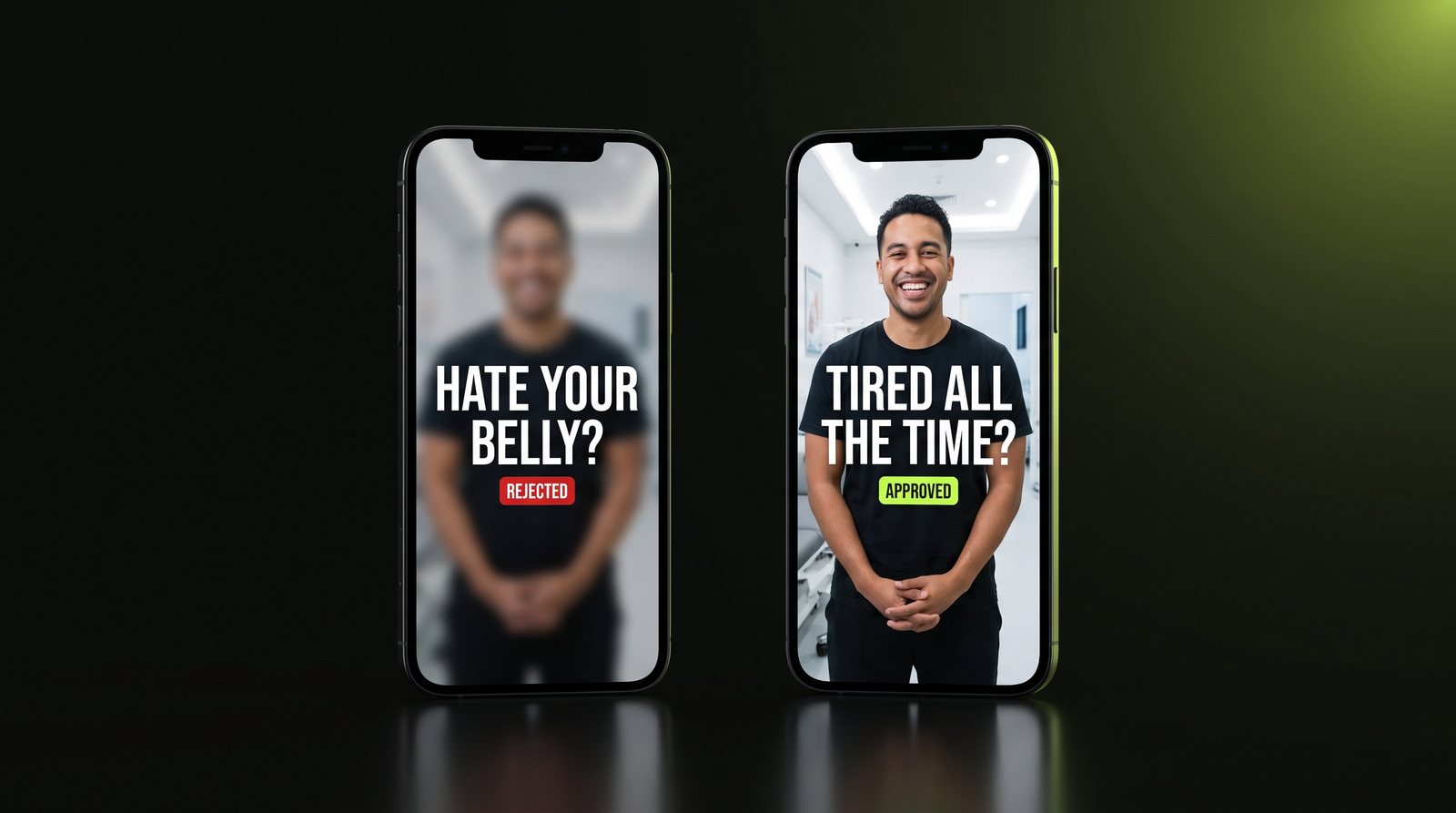
Curious, not afraid.
The two phones show a weight loss ad, but the rule behind them is the one longevity ads trip most: Meta bans copy that implies it knows a person's age or health. Its own not-allowed example is "Ready to upgrade your skin to look younger?" "A full health assessment with a physician, labs included" describes a visit instead.
Same clinic, same page. The approved line invites curiosity instead of fear, and makes no promise about years. The phones are an illustration, not a client's account.
Every longevity post, read by a person.
No tool removes the compliance read. Every ad and every page is read by a person against Google's speculative treatment policy, its drug list, Meta's claims rules and FDA's current lists, two rounds, before it runs. Prescription protocols get a drug-ad review, which is why a creator program for prescription products adds $1,000 a month.
- ClaimsNo slow, stop, reverse or extend. What is measured, by whom, and what happens next.
- WordsNo biohacking, experimental or cutting-edge treatment framing, on the ad or the page.
- DrugsNamed in copy only when prescribed, never as a keyword without certification.
- The pageThe page one click away is read too, including the booking menu. In our reading, a banned service listed there travels with the ad.


Newport Beach office. Clients anywhere.
Platform rules are national; prescribing and telehealth rules are state by state. We read yours before the first ad. We run this from Newport Beach and work remote with clinics across the United States.
Go deeper.
Get the account read first.
Fifteen minutes. Bring the ad that got rejected, or the protocol page you want to promote. We will tell you which word did it and what runs instead.
Asked by longevity clinics.
Can a longevity clinic run Google Ads?
Can we say biohacking in our ads?
Can we advertise rapamycin or metformin?
Can we make anti-aging claims?
Can we promote NAD+ or peptides?
Can creators promote our longevity clinic on TikTok?
Do you work with longevity clinics outside California?
Sources, all read on September 26, 2026: Google Ads, Speculative and experimental medical treatment, Restricted drug terms, the prescription drug list and Health in personalized advertising; Meta Transparency Center, Health and Wellness (change log Jul 22, 2026), Privacy Violations and Personal Attributes, and Drugs and Pharmaceuticals; TikTok Dangerous Products or Services (April 2025) and Branded Content Policy (effective August 31, 2026); FDA warning letter to Dynamic Stem Cell Therapy (February 11, 2026); FDA Public Safety Notification on Exosome Products; FDA list of bulk substances with potential safety risks (current as of April 22, 2026).