Influencer marketing for beverage and product brands

What is in the can sets the rules.

Beverage creators sell a moment, but the rules follow the can: what you call the drink, what the label says about sugar, and whether alcohol is anywhere near it. On TikTok even an alcohol-free spirit counts as alcohol, so a creator's post about it is shown only to US viewers 21 and over.

Nearly 80%of paid creator posts close under $300, Collabstr 2026
21+TikTok's US age gate for creator posts about alcohol-free alternatives, the same as for alcohol
2xevery post is read twice before it goes live

UpdatedSeptember 26, 2026FDA, platform and industry code rules checked at the sources below

Influencer marketing for beverage brands means many creators filming the drink in a real moment, each on a personal code, with the winners run as ads from their accounts. Three things decide the script: what you call the product decides whether FDA treats it as a beverage or a supplement, a zero sugar line has label conditions behind it, and anything alcohol, including zero-proof alternatives on TikTok, is for audiences 21 and over.

FDA, platform and industry code rules on this page were read at the source on 26 September 2026. Creator rates are what creators actually took, not rate-card asks.
For beverage brands

Who pours it, where, and what they say.

Who the creators are

Taste, not testimony.

Cooks, hosts, coffee people, taste testers and fitness creators for functional drinks, each on a personal code. For cocktails and zero-proof, adults who look it and whose audience is too.

Where it runs

Meta for ads, TikTok by category.

Instagram and Facebook partnership ads carry the paid reach. On TikTok most soft drinks, coffees and sparkling waters sit on neither of its branded content lists; alcohol and zero-proof are gated to 21 and over.

What they can say

What the label says.

The same name and claims as the can. Zero sugar only with the label's conditions. No health claim a beverage cannot make, and a paid label on every post, free cases included.

What it looks like

Their table. Your drink. One label.

This is the shape of a partnership ad for a beverage. The creator is a real taste tester, the label names your brand, and the hook is the flavor, not a health promise. Handle and brand are illustrations only.

MT
@marco.taste.tests
Paid partnership with Your Brand · Sponsored
“Tried every flavor so you can skip the bad ones.”
Find it near you →
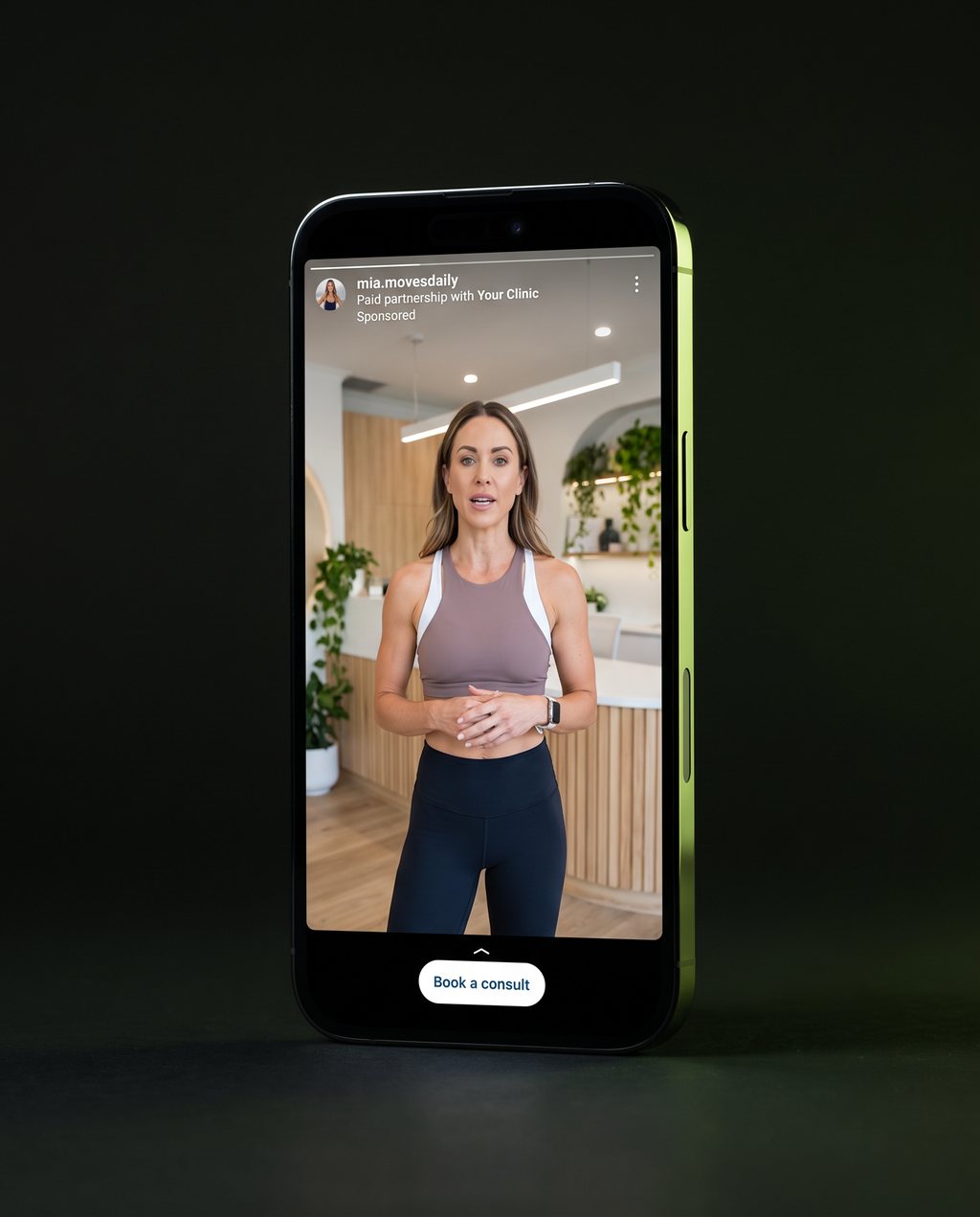
Instagram Reel labeled Paid partnership with Your Business, running from the creator's handle
Three ways to run a creator

Their pour. Your ad.

A beverage program can run all three at once: a creator's best post as your ad, standing permission from the creators who sell the most, and UGC for your own page. New flavors are the rhythm, so the cheaper formats carry most of the testing.

Instagram Reel labeled Paid partnership with Your Business, running from the creator's handle
Meta partnership ad

One post, run from their handle.

The creator tags your brand as a partner and sends a partnership ad code. You run that post as an ad from their account. For an alcohol product, Meta limits US ads to people 21 and over.

What the viewer sees: the creator's name, then "Paid partnership with Your Brand," then your button.
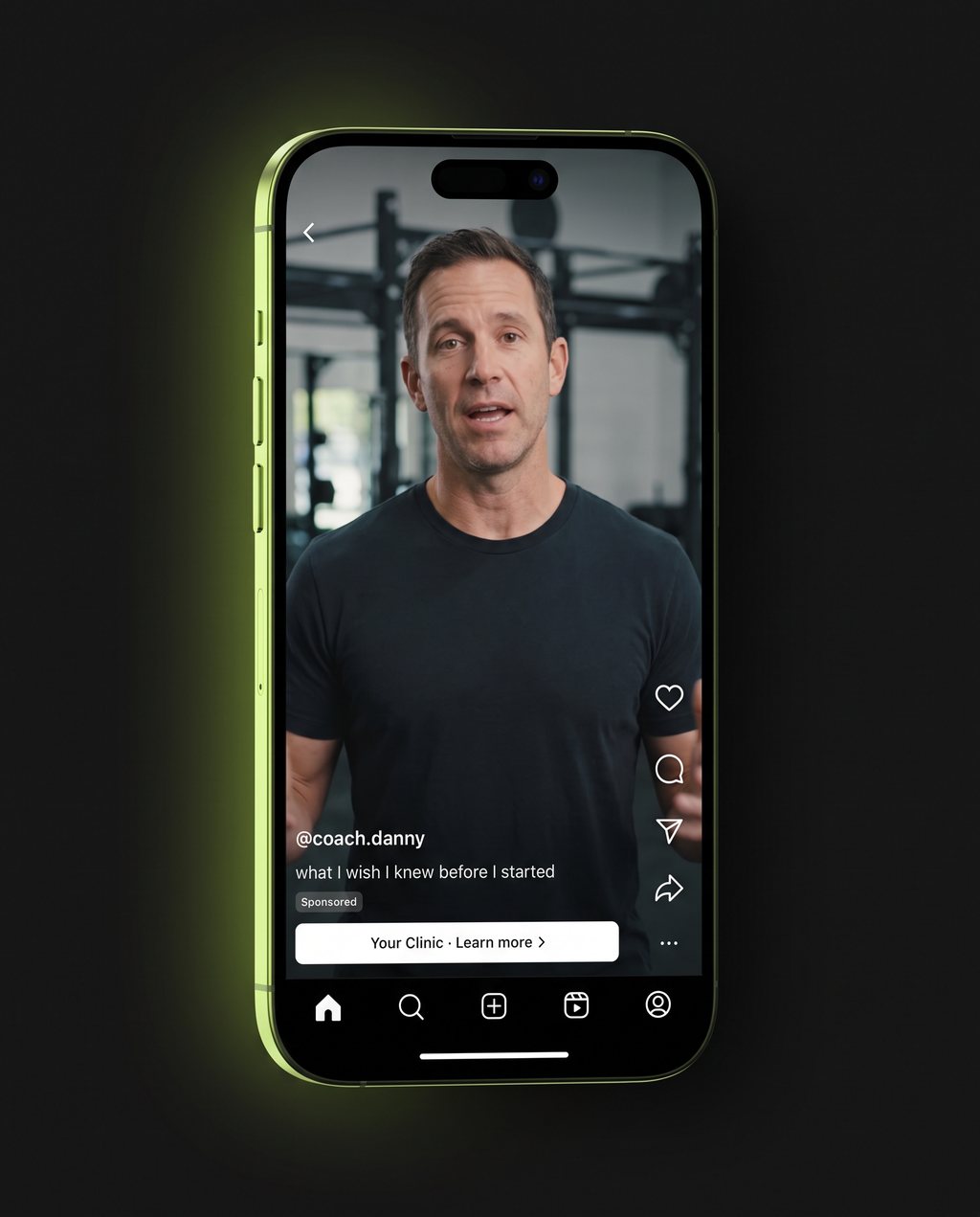
Vertical video ad running from a creator's handle, marked Sponsored, with a Learn more button
Standing permission

Every new flavor, one approval.

A creator whose posts sell grants your page permission once, at account level. Each new flavor or seasonal can then runs from their handle without a new code.

What the viewer sees: the creator's handle, a Sponsored tag, and your button.
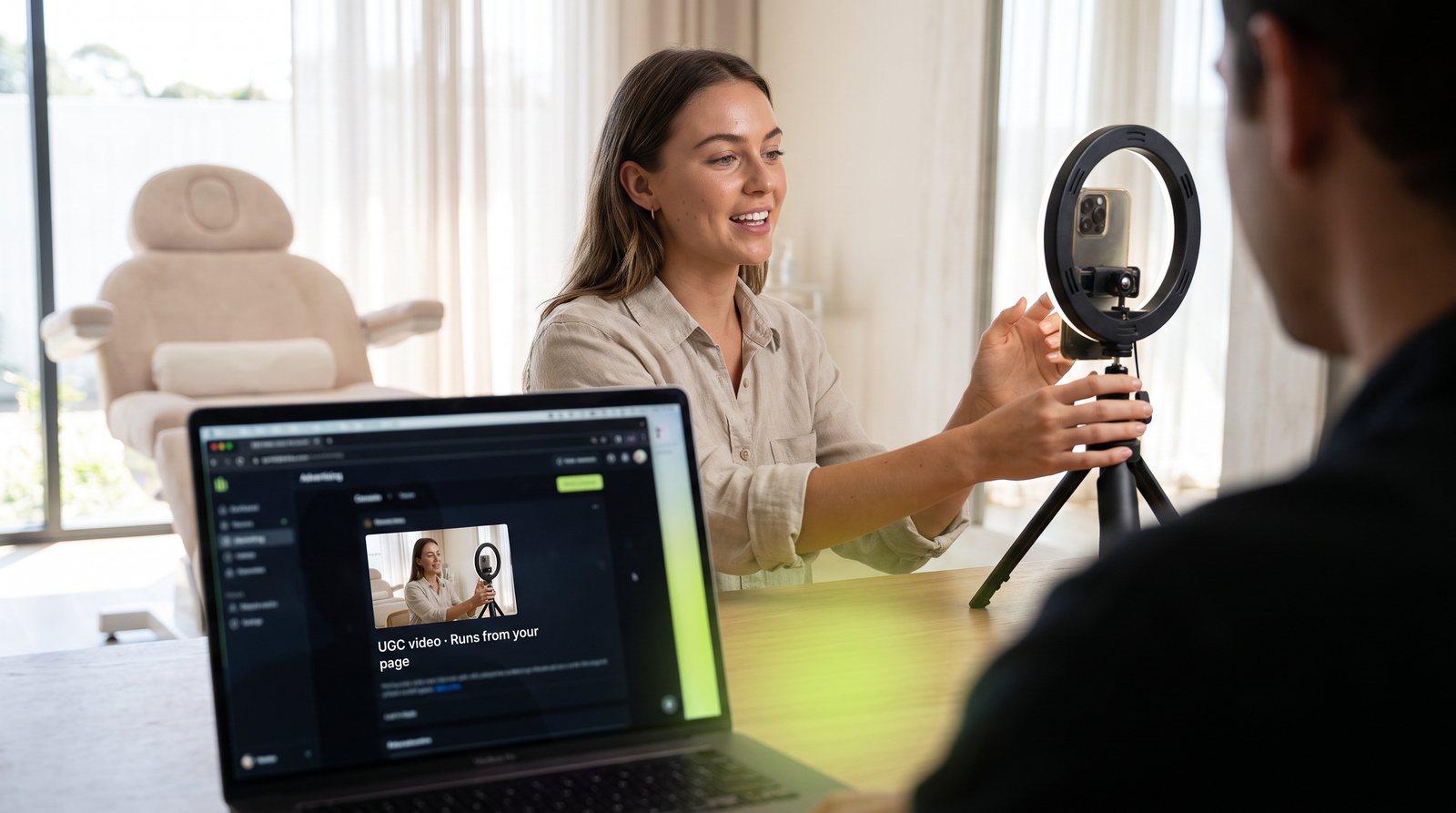
Creator filming a UGC video in a clinic, with the finished ad running from the clinic's own page
UGC video

Shot for your page.

Creators film pours, recipes and taste tests to our brief and hand over the videos with usage rights for your own account. The creator never posts them. Cheapest per video, which is how you test many hooks for one flavor.

What the viewer sees: your brand name, a real person with the drink, no partnership label.
The platforms we use

Meta and YouTube for ads. TikTok for creator posts.

Meta and YouTube carry the paid ads. TikTok carries creator posts. Each has its own rules by category. TikTok Ads and TikTok Shop are separate add-ons outside the creator program, quoted only after we read TikTok's rules for your drink.

Instagram and Facebook

Partnership ads

The ad runs from the creator's account with a Paid partnership label naming your brand, built and targeted in Ads Manager like any campaign.

  • Alcohol ads in the United States: 21 and over only
  • Non-alcoholic drinks may run "as long as they do not depict alcohol or consumption", in Meta's words
  • Ad rights add about 25 to 30 percent to the post fee per 30 days; creators charge about 39 percent more when ad rights are included ($307 against $221 on average, Collabstr 2025)

TikTok

Creator posts, by category

TikTok's alcohol category covers alcohol-free alternatives and soft drinks presented as mixers. For those, US creator posts are limited to 21 and over, and the brand needs TikTok's explicit permission and works with creators through TikTok One.

  • The commercial content disclosure toggle goes on for paid, gifted and affiliate posts
  • Energy drinks are restricted to 18 and over; see our energy drink page
  • A soda, coffee or sparkling water with no mixer angle is on neither list
YouTube

Taste tests and recipes

Taste tests, recipes and pairings with the drink in hand. Through Google Ads creator partnerships, the video can run as an ad from the creator's own channel, including Demand Gen In-feed and Shorts placements.

  • YouTube's paid promotion setting is on, so the video carries a disclosure label
  • YouTube lets a creator limit branded content by age, which we set for anything alcohol-related
  • Average paid integration $255, Collabstr 2026

How we pick the mix: before the first brief we read what drinks in your category already run in the Meta Ad Library, so the first post starts from the shelf you compete on, not a guess.

What a creator actually costs

Most posts close under $300.

Rate guides quote high. Transaction data does not. Across 21,000 paid collaborations in Collabstr's 2026 report, nearly 80 percent of deals were under $300 and only 2 percent were over $1,000. Drink programs run wide and often pay partly in cases. The FTC treats free product as a material connection, so a creator paid in cans discloses exactly like a creator paid in cash. You pay creators directly; we never invoice, hold, route or mark up creator money.

Creator sizeFollowersPer post, organicAdd ad rights, 30 daysWho they are
NanoUnder 10,000$150 to $400Plus 25 to 30 percentHome cooks, hosts, coffee lovers and taste testers. Where a drink program starts.
Micro10,000 to 100,000$400 to $1,500Plus 25 to 30 percentCity-level food, drink and lifestyle creators with an engaged audience.
Mid100,000 to 500,000$2,000 to $5,000NegotiatedRegional names. Worth it for a launch market, rarely for a flavor test.
CredentialedAny size40 to 60 percent above tierNegotiatedA registered dietitian or a sommelier on camera. Only when the story needs one.

Budget rule: two posts a month with 30-day ad rights runs about $400 to $1,000 per small creator, up to about $3,000 for a larger one. Collabstr's average paid post in 2026 was $193 on Instagram, $186 on TikTok and $255 on YouTube.

What a paid creator post actually costs

Average, 21,000 deals
Instagram$193
TikTok$186
YouTube$255

Source: Collabstr, 2026 Influencer Marketing Report, 21,000 paid collaborations, March 2026.

Where an influencer dollar goes

Industry average
70% creators
30% agency
Paid to creatorsAgency management

Source: ANA, Influencer Marketing Agency Compensation, survey of 84 client-side marketers fielded October to December 2025, reported February 2026. That sample skews to large advertisers, half of them spending over $100 million a year. At PELORA the management fee is fixed at $4,500 a month, so on a small program our share is higher than 30 percent and on a large one it is lower. Either way it sits on its own line of your invoice. Creator fees never appear on it, because you pay creators directly.

Where 21,000 paid deals actually closed, Collabstr 2026

Per post, organic, by creator size

Who gets paid what

YouApprove every creator and every fee before it is paid. You get one invoice from us, for our fee only.
→
PELORA, $4,500The management: find, contract, brief, read, run, report. A fixed monthly fee.
→
Creators, paid by youYou pay creators directly, in cash or cases. We paper the deal, brief the creator and approve the work; creator money never passes through us.
What we do for the fee

Six steps. Every can on camera.

We look at about 30 accounts for each creator we expect to sign, and the first filter depends on the drink: audience age for anything alcohol-related, fit and taste for the rest. The six steps below run from that list to a post that is live, lawful and pointed at a page that sells.

  1. 1

    Find and vet

    Audience fit first, audience age for alcohol and zero-proof, then fake followers and past sponsors. The FTC's reviews rule bans buying fake followers or views for a commercial purpose. You approve the shortlist before anyone is contacted.

    Week 1
  2. 2

    Negotiate and contract

    Fee or cases, a personal code, deliverables, usage rights and exclusivity against other drinks, on our standard agreement. About six message rounds per deal.

    Week 1 to 2
  3. 3

    Brief

    One moment per post and the page it points to. The product name and claims match the can, zero sugar only with the label's conditions, and for alcohol or zero-proof, adults only on camera and in the audience.

    Week 2
  4. 4

    Review, twice

    Two reads, each back within 48 hours, before anything posts: the disclosure, the audience setting, and every claim checked against your label.

    Week 2 to 3
  5. 5

    Run it as your ad

    With permission, we build the ad from their handle on Meta, apply the age rule the drink calls for, and point it at a page for that flavor.

    Week 2 to 4
  6. 6

    You pay, we report

    You pay each creator directly; creator money never passes through us. We report reach, clicks, code redemptions and cost per new customer for every creator.

    Monthly

From signed to live

Week 1 to 2Outreach and rateFit and age checks first. Deals take about six messages; about a third of cold messages get a reply.
ThenContract and briefCases written in as payment, and a brief that matches the label.
ThenTwo review roundsEach back in 48 hours: disclosure, audience age, every claim.
Week 2 to 4Live, from their handlePermission, ad, flavor page. Usually two to four weeks after signing.
The rules for beverages

Beverage or supplement, sugar claims, 21 and over.

A creator post about your drink is judged like your own advertising. Three questions decide what it can say: what FDA considers the product to be, what the label claims, and whether TikTok and the industry codes treat it as alcohol.

FDA

Drink or supplement, not both.

FDA weighs a product's name, packaging, serving size, recommended intake, composition and marketing to decide whether it is a conventional food. A name with drink, water or soda represents it as a conventional food, and a claim that it refreshes or rehydrates can do the same even with a Supplement Facts panel. A creator's claims are part of that marketing.

Label claims

Zero sugar has conditions.

Under FDA's rule a sugar free or zero sugar claim needs less than 0.5 grams of sugars per serving, and unless the drink is labeled low or reduced calorie, the claim must be accompanied each time by not a reduced calorie food, not a low calorie food or not for weight control. The creator's line matches the can.

Alcohol and zero-proof

21 and over, zero-proof included.

Meta limits US alcohol ads to people 21 and over. TikTok counts alcohol-free alternatives as alcohol for creator posts: 21 and over in the US, and its restricted list requires TikTok's explicit permission. The Beer Institute's code expects at least 73.8 percent of an influencer placement's audience to be of legal drinking age.

Map of the United States with Newport Beach, California marked
Where we work

Newport Beach office. Beverage brands anywhere.

We are in Newport Beach and work remotely with beverage brands all over the United States. Florida brands call us and we do that work. A creator program never needs us in the room.

Creators get sourced where the can is sold, so a viewer can find it near them. FDA's label rules and the platform policies are national; alcohol adds state law on top, which the platforms tell advertisers to follow.

CaliforniaFloridaTexasArizonaNevadaColoradoNew YorkAnywhere in the US
Pricing

Included from $14,000. Or added to any tier.

Creator fees and free cases are yours and paid directly; we never invoice, hold, route or mark up creator money. The prices below are the management: finding, contracting, briefing, reading, running and reporting.

Inside a retainer
Enterprise
$14,000 a month and above, included

Influencer and paid partnership ads, sourced and managed, are part of the Enterprise tier and every tier above it. Creator fees are on top, paid by you directly to each creator.

Creator program
$4,500
a month, attached to any tier

Up to five creators live in any month. Find, vet, contract, brief, two review rounds, run from their handle, monthly report. Creator fees are paid by you, directly.

UGC videos
$5,500
a month for 8 videos

Eight finished creator videos to our brief, with rights for your own channels and your ads. Extra videos $500 to $750 each.

Questions

Asked by beverage brands.

Can creators handle content production for a beverage brand?
Yes, for the social and paid side. UGC creators film to our brief and hand over videos with usage rights for your ads, at $5,500 a month for eight videos, with extra videos at $500 to $750 each. A production shoot day for commercial footage is a separate service.
Is our functional drink a beverage or a supplement for ad rules?
It depends on how you name and market it, and a creator's words are part of that. FDA weighs name, packaging, serving size, recommended intake, composition and marketing, and says a name with drink or soda represents it as a conventional food, as a refresh or rehydrate claim can. We keep every script consistent with the category you chose.
Can a creator say our drink is zero sugar?
Yes, if the label can say it. FDA's rule requires less than 0.5 grams of sugars per serving, and unless the drink is low or reduced calorie, each use of the claim is accompanied by not a reduced calorie food, not a low calorie food or not for weight control. The creator's line should match the can.
Can we use TikTok creators for a zero-proof or non-alcoholic drink?
Yes, as alcohol content. TikTok's Branded Content Policy puts alcohol-free alternatives and soft drinks presented as mixers in its alcohol category, so US posts are limited to 21 and over and the brand needs TikTok's explicit permission and works through TikTok One. On Meta, non-alcoholic drinks can run as long as they do not depict alcohol or consumption.
Who can appear in creator posts for an RTD cocktail?
Adults who look it, speaking to adult audiences. The Beer Institute's code says influencers may appear if they are of legal drinking age, reasonably appear to be, and do not appeal primarily to younger people, and the spirits industry's code sets a similar rule. Meta and TikTok both gate US alcohol ads and posts to 21 and over.
What does a creator cost?
Most paid creator posts close under $300. Small accounts run $150 to $400 a post and micro accounts $400 to $1,500, and ad rights add about 25 to 30 percent per 30 days. You can pay partly in cases. Every creator is paid by you, never through us, once you approve them.
Who handles the agreement and the payment?
We write the agreement and the brief and approve every post. You pay creators directly. Free cases are payment too, so they are written into the agreement.
Do you work with beverage brands outside California?
Yes. From Newport Beach we work remotely with beverage brands across the United States, and Florida brands are among those who call us. Creators come from the markets where your drink is sold.