Influencer marketing for dental practices

Flat fees. Real smiles.

In 2025 the ADA's ethics code began naming influencers. A dentist who pays a creator a share of the fees from the patients they send is fee splitting, and an influencer must disclose a paid partnership. So a dental creator program runs on flat fees, real patients and titles that match the license.

Nearly 80%of paid creator posts close under $300
2025the year the ADA's ethics code began naming influencers
12dental specialties the ADA code lists for a dentist to announce

UpdatedSeptember 26, 2026ADA code, Meta and TikTok rules read at the sources listed at the bottom

Influencer marketing for a dental practice means patients, hygienists and local creators filming a real visit or a real smile, run as Meta partnership ads from their accounts and pointed at a booking page. Three things set dental apart: the ADA code treats paying an influencer a share of patient fees as fee splitting, a general dentist does not present as a specialist, and TikTok bans creator posts for dental surgeries and teeth whitening.

ADA code, Meta and TikTok lines on this page read at the source on 26 September 2026. Creator rates are what creators actually accepted, not rate-card asks.
For dental practices

Who films, where it runs, what they can say.

Who the creators are

Patients, hygienists, local faces.

Patients who want to show their smile, your hygienists and assistants explaining a visit, and local parents, athletes and lifestyle creators near your office.

Where it runs

Instagram and YouTube. Not TikTok.

Instagram and Facebook partnership ads to your area, and YouTube for longer treatment walkthroughs. TikTok prohibits branded content for dental surgeries and for teeth whitening products.

What they can say

The visit, the smile, the real title.

A real patient's result with consent, the treatment named, and the dentist's actual credential. No specialist title unless the dentist holds it, and no health claim the science does not back.

What it looks like

Her smile. Your practice. One label.

This is the shape of a partnership ad for a dental practice. The creator is a patient showing her own treatment, the label names your practice, and the fee behind it is flat. The handle and the practice here are examples, not clients.

LS
@lena.smiles.oc
Paid partnership with Your Practice · Sponsored
“Six months of aligners in sixty seconds.”
Book a visit →
Instagram Reel labelled Paid partnership with Your Business, running from the creator's handle
Three ways to run a creator

Their smile. Your ad.

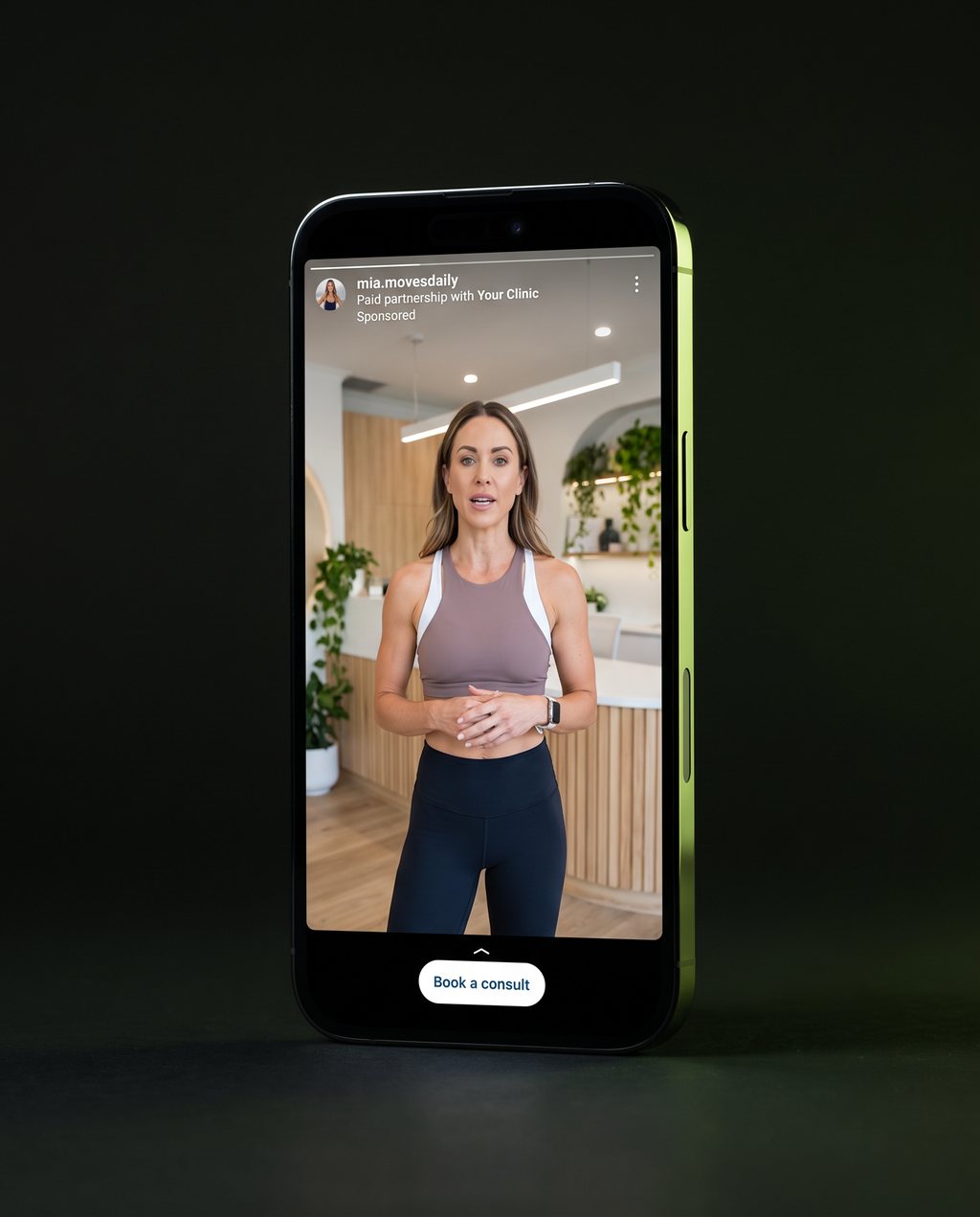
A patient can post and you run that post as an ad, a local creator can give you standing permission, or a creator can film for your page only. Whatever the format, the creator is paid per post, never a share of what the patients they bring in pay you.

Instagram Reel labelled Paid partnership with Your Business, running from the creator's handle
Meta partnership ad

One smile, run from her handle.

The patient tags your practice as a partner and sends a partnership ad code. You run the post as an ad from her account to your area. Her fee is flat and written down before she posts.

What the viewer sees: the patient's name, then "Paid partnership with Your Practice," then your button.
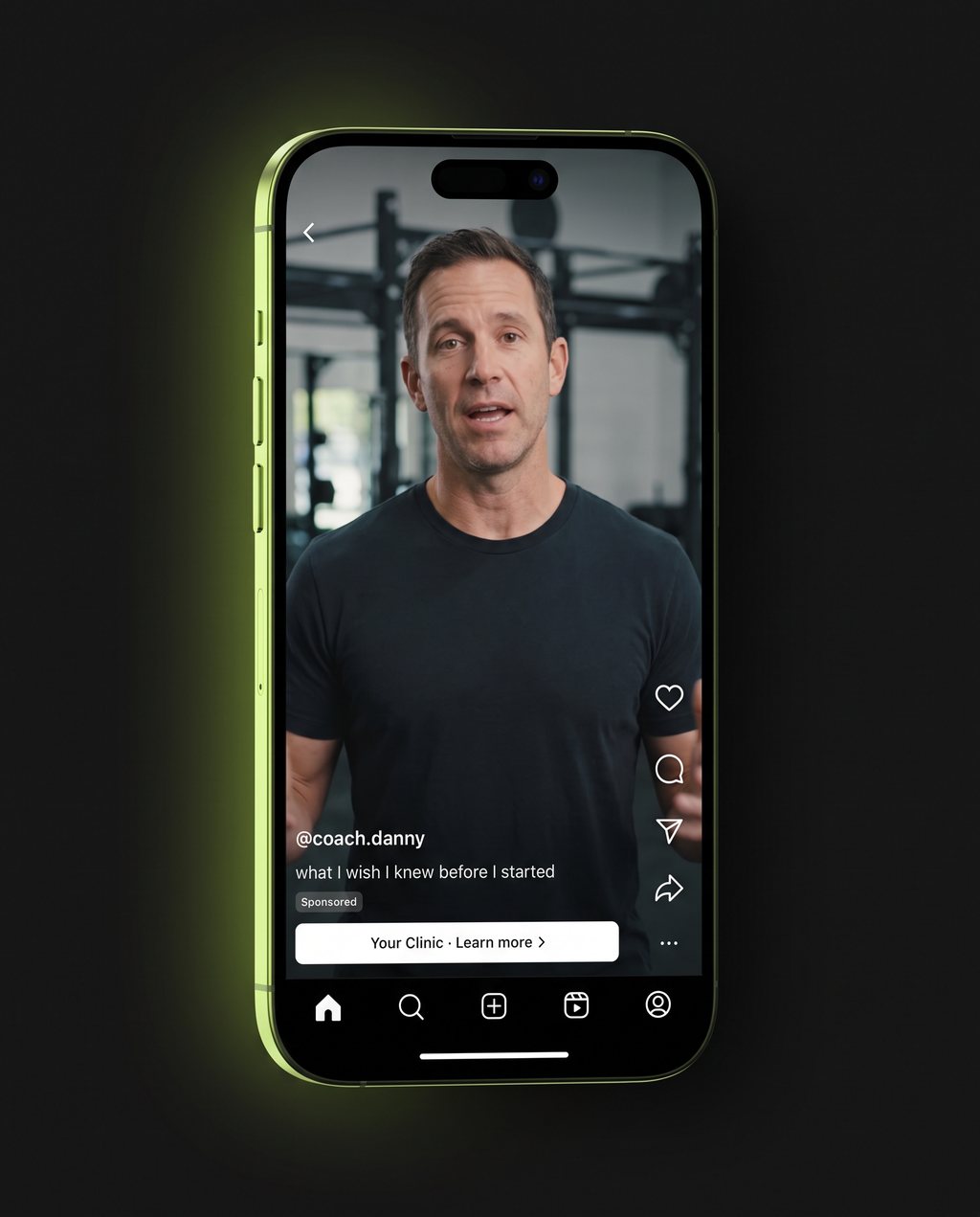
Vertical video ad running from a creator's handle, marked Sponsored, with a Your Clinic Learn more button
Standing permission

A local face, month after month.

A local creator who keeps coming in grants your page permission once, at account level. Each new video can run as an ad without a new code, each read before it runs.

What the viewer sees: the creator's handle, a Sponsored tag, and your booking button.
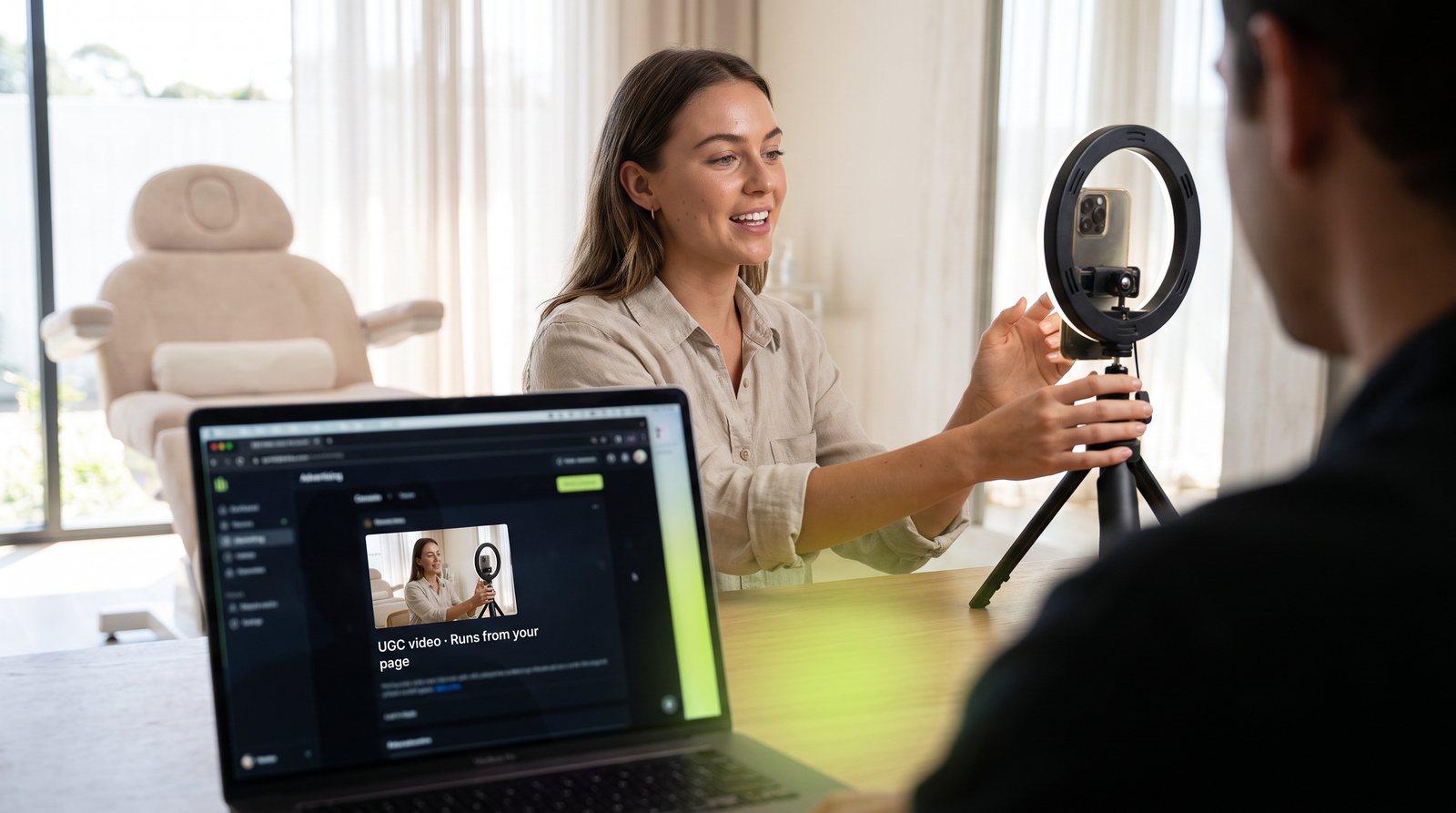
Creator filming a UGC video in a clinic, with the finished ad running from the clinic's own page
UGC video

Filmed in your operatory.

A creator films a visit, a cleaning or a consult to our brief and hands you the video with usage rights. It runs from your own account. Anyone on camera who is not your patient is labeled that way.

What the viewer sees: your practice name, a real visit, no partnership label.
Where it runs

Instagram and YouTube carry it.

Instagram and Facebook carry the paid reach, YouTube carries the longer walkthrough, and TikTok is off the list for dental practices. Here is what each asks of you.

Instagram and Facebook

Partnership ads to your area

The ad runs from the creator's account with a Paid partnership label naming your practice. Meta exempts dental products such as whitening from its 18-plus rule, while cosmetic procedures still target adults, and we treat cosmetic dentistry that way.

  • Permission once at account level in Business Suite, or per post with a partnership ad code
  • A flat fee per post, disclosed as a paid partnership
  • Ad rights add about 25 to 30 percent to the post fee per 30 days; creators charge about 39 percent more when ad rights are included ($307 against $221 on average, Collabstr 2025)

YouTube

Treatment walkthroughs

A dentist or hygienist walking through an implant consult, an aligner start or a first cleaning. YouTube requires paid videos to follow Google Ads policies, with some exceptions, and lets the creator set an age limit on branded content.

  • The paid promotion setting on, so a disclosure label opens the video
  • Specialist titles only for the recognized specialties
  • Average paid integration $255, Collabstr 2026
TikTok

Not for dental practices

TikTok's Branded Content Policy prohibits creator posts for "Teeth whitening products" and for cosmetic clinics "including dental surgeries". A free cleaning counts the same as a fee.

  • No free cleaning or whitening in exchange for a TikTok post
  • No Spark Ads or TikTok Shop; neither is offered for dental practices
  • The same patient can post the same smile to Instagram

How we pick the mix: we read the Meta Ad Library for dental practices in your metro once before the first brief, so the first post starts from what nearby practices already run.

What a creator actually costs

Most posts close under $300.

Rate guides quote high. Transaction data does not. Across 21,000 paid collaborations in Collabstr's 2026 report, nearly 80 percent of deals were under $300 and only 2 percent were over $1,000. A dental program runs on flat fees. The ADA's ethics code calls it fee splitting when an influencer, or a patient doing marketing, is paid a specific amount or percentage of the professional fees from the patients they bring in, so no creator we run is paid per patient or per case. You pay creators directly; we never invoice, hold, route or mark up creator money.

Creator sizeFollowersPer post, organicAdd ad rights, 30 daysWho they are
NanoUnder 10,000$150 to $400Plus 25 to 30 percentPatients, hygienists and local parents and athletes. Where a dental program starts.
Micro10,000 to 100,000$400 to $1,500Plus 25 to 30 percentCity-level family, lifestyle and beauty creators with an engaged local audience.
Mid100,000 to 500,000$2,000 to $5,000NegotiatedRegional names. Rarely worth it for a single-office practice.
CredentialedAny size40 to 60 percent above tierNegotiatedA dentist or specialist on camera explaining a treatment. Specialist only if they are one.

Budget rule: two posts a month with 30-day ad rights runs about $400 to $1,000 per small creator, up to about $3,000 for a larger one. Collabstr's average paid post in 2026 was $193 on Instagram, $186 on TikTok and $255 on YouTube.

What a paid creator post actually costs

Average, 21,000 deals
Instagram$193
TikTok$186
YouTube$255

Source: Collabstr, 2026 Influencer Marketing Report, 21,000 paid collaborations, March 2026.

Where an influencer dollar goes

Industry average
70% creators
30% agency
Paid to creatorsAgency management

Source: ANA, Influencer Marketing Agency Compensation, survey of 84 client-side marketers fielded October to December 2025, reported February 2026. That sample skews to large advertisers, half of them spending over $100 million a year. At PELORA the management fee is fixed at $4,500 a month, so on a small program our share is higher than 30 percent and on a large one it is lower. Either way it sits on its own line of your invoice. Creator fees never appear on it, because you pay creators directly.

Where 21,000 paid deals actually closed, Collabstr 2026

Per post, organic, by creator size

Who gets paid what

YouApprove every creator and every fee before it is paid. You get one invoice from us, for our fee only.
→
PELORA, $4,500The management: find, contract, brief, read, run, report. A fixed monthly fee.
→
Creators, paid by youYou pay each creator directly, a flat fee per post, never a share of patient fees. We paper the deal, brief the creator and approve the work; we never invoice, hold, route or mark up creator money.
What we do for the fee

Six steps. Every smile.

We scope the search at about 30 accounts for every one we expect to sign, and for a dental practice the first cut is the fee: flat, written and disclosed. This is the work between "we should use creators" and a post that is live, legal and pointed at a booking page.

  1. 1

    Find and vet

    Patients first, then local creators. We read past posts for undisclosed free dentistry, whitening promotion and health claims, and check the audience is real and local. You see every name before we reach out.

    Week 1
  2. 2

    Negotiate and contract

    A flat fee per post, never a percentage of fees and never per new patient, plus deliverables, usage rights and how long you can run it. A patient signs a written authorization before her treatment appears in your ads.

    Week 1 to 2
  3. 3

    Brief

    One visit or result per post and the page it points to. Never: a specialist title the dentist does not hold, a claim that a treatment is safer or better without evidence, a toxin-removal claim, or a whitening product pitch.

    Week 2
  4. 4

    Review, twice

    We read each post twice before it goes live, 48 hours a round: the disclosure, the title on screen, and every claim about safety or results.

    Week 2 to 3
  5. 5

    Run it as your ad

    With her permission, we build the ad from her handle on Meta, targeted to your area, and pointed at a booking page for that treatment.

    Week 2 to 4
  6. 6

    You pay, we report

    You pay each creator directly. We never invoice, hold, route or mark up creator money. We report booked visits, cost per booking and which creators brought them.

    Monthly

From signed to live

Week 1 to 2Outreach and termsPatients first. About six message rounds per deal; reply rates on cold outreach average about a third.
ThenAgreement and briefA flat fee per post in writing, the patient's authorization, and the titles and claims a dental post cannot use.
ThenTwo review rounds48-hour turnaround each. Disclosure, titles and every safety or results claim.
Week 2 to 4Live, from her handlePermission requested, ad built, pointed at a treatment page. Most creators go live two to four weeks after signing.
The rules for dental practices

Flat fees, real titles, real proof.

Dentistry has its own ethics code, and in 2025 it began speaking to influencers directly. The code binds ADA members and state dental boards set the law, but these three lines shape every dental brief we write.

ADA code

A share of fees is fee splitting.

Under the ADA code, an influencer or patient doing marketing who is paid "a specific amount or percentage of professional fees collected for dental procedures" from patients is engaged in fee splitting. You pay each creator a flat fee per post.

ADA code

Disclose, and back every claim.

The code's social media opinion says an influencer "must disclose any paid partnerships", and treats safety or efficacy claims without scientific support as false or misleading, naming claims that dental services remove toxic substances from the body.

ADA code

Specialist means specialist.

A dentist may announce as a specialist in the 12 specialties the code lists, or others their state recognizes, when they meet the education standard. A general dentist on camera is a general dentist, whatever the procedure.

Map of the United States with Newport Beach, California marked
Where we work

Newport Beach office. Practices anywhere.

We run this from Newport Beach and work remote with dental practices across the United States. We get calls from Florida and we do that work. A creator program never needs us in your operatory.

Creators get sourced around your office, because families pick a dentist close to home. What changes by state is the dental board's advertising rule, including how specialties and fee arrangements are treated, so we read yours before the first post.

CaliforniaFloridaTexasArizonaNevadaColoradoNew YorkAnywhere in the US
Pricing

Included from $14,000. Or added to any tier.

Creator fees are yours and paid directly, flat per post; we never invoice, hold, route or mark up creator money. The prices below are the management: finding, contracting, briefing, reading, running and reporting.

Inside a retainer
Enterprise
$14,000 a month and above, included

Influencer and paid partnership ads, sourced and managed, are part of the Enterprise tier and every tier above it. Creator fees are on top, paid by you directly to each creator.

Creator program
$4,500
a month, attached to any tier

Up to five creators live in any month. Find, vet, contract, brief, two review rounds, run from their handle, monthly report. Creator fees are paid by you, directly.

UGC videos
$5,500
a month for 8 videos

Eight finished creator videos to our brief, with rights for your own channels and your ads. Extra videos $500 to $750 each.

Questions

Asked by dental practices.

Can we pay an influencer for each new patient they send?
No, and we will not set it up that way. The ADA's ethics code says an influencer or patient doing marketing who is paid a specific amount or percentage of the professional fees from the patients they bring in is engaged in fee splitting, and state laws can add their own limits. Every creator we run is paid a flat fee per post.
Can a dental practice use TikTok creators?
No. TikTok's Branded Content Policy prohibits branded content for cosmetic clinics "including dental surgeries" and for teeth whitening products, and it counts a gifted service the same as payment. The same patients can post on Instagram, Facebook and YouTube, where we run their posts as partnership ads.
Does a dental influencer have to disclose the partnership?
Yes. The ADA's social media opinion says a social media influencer or anyone endorsing a product or service must disclose any paid partnerships, and the FTC requires disclosure of a payment or free service the audience would not expect. On Meta the partnership label does it on screen.
Can a general dentist be called a specialist in a video?
No. The ADA code lets a dentist announce as a specialist in the recognized specialties, such as orthodontics, endodontics or periodontics, when they meet the education standard. A general dentist who places implants or aligners is a general dentist on camera.
Can a creator talk about fluoride or holistic dentistry?
Only with science behind it, and not as a sales pitch. The ADA's social media opinion calls unsupported public statements about fluoride's safety or efficacy unethical, and names claims that dental services remove toxic substances from the body. We keep creator posts on the visit and the result.
Can patients show before-and-after smiles?
Yes, with written authorization and honest presentation. HIPAA requires a practice to get a patient's written authorization before using their health information in marketing, and in California a before-and-after must name the procedure, match in pose and lighting, and say results may not occur for all patients.
What does a creator cost for a dental practice?
Most paid creator posts close under $300. Small accounts run $150 to $400 a post, micro accounts $400 to $1,500, and ad rights add about 25 to 30 percent per 30 days. Every fee is flat per post. You pay creators directly, never through us.
Do you work with dental practices outside California?
Yes. We run this from Newport Beach and work remote with dental practices across the United States, and we get calls from Florida. Creators come from around your office, and we read your state dental board's advertising rule before the first post.