Influencer marketing for supplement and nutraceutical brands

The label writes the script.

A supplement creator post lives or dies on one sentence: what they say the product does. FDA draws the line between a structure or function claim and a disease claim, the FTC holds you to the evidence for whatever a paid creator says, and TikTok bars creator posts for weight management supplements outright.

Nearly 80%of paid creator posts close under $300, Collabstr 2026
$50,120the most per violation the FTC said it could seek after putting about 670 health product marketers on notice in 2023
2xevery post is read twice before it goes live

UpdatedSeptember 26, 2026FDA, FTC and platform rules checked at the sources below

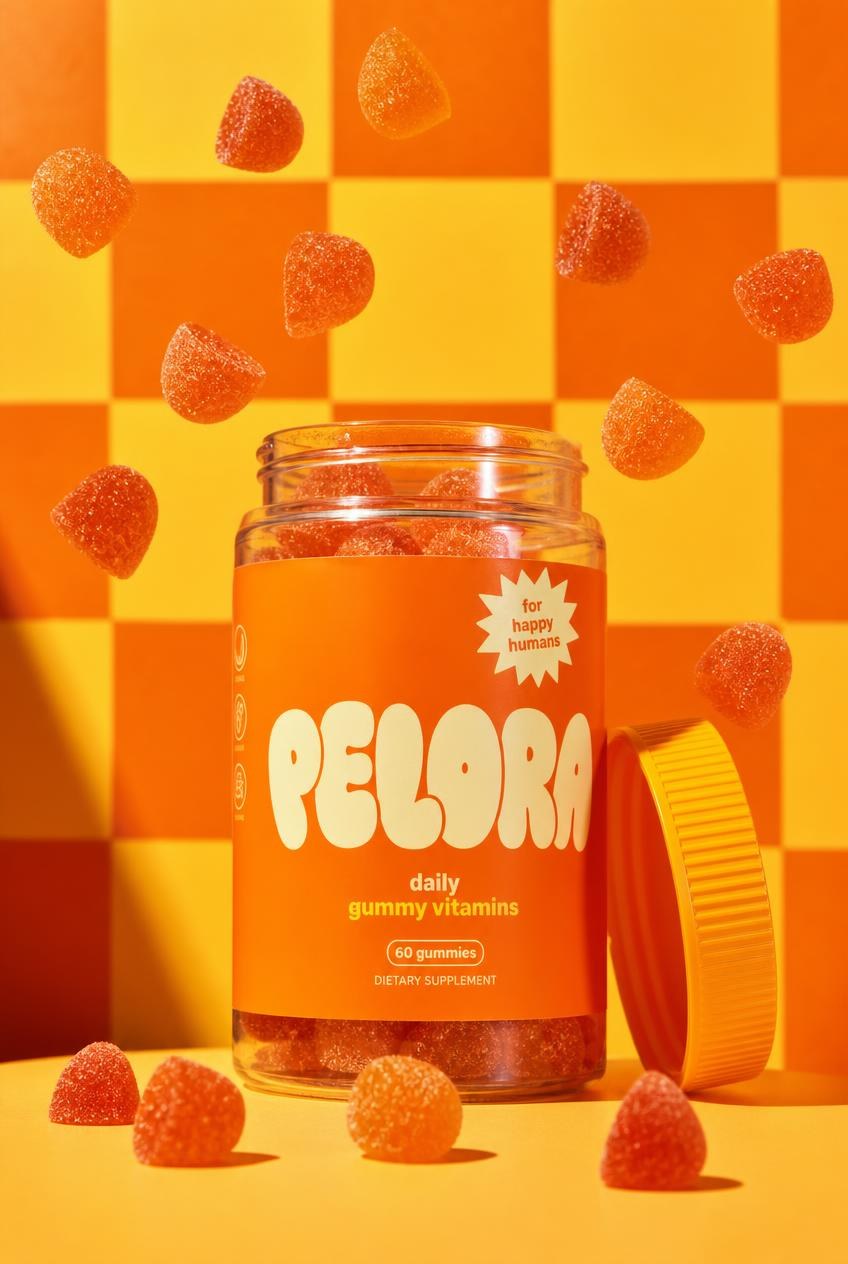
PELORA daily gummy vitamins jar with orange gummies falling around it on an orange checkerboard, in house packaging concept produced by PELORA Marketing

Influencer marketing for supplement brands means adult creators with real routines, each on a personal code, filming the product in use, with the winners run as ads from their accounts. The claim is the whole job: only structure or function claims your evidence supports, no disease named or implied, a paid label on every post, free product included, and no creator posts on TikTok for weight management products.

The FDA, FTC and platform rules on this page were read at the source on 26 September 2026. Creator rates reflect deals creators accepted, not rate-card asks.
For supplement brands

Who takes it on camera, and what they may claim.

Who the creators are

Adults with a routine.

Fitness, nutrition, sleep and everyday-routine creators, all adults, each on a personal code. A registered dietitian or physician only when the claim needs expert context, and the evidence bar stays the same.

Where it runs

Meta for ads, 18 and over.

Instagram and Facebook partnership ads, targeted to adults as Meta requires for dietary and health supplements. TikTok creator posts only where TikTok's rules allow the product. YouTube for the routine explained.

What they can say

What your evidence supports.

Structure or function, never a disease, not even by picture or implication. A paid label on every post, free product included. No weight loss line on TikTok.

What it looks like

Their routine. Your label. One disclosure.

This is the shape of a partnership ad for a supplement. The creator is an adult with a real routine, the label names your brand, and the hook is about their day, never about a condition the product treats. Handle and brand are placeholders, not clients.

NM
@nat.morning.stack
Paid partnership with Your Brand · Sponsored
“What is actually in my morning routine, and what is not.”
Shop now →
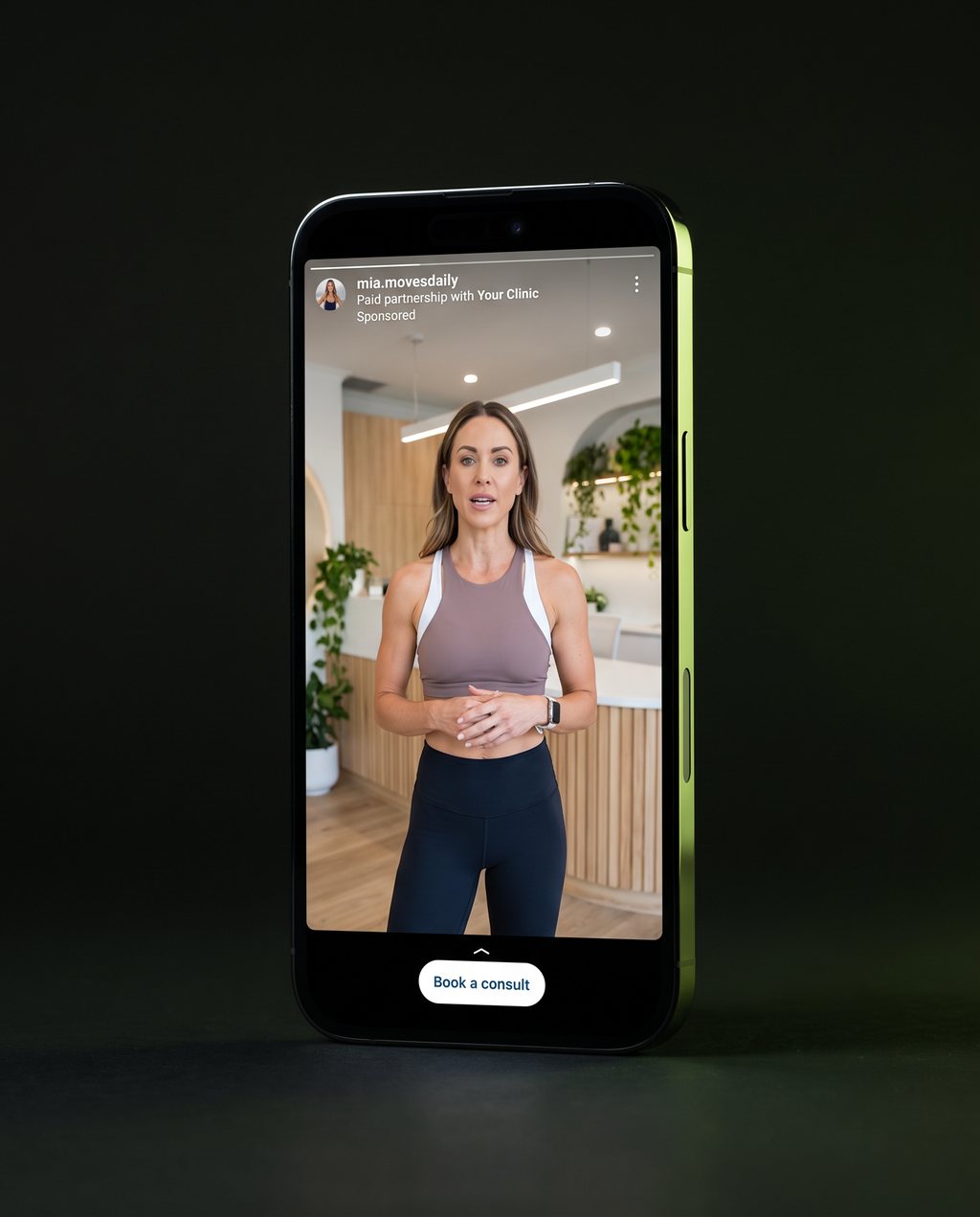
Instagram Reel labeled Paid partnership with Your Business, running from the creator's handle
Three ways to run a creator

Their routine. Your ad.

A creator's best post can run as your ad, a creator who converts can give you standing permission for new cuts, and UGC creators can film to our brief for your own account. Whichever route, every new cut is a new claim, so each one is read again.

Instagram Reel labeled Paid partnership with Your Business, running from the creator's handle
Meta partnership ad

One post, adults only.

The creator tags your brand as a partner and sends a partnership ad code. You run that post as an ad from their account, targeted to people 18 and over, which Meta requires for dietary and health supplements.

What the viewer sees: the creator's name, then "Paid partnership with Your Brand," then your button.
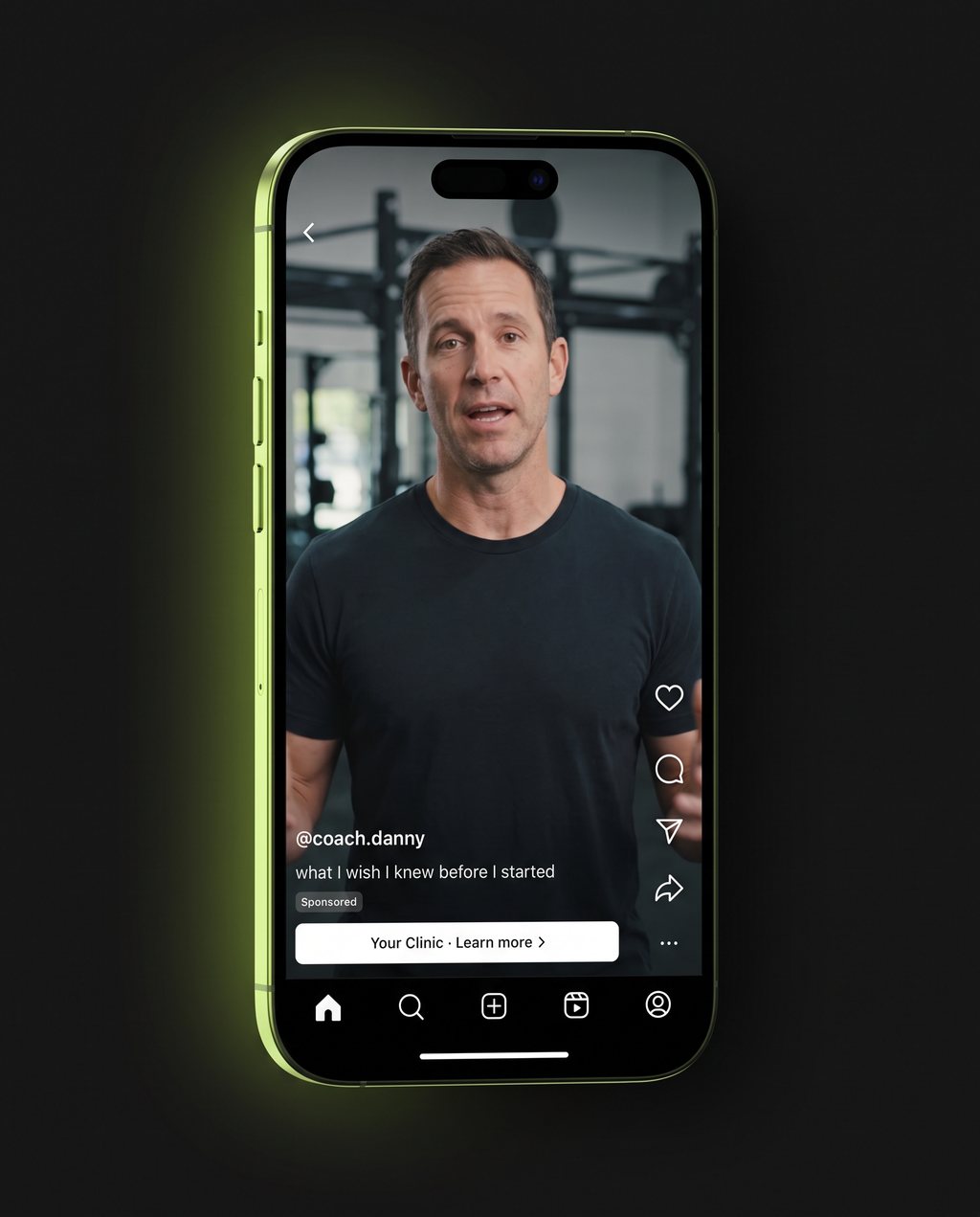
Vertical video ad running from a creator's handle, marked Sponsored, with a Learn more button
Standing permission

New cuts, read again.

A creator who converts grants your page permission once, at account level, so new hooks can run from their handle without a new code. A new hook can change the claim, so each cut goes back through the claim read before it runs.

What the viewer sees: the creator's handle, a Sponsored tag, and your button.
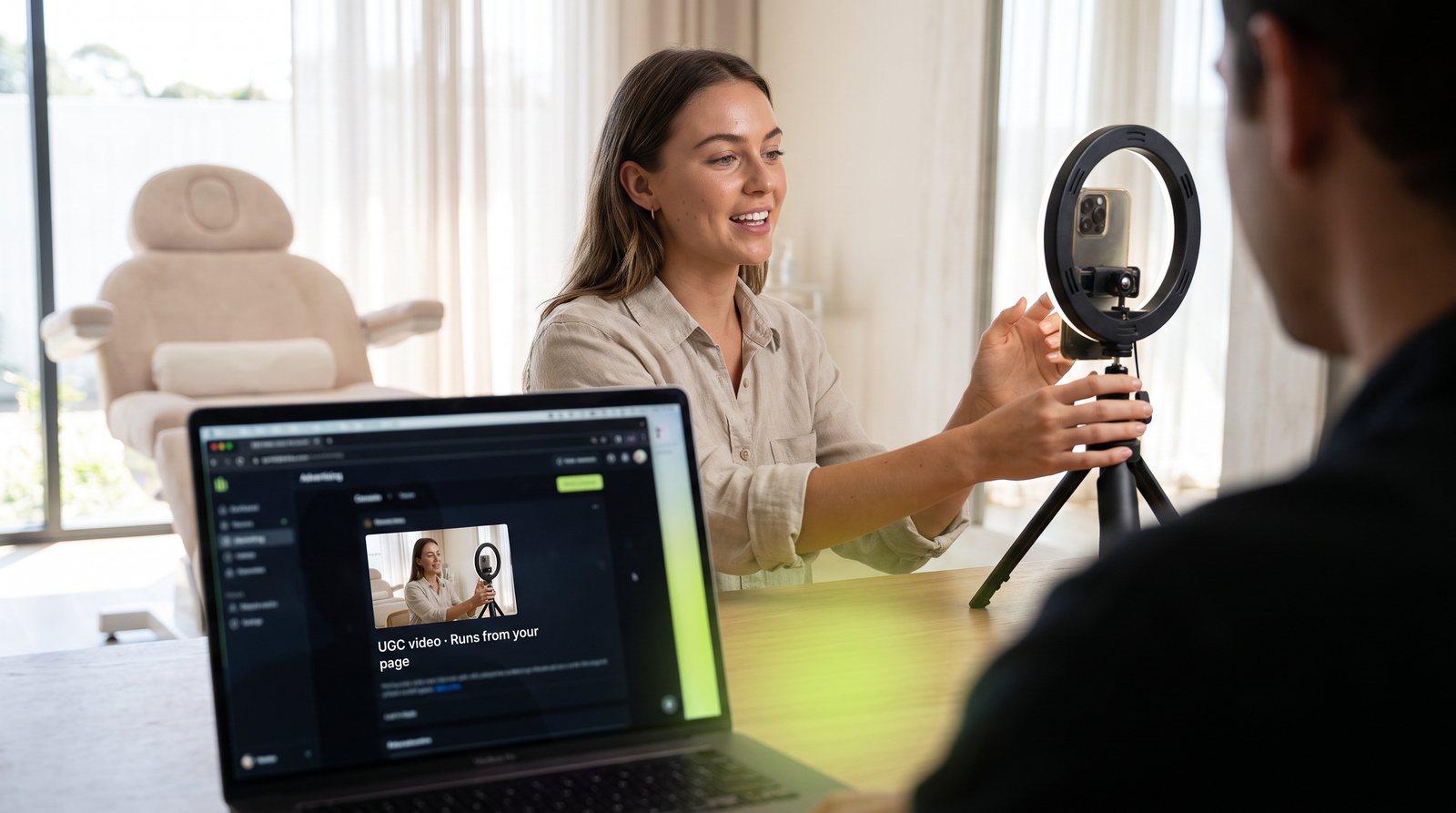
Creator filming a UGC video in a clinic, with the finished ad running from the clinic's own page
UGC video

Scripted to your evidence.

UGC creators film to a brief built from your substantiation file and hand over the video with usage rights for your own account. The creator never posts it, which makes it the cheapest way to test several claims you can already prove.

What the viewer sees: your brand name, a real person with the product, no partnership label.
The platforms we use

Meta for reach. TikTok only where it allows.

Meta carries the paid reach and YouTube carries the longer explainer. TikTok depends on the product: some supplements are barred from creator posts there, some are restricted, and TikTok Ads and TikTok Shop are separate add-ons we quote only after reading TikTok's rules for your exact product.

Instagram and Facebook

Partnership ads, 18 and over

The ad runs from the creator's account with a Paid partnership label naming your brand, targeted to adults. Meta restricts dietary and health supplement ads from reaching people under 18.

  • No claims to cure, heal or eliminate the diseases on Meta's list, such as diabetes, psoriasis or Alzheimer's
  • Meta's own rule: no statements of inferiority about a person's appearance in weight or cosmetic ads
  • Ad rights add about 25 to 30 percent to the post fee per 30 days; creators charge about 39 percent more when ad rights are included ($307 against $221 on average, Collabstr 2025)

TikTok

Creator posts, by product

TikTok's Branded Content Policy prohibits creator content for weight loss and weight management supplements and for CBD supplements. Vitamin supplements are on its restricted list: US posts are limited to adults, and the policy's requirements for that list call for TikTok's explicit permission and creator deals through TikTok One.

  • Fat burners, appetite suppressants and detox teas: no creator posts at all, gifted or affiliate included
  • TikTok Shop sells supplements by invitation only, and never weight management, meal replacement or mental wellness products
  • The commercial content disclosure toggle goes on for every paid, gifted or affiliate post
YouTube

Routines and ingredient explainers

Where a creator can explain what is in the product and why they take it. Through Google Ads creator partnerships, the video can run as an ad from the creator's own channel, including Demand Gen In-feed and Shorts placements.

  • YouTube's paid promotion setting goes on, so a disclosure label shows
  • The explainer is held to the same evidence as your label
  • Average paid integration $255, Collabstr 2026

How we pick the mix: before the first brief we read what supplement brands in your category already run in the Meta Ad Library, so the first post starts from what is working, and from what gets flagged.

What a creator actually costs

Most posts close under $300.

Rate guides quote high. Transaction data does not. Across 21,000 paid collaborations in Collabstr's 2026 report, nearly 80 percent of deals were under $300 and only 2 percent were over $1,000. Supplement programs usually pay partly in product and a commission code. The FTC counts free product as a material connection, and TikTok counts gifted product and affiliate codes as branded content, so those posts carry the paid label too. Creators are paid by you, directly; we never invoice, hold, route or mark up creator money.

Creator sizeFollowersPer post, organicAdd ad rights, 30 daysWho they are
NanoUnder 10,000$150 to $400Plus 25 to 30 percentEveryday routine, fitness and nutrition accounts, all adults. Where a supplement program starts.
Micro10,000 to 100,000$400 to $1,500Plus 25 to 30 percentCity-level fitness and wellness creators with an engaged adult audience.
Mid100,000 to 500,000$2,000 to $5,000NegotiatedRegional names. Worth it for a launch, rarely for a test.
CredentialedAny size40 to 60 percent above tierNegotiatedA registered dietitian, pharmacist or physician on camera. The claim still needs the same evidence.

Budget rule: two posts a month with 30-day ad rights runs about $400 to $1,000 per small creator, up to about $3,000 for a larger one. Collabstr's average paid post in 2026 was $193 on Instagram, $186 on TikTok and $255 on YouTube.

What a paid creator post actually costs

Average, 21,000 deals
Instagram$193
TikTok$186
YouTube$255

Source: Collabstr, 2026 Influencer Marketing Report, 21,000 paid collaborations, March 2026.

Where an influencer dollar goes

Industry average
70% creators
30% agency
Paid to creatorsAgency management

Source: ANA, Influencer Marketing Agency Compensation, survey of 84 client-side marketers fielded October to December 2025, reported February 2026. That sample skews to large advertisers, half of them spending over $100 million a year. At PELORA the management fee is fixed at $4,500 a month, so on a small program our share is higher than 30 percent and on a large one it is lower. Either way it sits on its own line of your invoice. Creator fees never appear on it, because you pay creators directly.

Where 21,000 paid deals actually closed, Collabstr 2026

Per post, organic, by creator size

Who gets paid what

YouApprove every creator and every fee before it is paid. You get one invoice from us, for our fee only.
→
PELORA, $4,500The management: find, contract, brief, read, run, report. A fixed monthly fee.
→
Creators, paid by youYou pay creators directly, in cash, product or commission. We paper the deal, brief the creator and approve the work; creator money never passes through us.
What we do for the fee

Six steps. Every claim checked.

We review about 30 accounts for every creator we expect to sign, and for a supplement the first filter is whether their audience is adult. Everything from that shortlist to a post that is live, lawful and pointed at a product page sits in these six steps.

  1. 1

    Find and vet

    Adult audience first, then fake followers, past sponsors and fit. The FTC's reviews rule bans buying fake followers or views for a commercial purpose. You approve the shortlist before we contact anyone.

    Week 1
  2. 2

    Negotiate and contract

    Fee, product, commission code, deliverables, usage rights and exclusivity against other supplements, on our standard agreement. About six message rounds per deal.

    Week 1 to 2
  3. 3

    Brief

    Built from your label and your evidence file. Never: a disease named or implied, a cure, treat or prevent line, a weight loss claim on TikTok, or a testimonial standing in for proof.

    Week 2
  4. 4

    Review, twice

    Nothing posts until it has been read twice, each round back within 48 hours: the disclosure, the audience setting, and every claim held against your substantiation.

    Week 2 to 3
  5. 5

    Run it as your ad

    With the creator's permission, we build the ad from their handle on Meta, targeted 18 and over, and point it at a page for that product.

    Week 2 to 4
  6. 6

    You pay, we report

    You pay each creator directly; creator money never passes through us. We report reach, clicks, code redemptions and cost per new customer, creator by creator.

    Monthly

From signed to live

Week 1 to 2Outreach and rateAdult audience check first. About six messages per deal; roughly a third of cold outreach gets a reply.
ThenContract and briefProduct and commission written in as payment, and a brief built from your label.
ThenTwo review rounds48 hours each: the label, the audience and every claim.
Week 2 to 4Live, from their handlePermission, ad, product page. Two to four weeks after signing is usual.
The rules for supplements

No disease claims, real evidence, TikTok's limits.

A creator's post about your supplement is your advertising. The FTC says so in its health products guidance, which counts social media and influencer marketing as advertising. Three sets of rules decide what the post may say.

FDA

Structure or function, never disease.

FDA defines a disease as damage to an organ, part, structure or system of the body such that it does not function properly, and counts pictures, vignettes and symbols among the ways to imply a disease claim. A structure or function claim carries FDA's disclaimer, and the company notifies FDA no later than 30 days after first marketing it.

FTC

The evidence covers the creator.

The FTC's guidance says health benefits generally need randomized, controlled human clinical testing and that testimonials are not substantiation. Its own example: a marketer who pays a blogger is liable for the blogger's unsupported claim. In 2023 it sent notices to about 670 companies, supplement marketers among them, citing penalties of up to $50,120 per violation.

TikTok

No weight loss. Vitamins by permission.

TikTok's Branded Content Policy prohibits creator content for weight loss and weight management supplements and for CBD supplements, and puts vitamin supplements on a restricted list: adults only, and the list's requirements call for TikTok's explicit permission. TikTok Shop sells supplements by invitation only.

Map of the United States with Newport Beach, California marked
Where we work

Newport Beach office. Supplement brands anywhere.

Newport Beach is our office; the work is remote, for supplement brands across the United States. Florida brands call us and we take that work. Nothing in a creator program needs us in the room.

Creators get sourced where your customers are, online or near your retail. FDA's claim rules, the FTC's evidence bar and the platform policies are national, so the same claim read applies in every state.

CaliforniaFloridaTexasArizonaNevadaColoradoNew YorkAnywhere in the US
Pricing

Included from $14,000. Or added to any tier.

Creator fees, product and commissions are yours and paid directly; we never invoice, hold, route or mark up creator money. The prices below are the management: finding, contracting, briefing, reading, running and reporting.

Inside a retainer
Enterprise
$14,000 a month and above, included

Influencer and paid partnership ads, sourced and managed, are part of the Enterprise tier and every tier above it. Creator fees are on top, paid by you directly to each creator.

Creator program
$4,500
a month, attached to any tier

Up to five creators live in any month. Find, vet, contract, brief, two review rounds, run from their handle, monthly report. Creator fees are paid by you, directly.

UGC videos
$5,500
a month for 8 videos

Eight finished creator videos to our brief, with rights for your own channels and your ads. Extra videos $500 to $750 each.

Questions

Asked by supplement brands.

What does a supplements influencer marketing agency actually do?
It finds the creators, contracts them, writes a brief that keeps the claims legal, reads every post before it goes live, runs the winners as ads and reports what each creator earned. For supplements the brief and the read are most of the work, because FDA and the FTC judge the creator's words as your advertising.
What claims are safe in a supplement video ad?
Structure or function claims that your evidence supports, and nothing that names or implies a disease. FDA counts pictures and symbols as ways to imply a disease claim, and the FTC's guidance says health benefits generally need randomized, controlled human clinical testing. A creator's personal story does not replace that evidence.
Are we responsible for what a paid creator says about our supplement?
Yes. The FTC's health products guidance gives the example of a marketer that pays a blogger who then claims the supplement cures acid reflux, and says the marketer is liable for that claim. That is why every post is read against your evidence before it goes live.
Can supplement brands use TikTok creators?
Some can, and weight management brands cannot. TikTok's Branded Content Policy prohibits creator content for weight loss and weight management supplements, including gifted and affiliate posts, and for CBD supplements. Vitamin supplements sit on TikTok's restricted list, allowed for US adults under that list's requirements, which call for TikTok's explicit permission; TikTok Shop sells supplements by invitation only.
Can FDA use a brand's social media posts as evidence?
Yes. In a December 19, 2025 warning letter to Agebox Inc., FDA said it reviewed the company's website and its social media accounts, including Facebook, and quoted a Facebook post among its examples of evidence that products were intended for use as drugs. We read creator posts with the same eye.
What does a creator cost?
Usually under $300 a post. Small accounts run $150 to $400 a post and micro accounts $400 to $1,500, with ad rights adding about 25 to 30 percent per 30 days. Much of a supplement program is paid in product and commission. You pay every creator directly, never through us, after approving each one.
Who handles the agreement and the payment?
We write the agreement and the brief and approve every post. You pay creators directly. Product and commission count as payment, so they go in the agreement.
Do you work with supplement brands outside California?
Yes. We are based in Newport Beach and work remotely with supplement brands across the United States, and Florida brands are among those who call us. The claim rules are national, so the review is the same wherever you sell.