A hundred small bets beat one big one.
Free product and a commission to hundreds of real people, filmed in their real lives. Riders, surfers, moms, dads, builders, lifters, office people, the vendor at the fruit cart. The market picks the winners. We turn the winners into ads.
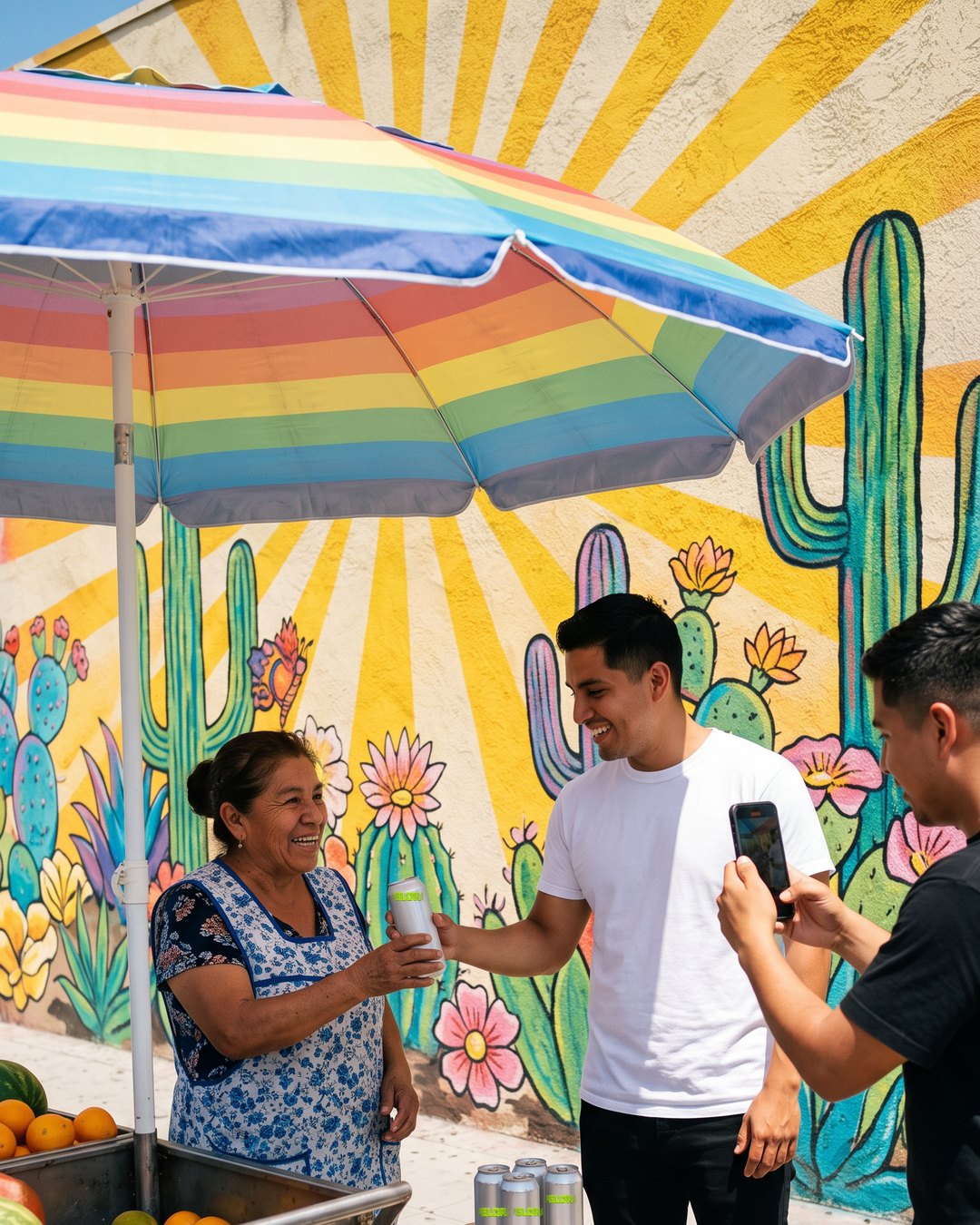 Street taste test
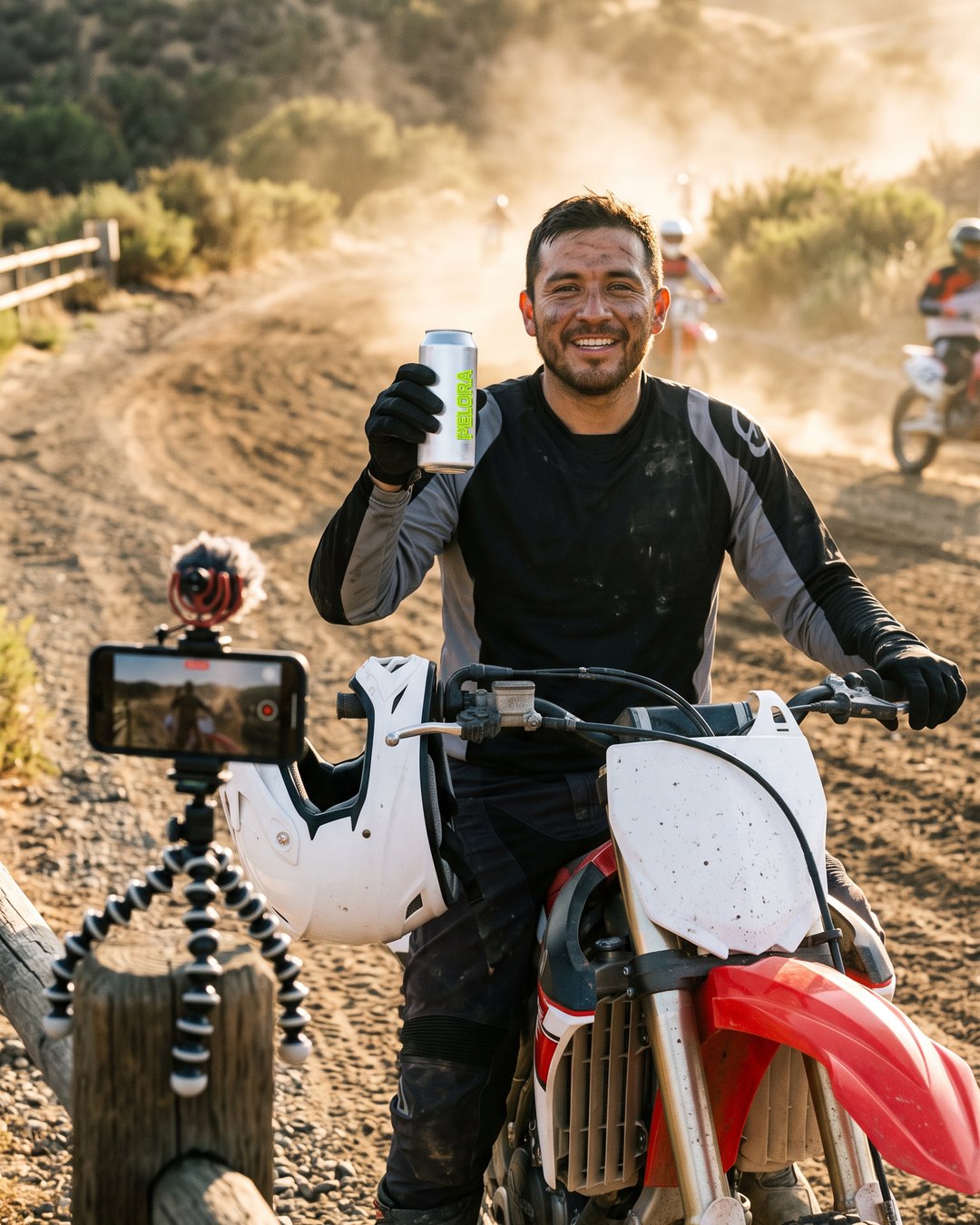 Moto
Moto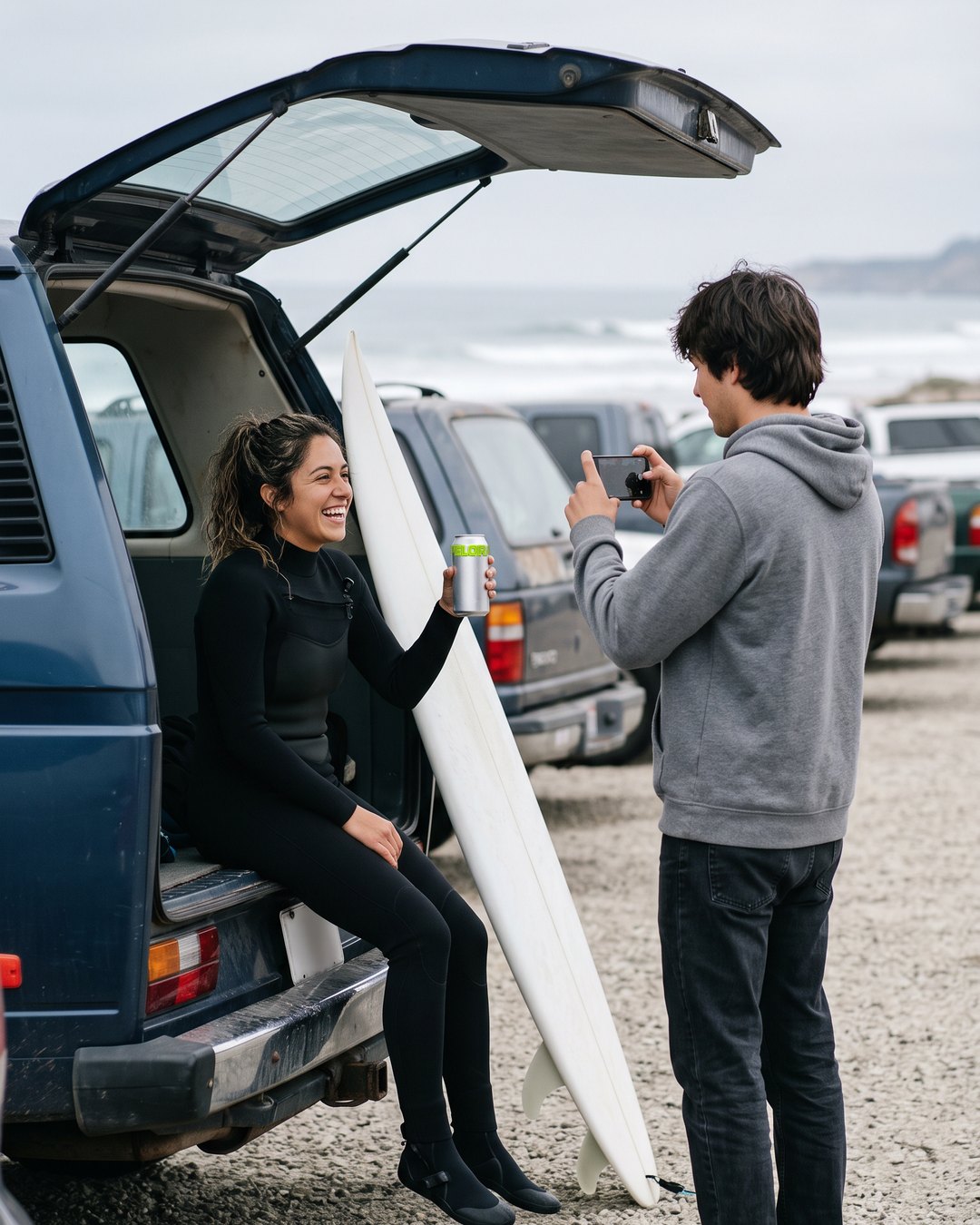 Surf
Surf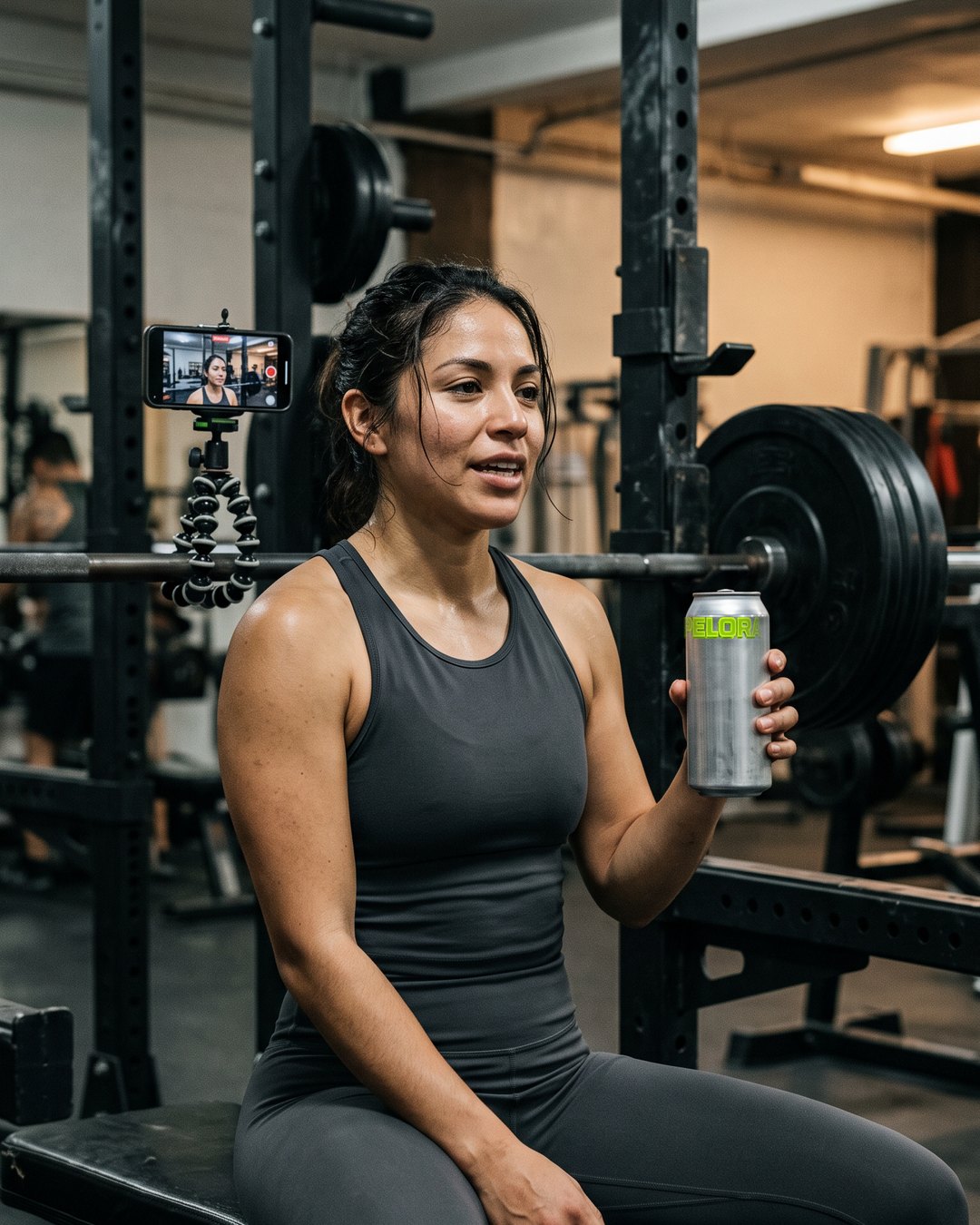 Gym
Gym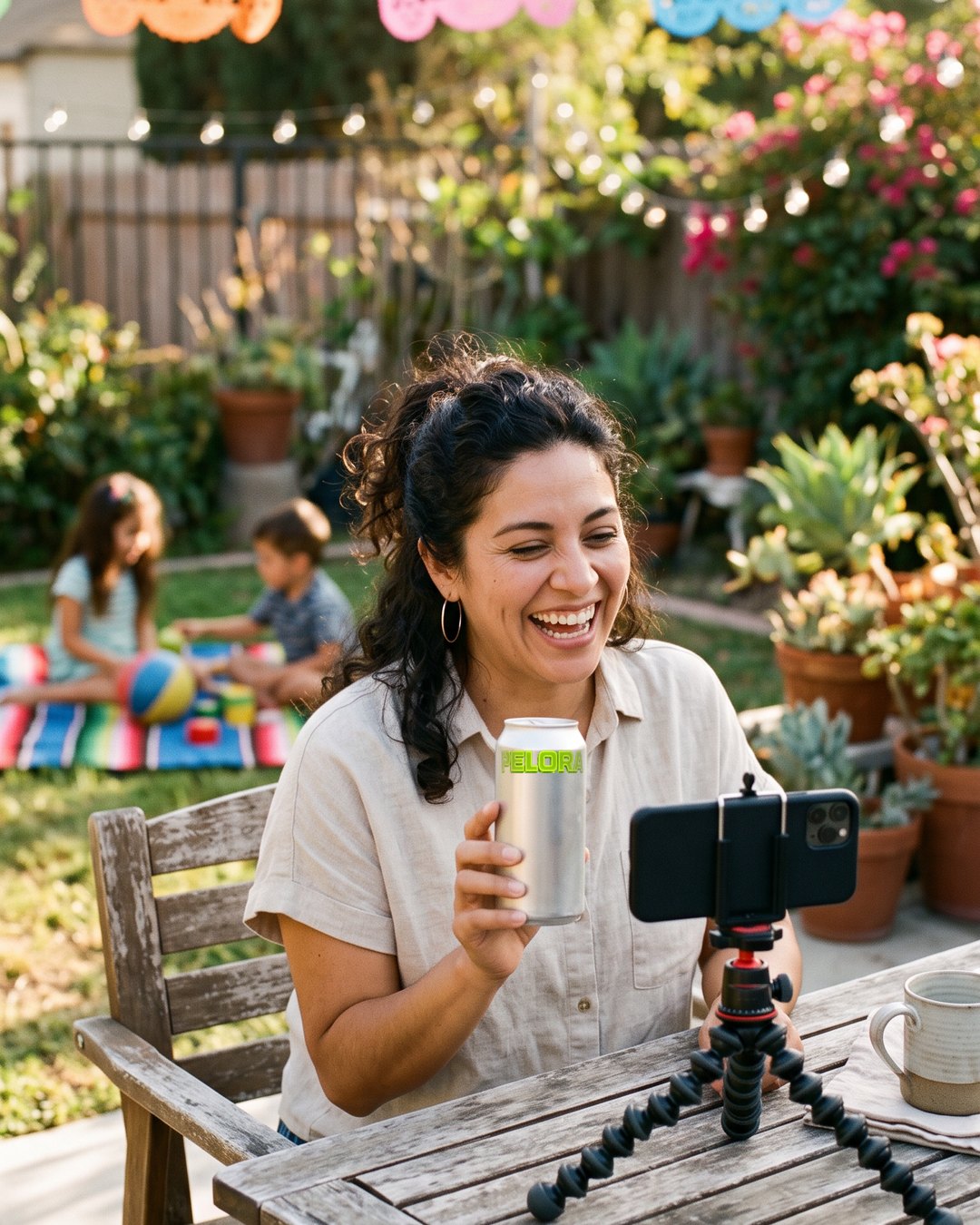 Moms
Moms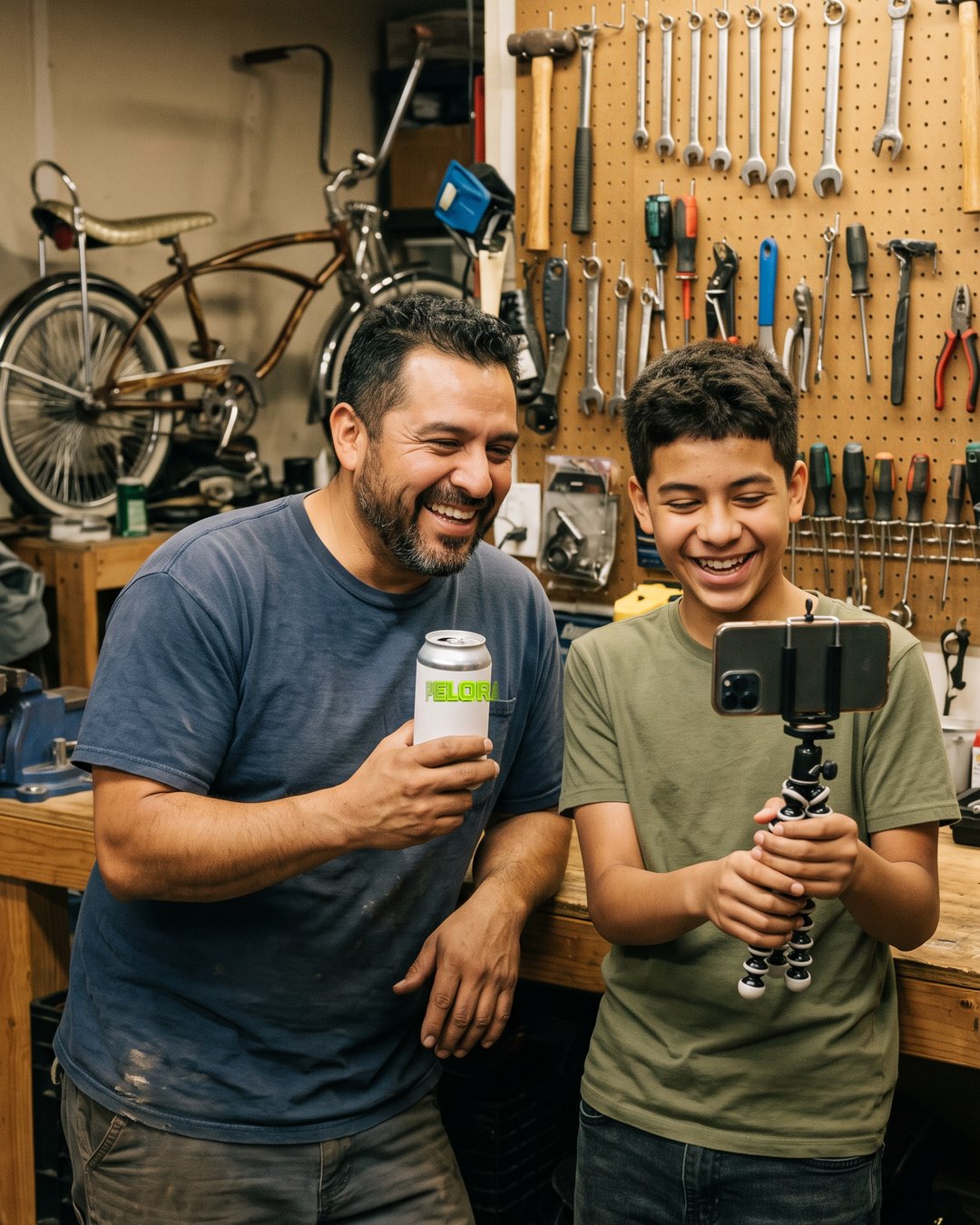 Dads
Dads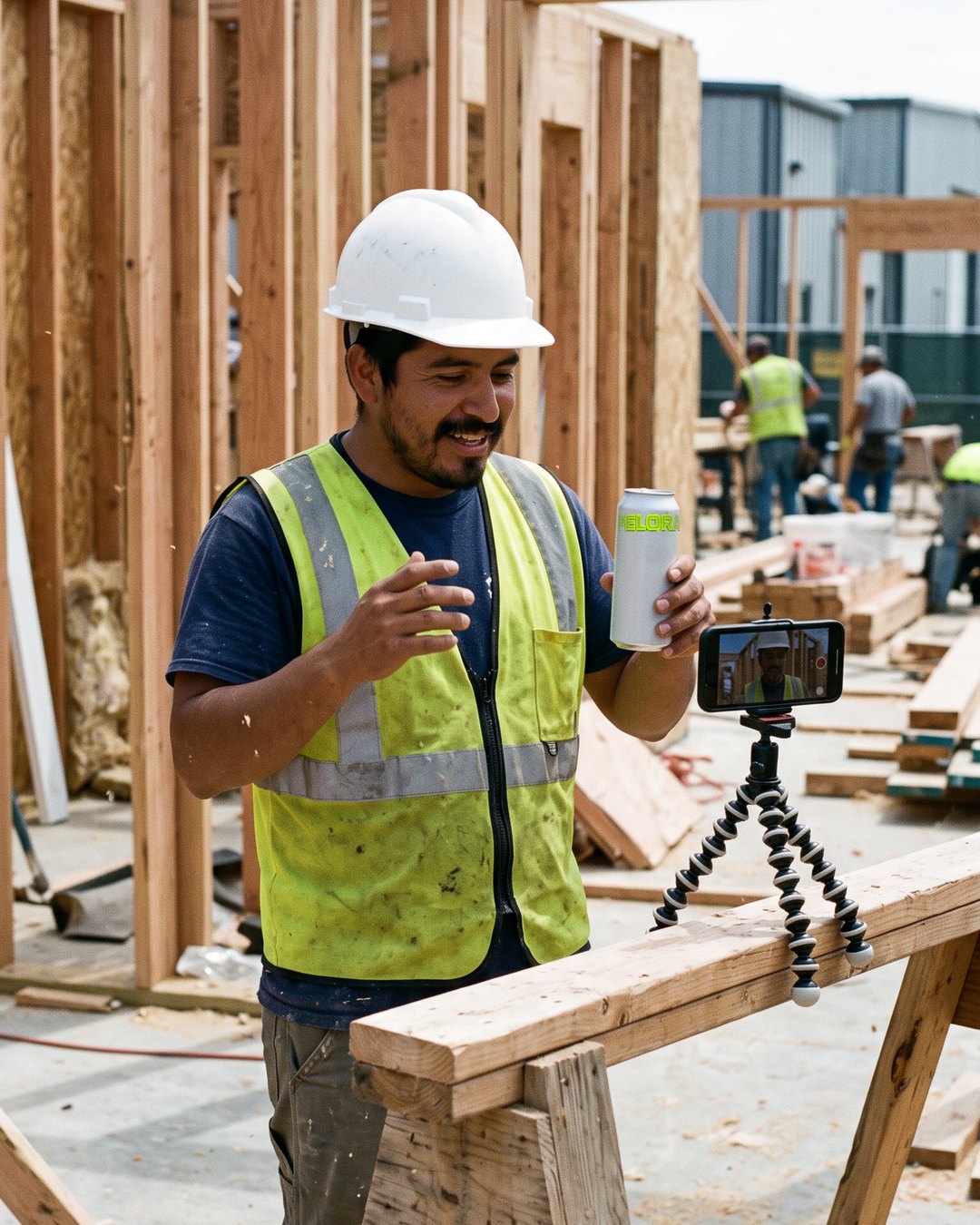 Construction
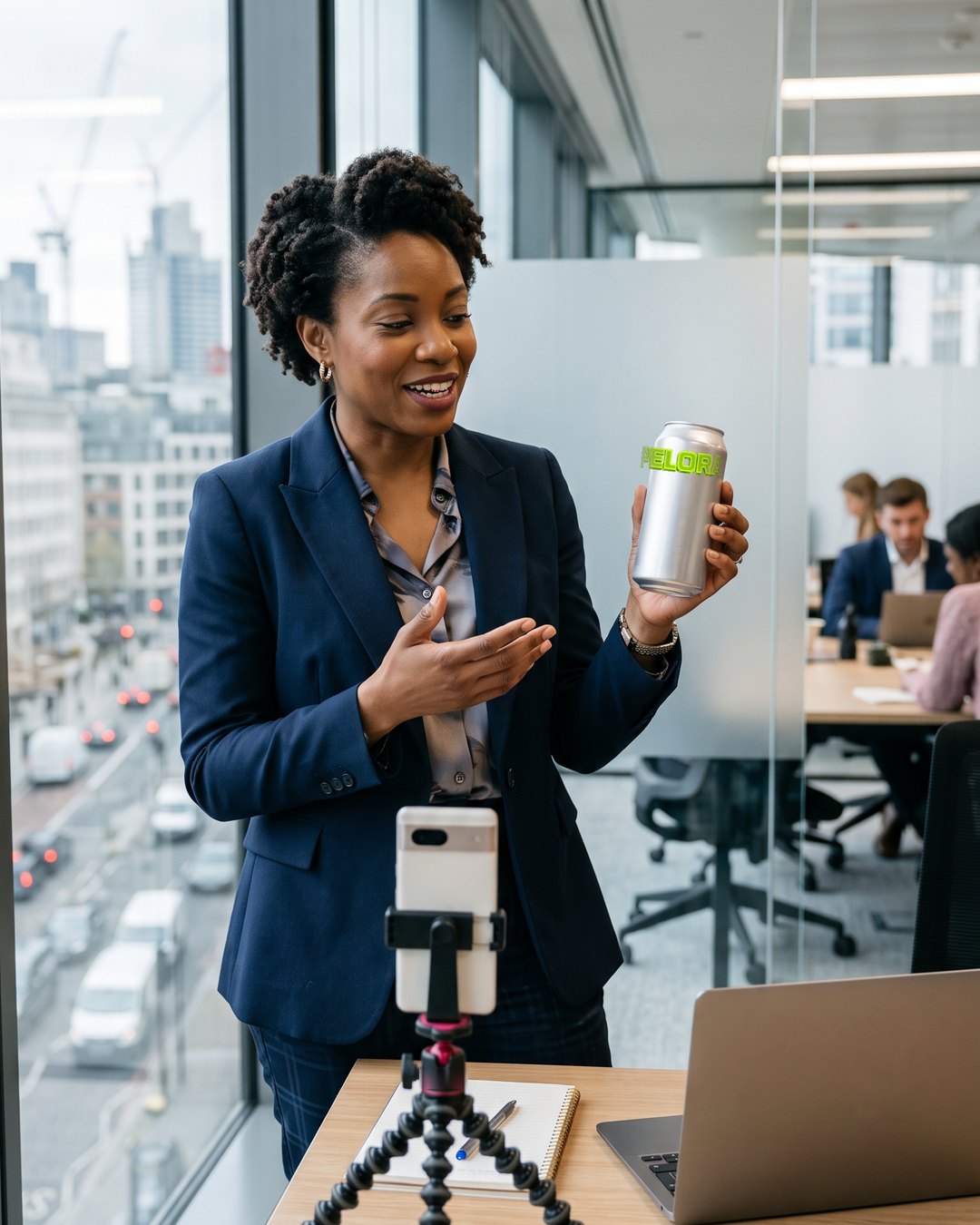 Corporate
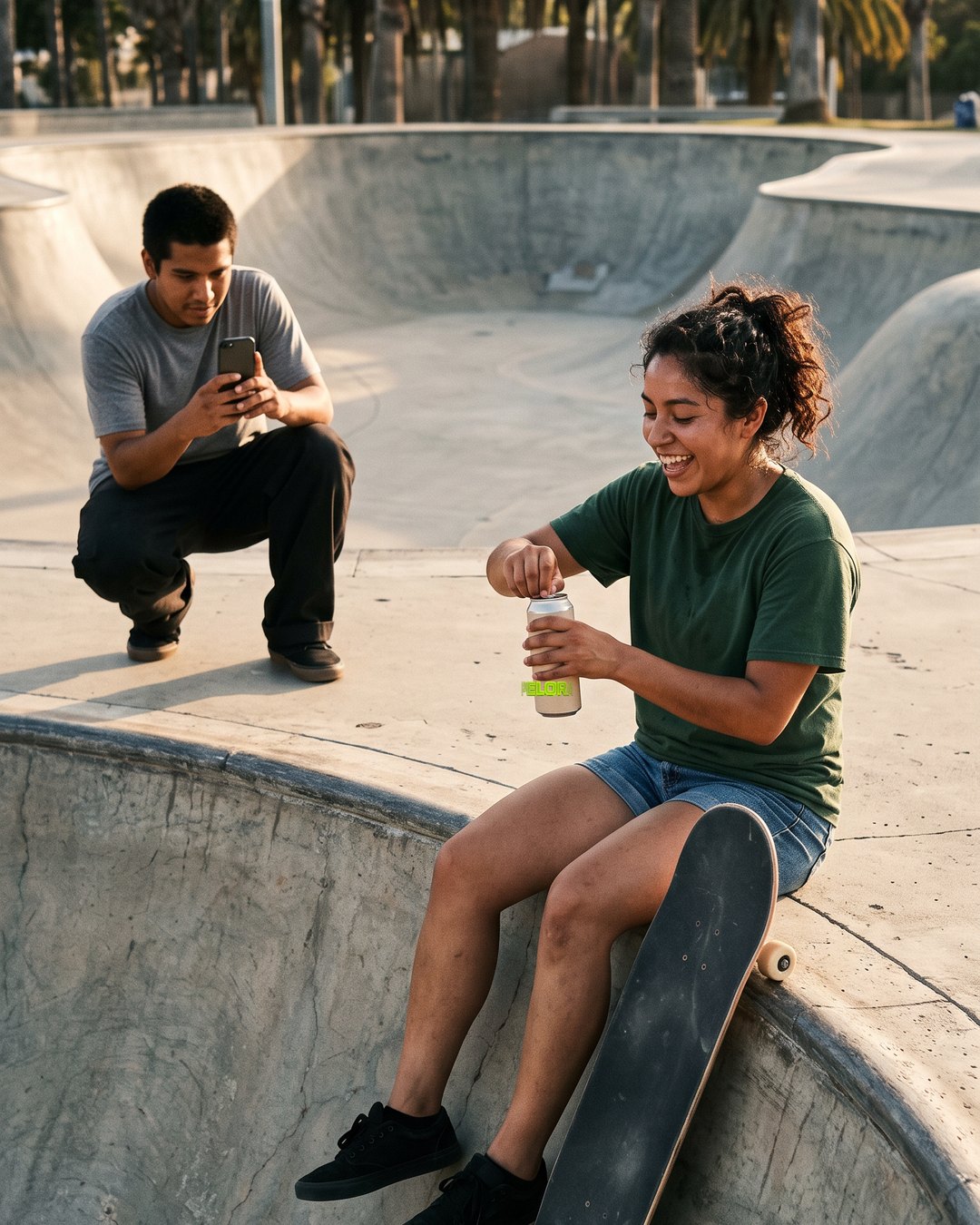 Skate
Skate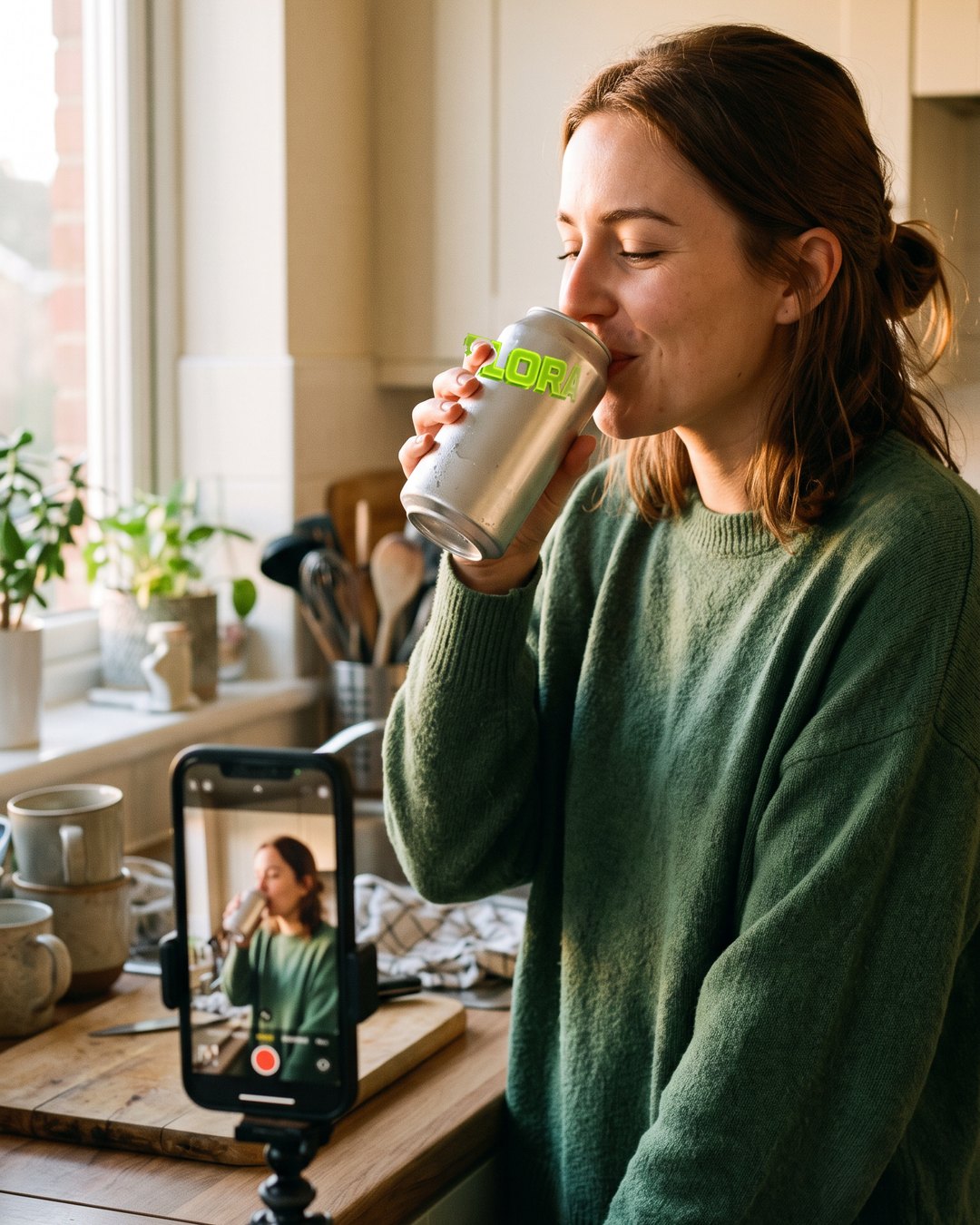 First sip
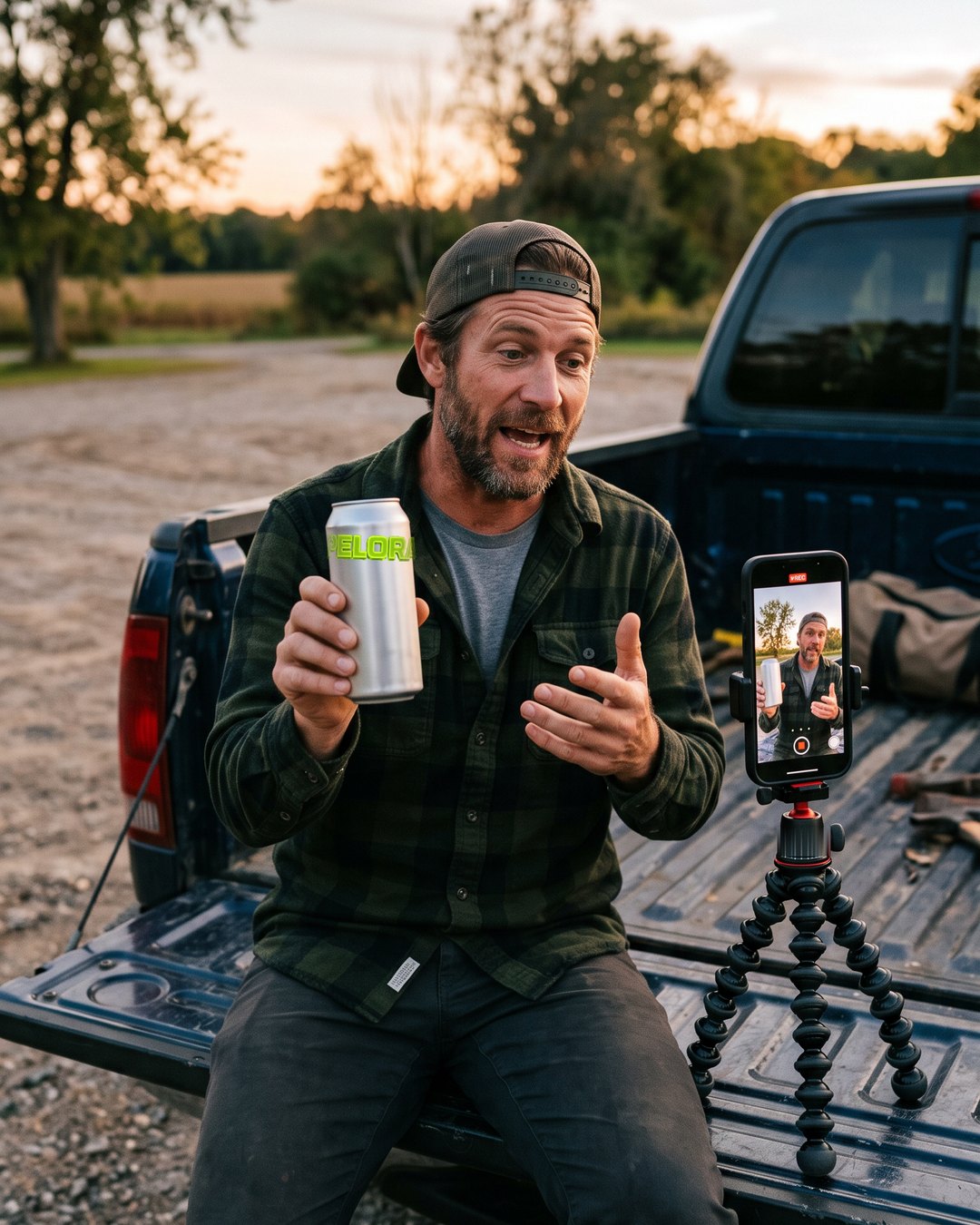 Tailgate
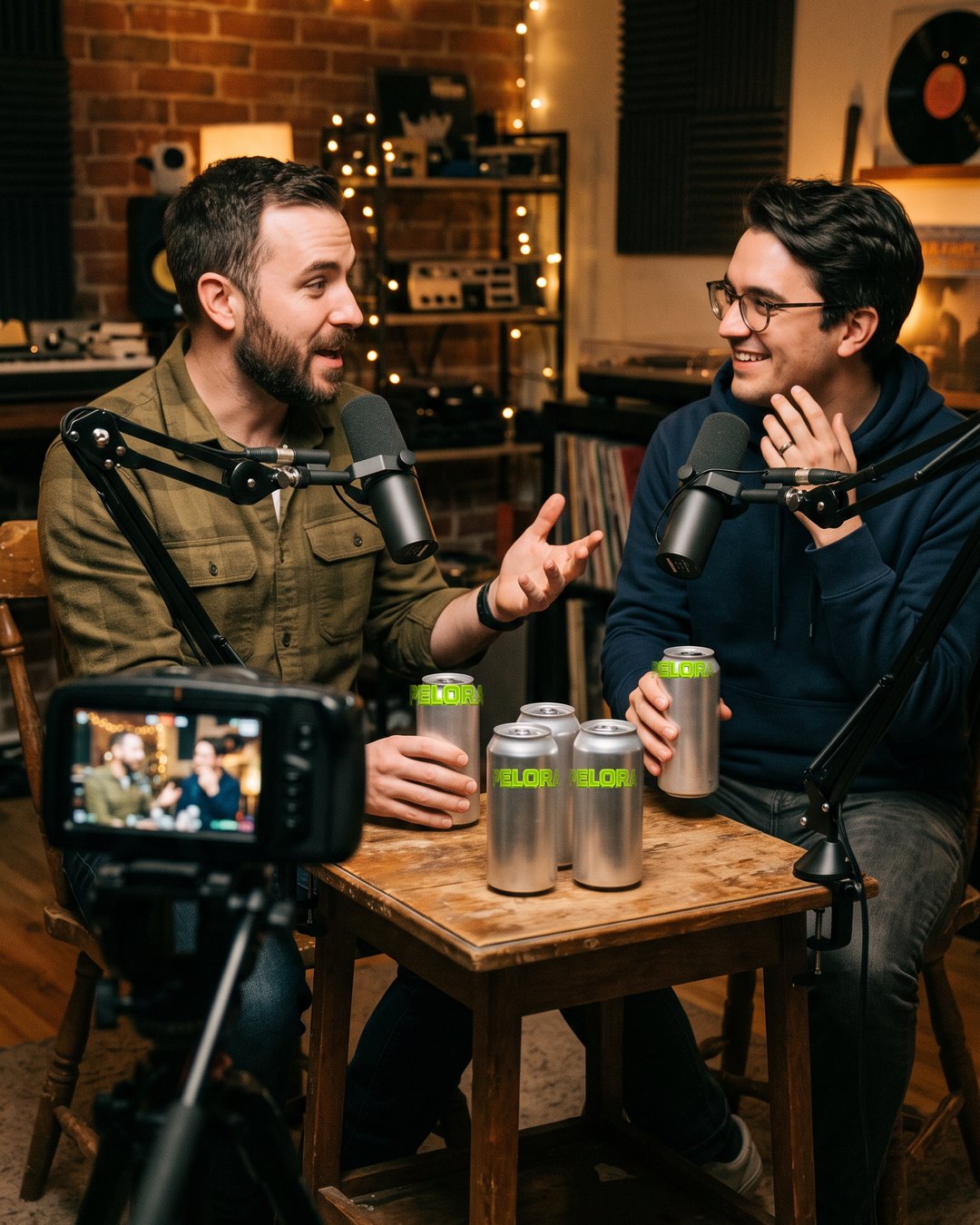 Podcast
Every can is blank on set. The wordmark goes on in post. No creator is scripted.Concept imagery for the program. Not client footage.
A creative testing operation with an influencer shaped top of funnel.
You are not buying posts. You are buying two things: a library of hooks proven on real traffic, and a short list of creators whose winning videos can run as ads from their own handles. The roster of hundreds is the input. The winners are the product.
A few, run deep
Up to five creators a month, interviewed before hiring, briefed, filming where your product is actually sold, running as partnership ads from their own handles. Every post read before it goes live. This is the creator program already on our pricing page.
Many, run wide
Hundreds of small creators seeded with product and a commission. No flat fee, no negotiation, no script. Most of them will do nothing, and that is fine, because the ones who post cost a case of product and the ones who win pay for the whole program.
Paying one person ten thousand dollars is a bet on one video. This is a hundred small bets where the losers cost a case of product.
Five steps. The rights come second, not last.
Drawn as a funnel because that is what it is. Wide at the top, narrow at the bottom, and the one clause that decides the economics sits at the door, before anyone knows which video will win.
Invite at volume
Open applications and bulk invites in your categories. Prequalify, take the top of the list. Riders, lifters, moms, tradespeople, gamers, whoever already drinks the category by habit.
Usage rights, at recruitment
Every creator signs one agreement to join. It carries the disclosure rules, the prohibited claims list, and the usage rights for anything they post about you.
Product, hooks, commission
Free product, a commission code, and a short list of hooks that work. Never a script that kills their voice. Then let them post: taste tests, comparisons, first sip, routines, the drive to work.
The market answers
Which hook holds, which angle sells, which objection recurs, which face the audience trusts. Real research with a checkout button attached.
Winners become Meta ads
Rights are already ours. The creator grants ad permission once at account level, and the proven video runs as a partnership ad from their handle the same week.
In the monthly fee. Recruit and vet, write the hooks and the prohibited claims list, secure the rights at recruitment, read a sample of what posts, and report which hooks won. Per winner. Whitelisting setup and management, and Spark code renewals where TikTok is used. Editing of the winning video is quoted at our published editing rate. When we run the ads. Amplification, priced on ad spend. What you do. Make the product, ship the seeding at your cost from the list we hand you, pay creators directly if any commission is owed, and keep the margin. We never hold, invoice or mark up creator money.
Gifting has no rate card. It has a formula.
Pay a creator and the price of a post is known. Gift a creator and there is no rate: the cost of a video is the product you shipped divided by the share of people who post. No published source has measured that share, so we measure it on your program instead of assuming it.
Cost per posted video at a $15 product
Product cost plus $12 shipping, divided by the activation rate. Against the average paid TikTok post and the price of a bare edit with nobody in it. The rates on the left are assumptions, not measurements. No published source has measured how many gifted creators post. That is why the chart shows four of them.
What it means: if one in three post, a gifted video costs about what a bare edit costs, and it arrives with a real face, a real audience and a real posting slot attached. Sources: $12 domestic seeding logistics, PELORA service line model 2026-08-31. $186 average paid TikTok post, Collabstr 2026 report, 21,000 plus paid collaborations. Bare edit $31.09 VidChops and $89 beCreatives, published prices. Arithmetic: CFO, 2026-09-08.
The posting rate that beats paying cash
Share of gifted creators who need to post for the gifted video to cost less than the $186 average paid TikTok post, by what the product costs to make and ship.
Where it holds: under about $25 to make and ship, the gifted model beats paying market rate if better than one in five post. Above $60 it needs better than two in five and the case weakens fast. Energy drinks and most supplements sit on the left of this chart. Source: break even against Collabstr 2026 transacted TikTok average, CFO arithmetic 2026-09-08. Honest limit: a paid post comes with a negotiated deliverable and a review cycle. A gifted post comes with neither. This comparison holds on at bats, which is what a testing operation buys.
What guides publish versus what brands actually paid
The rate guides are written by people selling to creators and disagree with each other by two to five times. The transaction data sits at the bottom of every guide range. Both matter, because this program pays neither: it pays product and commission.
What to budget: nearly 80 percent of all paid creator deals closed under $300. Fitness partnerships start from $75. If you do pay a creator, budget the guide range and expect to close nearer the transacted average. Sources: Collabstr 2026 report, 21,000 plus paid collaborations across 200,000 creators, and the Collabstr health and fitness marketplace, 2026. Guide ranges as compiled in PELORA's creator rates research, 2026-09-01.
Every point of commission is a point of your gross margin.
On TikTok Shop the commission rate is set by you, the seller, anywhere from 1 to 80 percent, and every point of it comes out of your gross margin, not our fee. Commission is calculated on revenue minus refunds, times the rate, so a full refund takes the creator's commission to zero. That protects you, and it also makes creator earnings volatile, which is part of why most people we recruit will never post. Creators are paid 15 days after the order delivery date, not at order.
One line we keep separate on every quote: TikTok's 6 percent per order referral fee is your cost, shown on its own line, never blended into ours. And this is product clients only. TikTok's Prohibited Products Policy bars services from the shop outright, so a clinic, a contractor or an agency cannot run this, whatever the brief says.
Sources: TikTok Shop published affiliate mechanics as recorded in the CFO's creator army costing, 2026-09-08, sections 4 and 7.
Ask for the rights at the door and they cost nothing.
Every sourced figure for what usage rights cost is a percentage of the creator's base fee. In a gifted deal the base fee is zero. So the price of rights in this model is set entirely by when you ask.
Meta partnership ads
The creator grants ad permission once, at account level, under Ad partners in their own Instagram settings. Free, and it does not expire per post.
- One action per creator, ever
- Every winning video from that handle can run as your ad
- Operationally cheap at a hundred winners
TikTok Spark Ads
The creator toggles authorization per video and sends a code valid for 7, 30, 60 or 365 days. Every video needs its own code, and the ad stops when the code lapses.
- One action per video, per creator
- Code expiry is a standing job that stops ads when it is missed
- Where we use it, we always ask for the 365 day code
Sources: Meta and TikTok help content on partnership ads and Spark Ads authorization, checked 2026-09-02 (knowledge/influencer-economics/README.md), mechanics restated in the CFO's creator army costing 2026-09-08, section 6. A contract clause does not technically grant whitelisting; the creator takes the action inside their own account and can revoke it. Code renewals sit inside winner conversion, where the whitelisted creators are.
The cast looks like the country, because the customers do.
Almost one in five people in the United States is Hispanic, 65 million people, and that community drove 71 percent of the country's growth in the last year the Census measured. This is a Southern California company and the casting shows it: Latino families, riders, builders and creators are in the frame from the first brief, beside the lifters, the office people and the guys on the tailgate.
Nobody is scripted. Nobody is styled. The can is the only prop.
BackyardGarageThe blockSkate park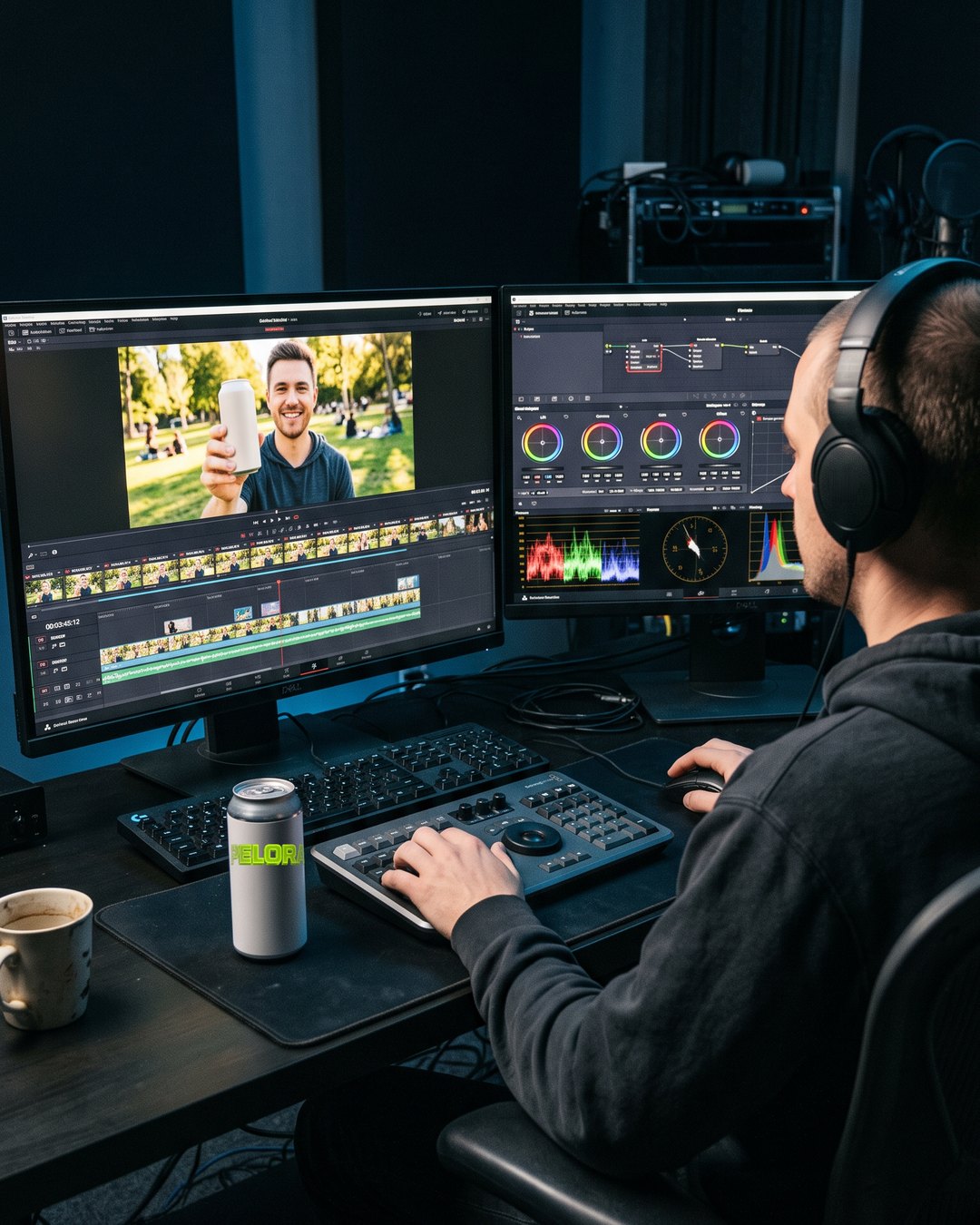 The cut
Source: U.S. Census Bureau, "New Estimates Highlight Differences in Growth Between the U.S. Hispanic and Non-Hispanic Populations," June 27, 2024: Hispanic population 65,219,145, 19.5 percent of the U.S. population in 2023, just under 71 percent of national growth between 2022 and 2023. Imagery on this page is concept imagery for the program, generated and audited, not client footage and not real customers.
Product clients only. The compliance cost rises with how regulated the product is.
The one line that never automates is the compliance read. At this scale it is a sample, not a census. Fine for a beverage, not fine everywhere.
Energy drinks, beverages, consumer products
A can shaped and sold like a drink is a conventional food under FDA's 2014 guidance, not a supplement. The read is a disclosure sweep, not a claims review. Caffeine is listed as an ingredient and the hooks stay on taste, routine and energy the label supports.
Supplements and functional products
Structure and function claim territory under the FTC Health Products Compliance Guidance, with civil penalties to $53,088 per violation. The mitigation is cheap and it is built in: a tight prohibited claims list handed to every creator at recruitment, in the same agreement as the rights. That does more at this scale than any amount of after the fact reading.
Prescription products and services
TRT, GLP-1, HRT and anything prescription: FDA treats a paid creator's post as if the company wrote it, and sent 30 warning letters to telehealth companies on March 3, 2026 and 25 more the week of June 15, naming Instagram influencer partnerships specifically. Those clients get our creator program with every post read, never the wide program. Services are barred from TikTok Shop by platform policy, so this is not a channel for a clinic, a contractor or an agency.
What every creator signs up to.
Disclose on every post. Free product counts as payment. The disclosure sits where a viewer sees it without tapping more. We check it on every sampled deliverable and keep the log.
Undisclosed commercial content loses distribution. TikTok's own policy: if commercial content is not properly disclosed, the video may not be eligible for the For You feed. Disclosure is not only the law, it is reach.
No before and after. Product effect comparisons are banned globally on TikTok. Weight loss and muscle gain claims are restricted to audiences 18 and older, and a product cannot be shown working alone without diet or exercise.
Supplements are 18 plus on Meta. General foods are not. Ads for dietary products must be targeted to people at least 18. The gate does not apply to general food products marketed for general wellbeing, which is the line that decides how a functional beverage is sold.
Sources: FTC Health Products Compliance Guidance and the January 2025 civil penalty adjustment ($53,088), PELORA regulator research 2026-09-05. FDA telehealth warning letters, March 3 and the week of June 15, 2026, as recorded in PELORA's creator cost research. FDA 2014 guidance on liquid products, PELORA regulator research 2026-09-05. Meta and TikTok advertising policies opened and read in a browser 2026-09-05, PELORA platform policy research. TikTok Prohibited Products Policy on services, CFO creator army costing 2026-09-08, section 7.
The answer engines read plain claims and real footage. So this page is written in plain claims.
Half of American adults use a chatbot, most of them to look things up, and sixty percent read the AI summary on Google. Every section on this page is a direct answer with its source under it, because that is what an answer engine quotes and a buyer can check.
People did not leave Google. They added a second place to ask.
68.01 percent of U.S. Google searches ended without a click in January to April 2026, up from 60.45 percent in 2024, on a Similarweb panel analysed by SparkToro, whose founder sells audience research and whose panel excludes the Google app, so the true rate is higher. Separately, Semrush found on 260 billion rows of clickstream that adopting ChatGPT did not reduce Google search use. The click is being taken above the result, not moved to another site.
The video is the proof. The page is the answer.
A creator's first sip is the kind of evidence a person believes and an engine can describe. The page it points to has to say plainly what the product is, what it costs, what it may claim and where to buy it, with sources. We build the page and the program together, and we measure what the engines actually cite in your category rather than promise it. Our own proof: PELORA is named first in Google's AI Overview for "med spa marketing orange county," read 2026-09-07, and AI assistant referrals are the second most engaged channel on this site at 62.32 percent engagement over the 28 days to September 4, 2026.
Sources: Pew Research Center as cited on each tile, verified against the Pew instrument 2026-09-03. SparkToro analysis of Similarweb U.S. desktop and mobile web panel, published 2026. Semrush, August 2025, January 2024 to June 2025 clickstream with matched control. PELORA SERP read 2026-09-07 and GA4, 28 days to 2026-09-04. Which sources AI engines cite in a category is an open research question and no figure for it appears on this page.
Priced as two outputs. Never as a roster.
Per head pricing cannot price an army. You pay for the build, the monthly running, and each winner turned into an ad. Product, shipping and software pass through at cost on their own lines, never inside the fee. This program is quoted per brand until a published rate card exists; nothing on this page is a price.
Program build
One fee, quoted per program
The recruitment system, the three party creator agreement with rights at the door, the outreach sequence, the hooks and the prohibited claims list, the shop configuration where we run the shop.
Program management
Monthly, quoted per program
Maintenance recruitment up to a stated number of new creators a month, the recruit list for your seeding, the sampled compliance read at a stated capacity re-checked monthly, and the hook report that tells you what the market said. Recruitment above the stated number is quoted per wave.
Winner conversion
Per whitelisted creator, quoted
Setup and monthly management of each whitelisted creator whose video runs as your ad from their own handle: the permission and Spark code renewals where TikTok is used. Editing of the winning video is quoted at our published editing rate.
Amplification
A share of ad spend, quoted
Media management on the winning videos as Meta partnership ads, priced on ad spend with a minimum. Ad spend itself is yours, paid to the platform, never marked up.
At cost
Product, shipping, software
Your product and your shipping, direct, about $12 a package domestic; you or your fulfilment partner ship from the list we hand you. Creator platform software at cost on its own line if the program needs one. Creator commission is paid by you to the creator. We never hold, route or mark up creator money.
Straight answers.
What is a creator army?
How much does it cost to gift a creator instead of paying one?
Why take usage rights at recruitment instead of when a video wins?
Why do the winners run as Meta ads rather than TikTok Spark Ads?
Who pays the creators?
Can a supplement brand run a creator army?
Can a service business or a clinic run one?
Does the program help with AI search, AEO and GEO?
Every number on this page, and where it came from.
- Collabstr, 2026 Influencer Marketing Report. 21,000 plus paid collaborations across 200,000 creators. Average paid post TikTok $186, Instagram $193, YouTube $255. Nearly 80 percent of deals under $300. Collabstr health and fitness marketplace, 2026: $175 average, fitness partnerships from $75.
- Collabstr, 2025 report. Usage rights moved the average deal from $221 to $307, a 39 percent lift.
- Modash (March 2026), Top Growth Marketing (July 2026), UGCBloom (July 2026). 25 to 30 percent of base fee per 30 days as the standard whitelisting ask.
- Lumanu and Collectively survey, 400 plus influencers. 51 percent charge extra for usage rights; 80 percent have been asked.
- VidChops $31.09 and beCreatives $89. Published short form edit prices, read 2026-09-07.
- PELORA service line model, 2026-08-31. $12 per package domestic seeding logistics, 25 package minimum.
- PELORA CFO, creator army costing, 2026-09-08. Cost per video formula, break even table, $15 product table, commission mechanics, Meta versus TikTok permission, product clients only.
- Meta and TikTok help content on partnership ads and Spark Ads authorization, checked 2026-09-02 (knowledge/influencer-economics/README.md), mechanics restated in the CFO's section 6.
- Meta, Google, TikTok and Amazon advertising policies, opened and read in a browser 2026-09-05: Meta 18 plus for dietary products with the general food exemption; TikTok before and after ban and weight management rules; TikTok disclosure and For You feed eligibility.
- FTC Health Products Compliance Guidance and the January 17, 2025 civil penalty adjustment, $53,088 per violation.
- FDA warning letters to telehealth companies, March 3, 2026 (30) and the week of June 15, 2026 (25), naming Instagram influencer partnerships. FDA 2014 guidance distinguishing liquid dietary supplements from beverages.
- U.S. Census Bureau, June 27, 2024. Hispanic population 65,219,145, 19.5 percent of the U.S. population in 2023, just under 71 percent of national growth 2022 to 2023.
- Pew Research Center, American Trends Panel Wave 187, February 17 to 23, 2026, n = 5,119: 49 percent use chatbots, 42 percent use them to search, 60 percent read AI summaries. Pew, July 22, 2025: 8 percent versus 15 percent click through, 1 percent click a cited source, 900 adults and 68,879 searches in March 2025.
- SparkToro analysis of Similarweb U.S. panel, 2026: 68.01 percent zero click January to April 2026, 60.45 percent in 2024. Desktop and mobile web, excludes the Google app. Semrush, August 2025: 260 billion rows, ChatGPT adoption did not reduce Google use.
- PELORA own data. Google AI Overview read for "med spa marketing orange county," 2026-09-07. GA4 channel engagement, 28 days to 2026-09-04.