Influencer marketing for concierge nursing

The nurse is the story.

For a concierge nursing practice we start with your nurses, and the first rule comes from nursing itself, not the platform. Nurses may not photograph patients on personal phones or post anything that could identify them. So the story is the nurse, the visit and the family's decision, told with consent and without the patient on screen.

Nearly 80%of paid creator posts close under $300
0patient photos on a nurse's personal phone, under the NCSBN's social media guide
HIPAAwritten authorization before a patient's health information appears in your marketing

UpdatedSeptember 26, 2026NCSBN, HIPAA, Meta and TikTok rules read at the sources listed at the bottom

Influencer marketing for a concierge nursing practice means your nurses, family caregivers and local parents and professionals talking about what an in-home visit is like, run as Meta partnership ads from their accounts and pointed at a consult page. The patient stays off camera unless they have signed a written authorization, nurses follow their own profession's rules on photos and privacy, and TikTok is out: it bans creator posts for medical services.

NCSBN, HIPAA, Meta and TikTok lines on this page read at the source on 26 September 2026. Creator rates are what creators actually accepted, not rate-card asks.
For concierge and in-home nursing

Who talks, where it runs, what stays private.

Who the creators are

Your nurses and the families.

Your RNs explaining what a visit involves, adult children who arranged care for a parent, and local parents and professionals who booked a visit for themselves. Real people, with consent.

Where it runs

Facebook and Instagram. Not TikTok.

Facebook and Instagram partnership ads to adults in your service area, and YouTube for longer walkthroughs. TikTok prohibits branded content for medical treatments and institutions.

What stays private

The patient, unless they sign.

What the visit looked like, why the family chose in-home care, what the nurse does. No outcome claims, no patient named or shown without written authorization, and no detail that could identify someone.

What it looks like

Your nurse. Your practice. One label.

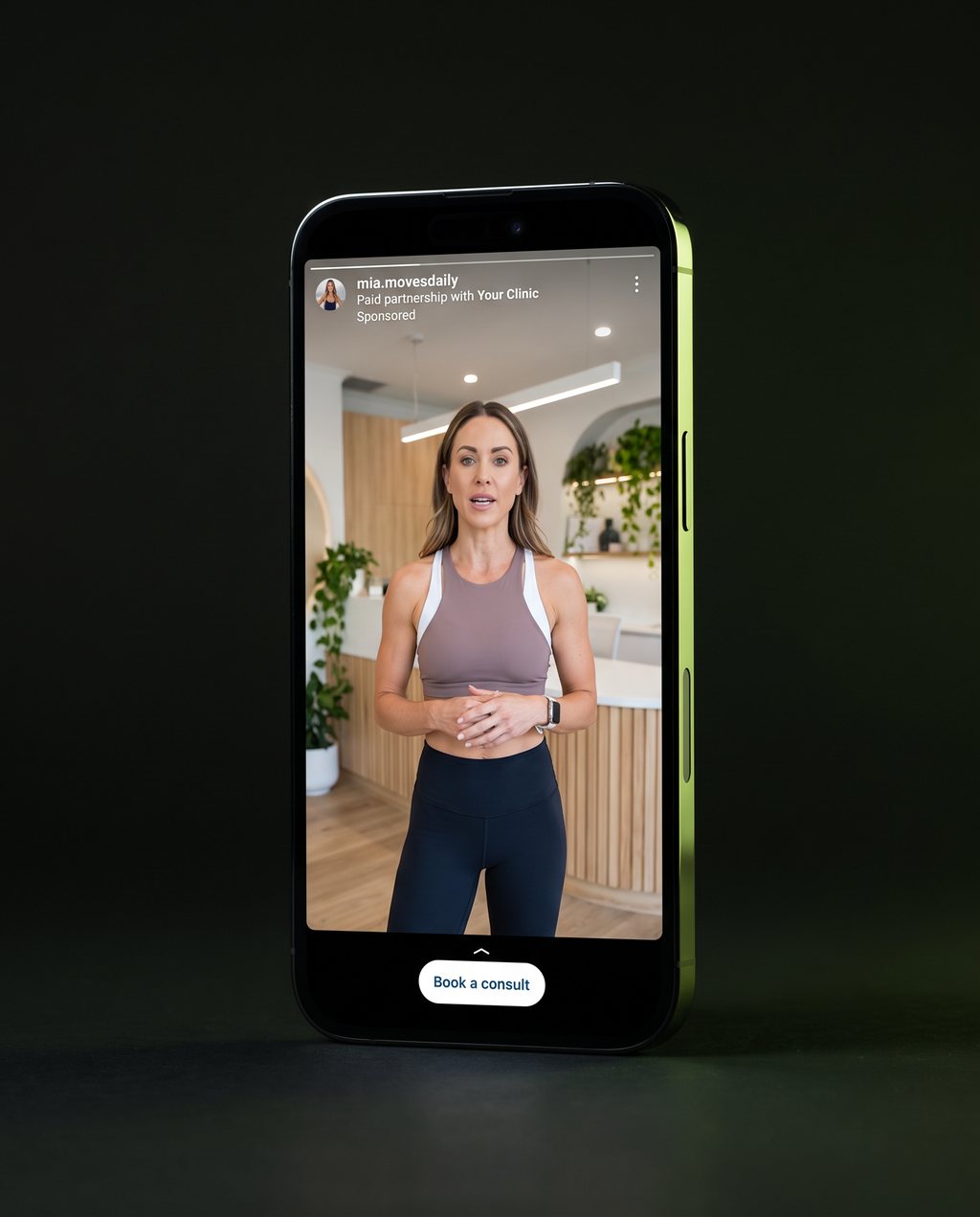
This is the shape of a partnership ad for a concierge nursing practice. The creator is your nurse, the label names your practice, and the visit is shown without the patient in frame. The handle and the practice here are examples, not clients.

NT
@nurse.tara.rn
Paid partnership with Your Practice · Sponsored
“What a first home visit actually looks like.”
Book a consult →
Instagram Reel labelled Paid partnership with Your Business, running from the creator's handle
Three ways to run a creator

The visit. Your ad.

A nurse can post and you run it as an ad, a family member can give you standing permission to run their story, or a creator can film for your page only. In home care the choice turns on privacy: whose home is on camera, and who has signed what.

Instagram Reel labelled Paid partnership with Your Business, running from the creator's handle
Meta partnership ad

Your nurse, run as an ad.

Your nurse posts from her own account, tags your practice as a partner and sends a partnership ad code. You run it to adults in your service area. The post shows her, the bag and the drive, never a patient she has not been authorized to show.

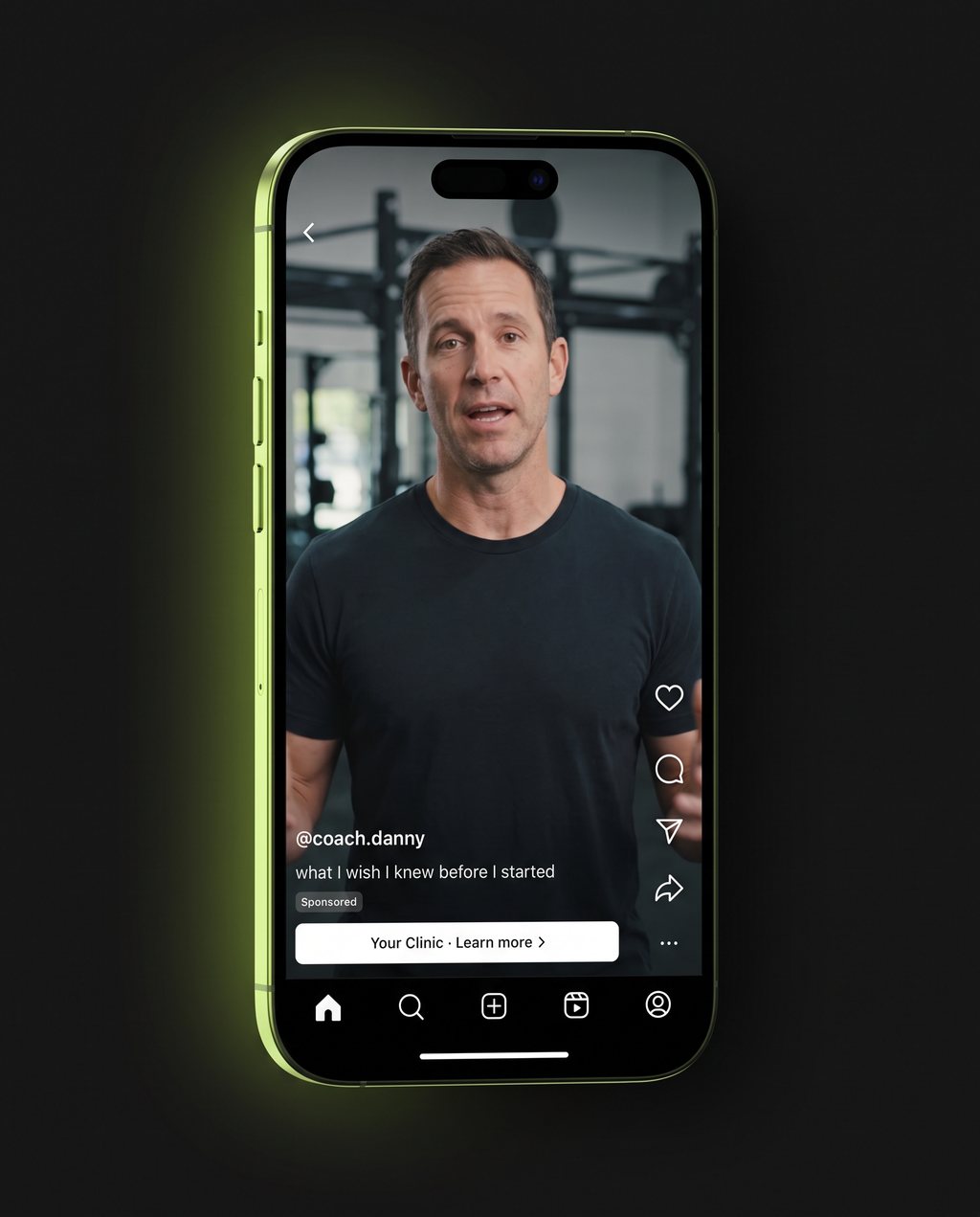
What the viewer sees: the nurse's name, then "Paid partnership with Your Practice," then your button.
Vertical video ad running from a creator's handle, marked Sponsored, with a Your Clinic Learn more button
Standing permission

A family's story, run for months.

An adult child who arranged care grants your page permission once, at account level. Their updates can run as ads without a new code, each read for anything that identifies the patient.

What the viewer sees: the family member's handle, a Sponsored tag, and your button.
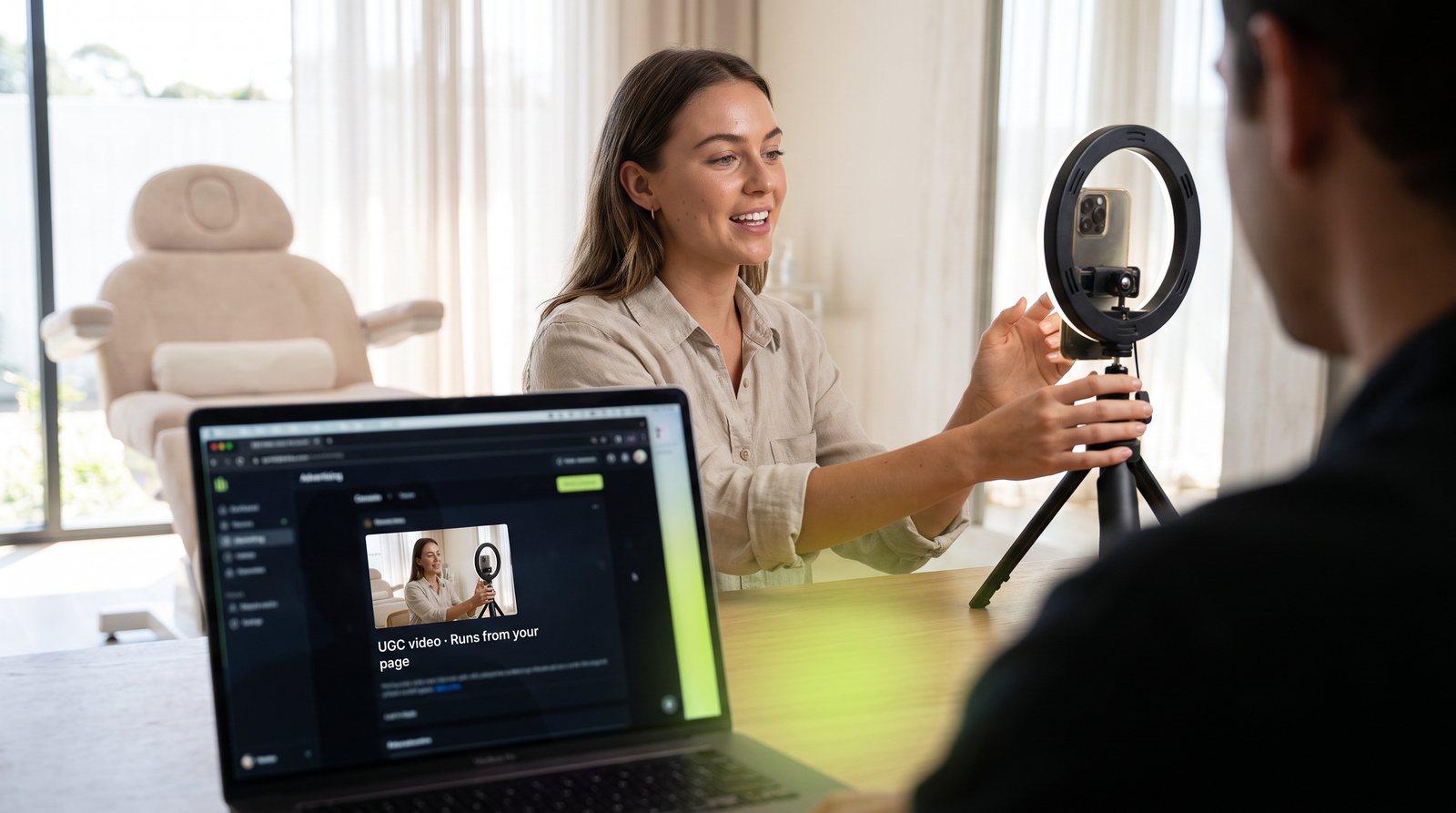
Creator filming a UGC video in a clinic, with the finished ad running from the clinic's own page
UGC video

A staged visit, labeled.

A creator films a visit in a staged home to our brief and hands you the video with usage rights. It runs from your own account. Anyone playing a patient is labeled as not a patient, as the FTC expects.

What the viewer sees: your practice name, a staged visit, no partnership label.
Where it runs

Facebook and Instagram carry it.

Meta carries the paid reach, YouTube carries the longer walkthrough, and TikTok is off the list for this category. Here is what each asks of an in-home care practice.

Instagram and Facebook

Partnership ads to your service area

The ad runs from the creator's account with a Paid partnership label naming your practice. Meta bars ads that imply knowledge of the medical information of a viewer or their family, so the hook describes the service, not the viewer's parent.

  • Permission once at account level in Business Suite, or per post with a partnership ad code
  • No "Is your mom struggling at home?" hooks; a family member's health is a personal attribute on Meta
  • Ad rights add about 25 to 30 percent to the post fee per 30 days; creators charge about 39 percent more when ad rights are included ($307 against $221 on average, Collabstr 2025)

YouTube

The walkthrough

A nurse walking through a first visit: the questions, the equipment, what happens next. YouTube requires paid videos to follow Google Ads policies, with some exceptions, and lets the creator limit branded content by age or location.

  • Paid promotion switched on, so YouTube shows a disclosure label at the start
  • A location limit matched to the area you actually serve
  • Average paid integration $255, Collabstr 2026
TikTok

Not for in-home nursing

TikTok's Branded Content Policy prohibits creator posts for "Any medical institutions, treatments or devices". A nursing practice provides medical services, so paid, gifted and affiliate posts about it are out.

  • No paid or gifted TikTok posts about your practice
  • No Spark Ads or TikTok Shop
  • The same nurse can post the same walkthrough to Instagram

How we pick the mix: we read the Meta Ad Library for concierge and in-home nursing in your area once before the first brief, so the first post starts from what nearby practices already run.

What a creator actually costs

Most posts close under $300.

Rate guides quote high. Transaction data does not. Across 21,000 paid collaborations in Collabstr's 2026 report, nearly 80 percent of deals were under $300 and only 2 percent were over $1,000. A concierge nursing program leans on your own nurses and a few families rather than a big name, so the budget goes to a handful of small, trusted accounts. You pay outside creators directly, per post; we never invoice, hold, route or mark up creator money.

Creator sizeFollowersPer post, organicAdd ad rights, 30 daysWho they are
NanoUnder 10,000$150 to $400Plus 25 to 30 percentYour nurses, family caregivers and local parents. Where an in-home care program starts.
Micro10,000 to 100,000$400 to $1,500Plus 25 to 30 percentCity-level family, caregiving and lifestyle creators with an engaged adult audience.
Mid100,000 to 500,000$2,000 to $5,000NegotiatedRegional names. Rarely worth it for a single service area.
CredentialedAny size40 to 60 percent above tierNegotiatedAn RN, NP or physician on camera explaining a visit. Your own staff first.

Budget rule: two posts a month with 30-day ad rights runs about $400 to $1,000 per small creator, up to about $3,000 for a larger one. Collabstr's average paid post in 2026 was $193 on Instagram, $186 on TikTok and $255 on YouTube.

What a paid creator post actually costs

Average, 21,000 deals
Instagram$193
TikTok$186
YouTube$255

Source: Collabstr, 2026 Influencer Marketing Report, 21,000 paid collaborations, March 2026.

Where an influencer dollar goes

Industry average
70% creators
30% agency
Paid to creatorsAgency management

Source: ANA, Influencer Marketing Agency Compensation, survey of 84 client-side marketers fielded October to December 2025, reported February 2026. That sample skews to large advertisers, half of them spending over $100 million a year. At PELORA the management fee is fixed at $4,500 a month, so on a small program our share is higher than 30 percent and on a large one it is lower. Either way it sits on its own line of your invoice. Creator fees never appear on it, because you pay creators directly.

Where 21,000 paid deals actually closed, Collabstr 2026

Per post, organic, by creator size

Who gets paid what

YouApprove every creator and every fee before it is paid. You get one invoice from us, for our fee only.
→
PELORA, $4,500The management: find, contract, brief, read, run, report. A fixed monthly fee.
→
Creators, paid by youYou pay each outside creator directly, a flat fee per post. We paper the deal, brief the creator and approve the work; we never invoice, hold, route or mark up creator money.
What we do for the fee

Six steps. Every visit, privately.

We scope the search at about 30 accounts for every one we expect to sign, and for a nursing practice the first cut is privacy: whether a nurse has ever posted a patient. This is the work between "we should use creators" and a post that is live, legal and pointed at a consult page.

  1. 1

    Find and vet

    Your nurses first, then families and local creators. We read each nurse's past posts for patient photos or identifying details, and check the audience is real and local. You approve the shortlist before we contact anyone.

    Week 1
  2. 2

    Negotiate and contract

    A flat fee per post for outside creators, usage rights and how long you can run it, plus a written HIPAA authorization from any patient whose health information appears, and consent from anyone on camera.

    Week 1 to 2
  3. 3

    Brief

    One moment per post and the page it points to. Never: a patient's face, name, home or room without written authorization, a detail that could identify them, an outcome promise, or a hook about the viewer's own family's health.

    Week 2
  4. 4

    Review, twice

    Every post is read twice before it runs, within 48 hours a round: the disclosure, anything that identifies a patient, and every claim about care.

    Week 2 to 3
  5. 5

    Run it as your ad

    With permission in hand, we build the ad from their handle on Meta, targeted to adults in your service area, and pointed at a consult page.

    Week 2 to 4
  6. 6

    You pay, we report

    You pay each outside creator directly. We never invoice, hold, route or mark up creator money. We report consult requests, cost per consult and which nurses and families brought them.

    Monthly

From signed to live

Week 1 to 2Outreach and termsYour nurses and families first. About six message rounds per outside deal; reply rates on cold outreach average about a third.
ThenAgreement and briefA flat fee per post, written consent and HIPAA authorization, and what stays off camera.
ThenTwo review rounds48-hour turnaround each. Disclosure, privacy and every claim about care.
Week 2 to 4Live, from their handlePermission requested, ad built, pointed at a consult page. Most creators go live two to four weeks after signing.
The rules for concierge nursing

Privacy first, then the post.

Home care happens in someone's home, with someone's health involved, and every rule here follows from that. These three lines shape every brief we write for this category.

NCSBN

No patient photos on a personal phone.

The national council of nursing boards tells nurses they "must not take photos or videos of patients on personal devices, including cell phones", and that privacy settings are not enough. Boards can discipline a nurse, up to loss of licensure.

HIPAA

Written authorization for marketing.

HIPAA requires a covered practice to get a patient's written authorization before using or disclosing their health information for marketing. A patient's care in your ad is marketing use, so the authorization comes first.

Meta

Describe the service, not their parent.

Meta bars ads that imply knowledge of the medical information of a viewer or their family. "In-home nursing for aging parents" describes the service; "Is your mom struggling at home?" implies the viewer's family's health.

Map of the United States with Newport Beach, California marked
Where we work

Newport Beach office. Home care anywhere.

We run this from Newport Beach and work remote with concierge nursing and in-home care practices across the United States. We get calls from Florida and we do that work. A creator program never needs us in anyone's home.

Creators get sourced inside your service area, because a family books a nurse who can reach the house. What changes by state is the nurse practice act, who may do what in a home, and the board's view of social media, so we read your state's rules before the first post.

CaliforniaFloridaTexasArizonaNevadaColoradoNew YorkAnywhere in the US
Pricing

Included from $14,000. Or added to any tier.

Creator fees are yours and paid directly, per post; we never invoice, hold, route or mark up creator money. The prices below are the management: finding, contracting, briefing, reading, running and reporting.

Inside a retainer
Enterprise
$14,000 a month and above, included

Influencer and paid partnership ads, sourced and managed, are part of the Enterprise tier and every tier above it. Creator fees are on top, paid by you directly to each creator.

Creator program
$4,500
a month, attached to any tier

Up to five creators live in any month. Find, vet, contract, brief, two review rounds, run from their handle, monthly report. Creator fees are paid by you, directly.

UGC videos
$5,500
a month for 8 videos

Eight finished creator videos to our brief, with rights for your own channels and your ads. Extra videos $500 to $750 each.

Questions

Asked by concierge nursing practices.

Can our nurses be the influencers?
Yes, within their profession's rules. The NCSBN's social media guide says nurses must not photograph patients on personal devices or post anything that could identify a patient, so your nurse talks about the work and the visit, not a person she cares for.
Can a patient appear in a creator video?
Only with a signed HIPAA authorization and their own consent to be filmed. HIPAA requires written authorization before a practice uses a patient's health information in marketing. Without it, the video shows the nurse, the equipment and the drive, not the patient.
Can concierge nursing practices use TikTok creators?
No. TikTok's Branded Content Policy prohibits branded content for any medical institution or treatment, whether the creator is paid, gifted or on a code. We run this category on Facebook, Instagram and YouTube instead.
Can an adult child talk about arranging care for a parent?
Yes, about their own decision and experience, with the parent's authorization for any health detail. The story is theirs: why they looked for in-home care and how the first visit went. Details of the parent's condition stay out unless the parent has signed for them.
What hooks does Meta reject for home care ads?
Anything that implies the viewer's family has a health problem. Meta bars ads that imply knowledge of the medical information of a user or their family, so "Is your mom struggling at home?" is out, while a line that describes the service is fine.
Can an ad use actors instead of real patients?
Yes, if the ad says so. The FTC expects ads presented as featuring actual customers to use actual customers or to disclose clearly that they are not. A staged visit with an actor is labeled that way in the video.
What does a creator cost?
Most paid creator posts close under $300. Small accounts run $150 to $400 a post, micro accounts $400 to $1,500, and ad rights add about 25 to 30 percent per 30 days. Your own nurses' posts carry no creator fee. You pay outside creators directly, never through us.
Do you work with in-home nursing practices outside California?
Yes. We run this from Newport Beach and work remote with concierge and in-home nursing practices across the United States, and we get calls from Florida. Creators come from your service area, and we read your state's nursing rules before the first post.